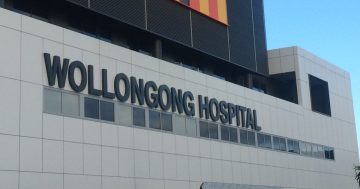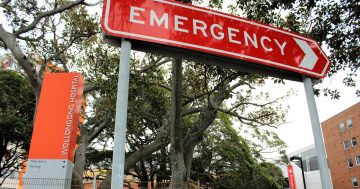

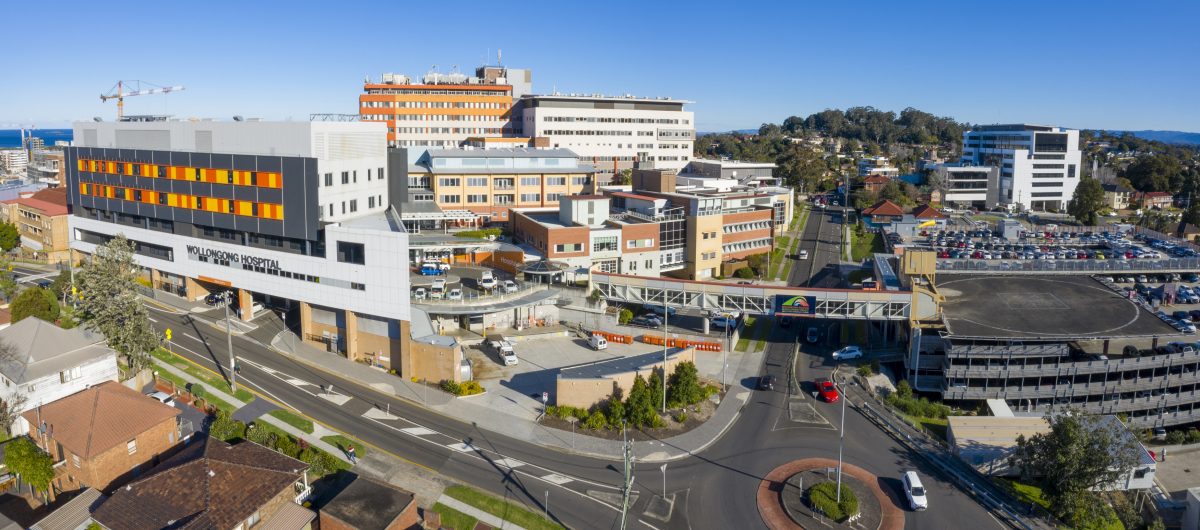
Government initiatives for elective surgery and emergency departments are showing signs of having an impact. Photo: Planning NSW.
The region’s elective surgery waitlist has dipped to pre-pandemic levels according to a new report which also indicates that government infrastructure and investment are successfully diverting non-urgent presentations from local emergency departments.
The 3686 elective procedures performed in the Illawarra Shoalhaven Local Health District (ISLHD) between July and September this year have reduced the waitlist to its lowest number since 2017, with the latest Bureau of Health Information (BHI) quarterly report also showing the least number of patients waiting longer than recommended for surgery in more than six years.
“It’s been clear that it’s been a priority of the government,” NSW Health Minister Ryan Park said. “We’ve invested over $200 million into additional elective surgery including millions of dollars in the Illawarra Shoalhaven.”
“We’ve got a long way to go yet though.
“I want that figure as close as I can to zero because that means people are getting their surgery in a time that’s clinically recommended.”
Data from local emergency departments indicated the community could be utilising the recently introduced alternatives to hospitals designed for less severe conditions.
In Wollongong ED, while emergency and urgent presentations were the highest in BHI’s 15 years of records, semi-urgent presentations were the lowest on record and non-urgent presentations, the lowest in eight years.
“Now that we’ve got the infrastructure, including urgent care services, virtual care services, making sure that we use our pharmacists in a way that people can access healthcare through those channels, we’re starting to see those category four and five, those less serious patients, get out of the ED,” Minister Park said.
“It’s absolutely critical because we’re still seeing big increases in the category twos and threes; they’re very ill and seriously unwell patients.
“What we need to do is have as much capacity within our EDs for people to be treated and take those out of our EDs who don’t need to be there.”
While these services may have freed up some capacity in EDs, there are still delays when it comes to the next steps.
Wollongong Hospital patients who were treated and admitted to hospital or transferred to another hospital spent a median time of 14 hours and 33 minutes in the ED, with the 90th percentile spending more than 29 hours in the department.
Only 13.8 per cent were treated and admitted or transferred within the six-hour benchmark, with many beds in the system taken up by patients waiting for suitable care elsewhere.
“That bed block is brought about because we don’t have enough spaces in our aged care facilities and we don’t have enough support through the NDIS,” Mr Park said.
“They’re things that the NSW Government and me as the minister are arguing day and night to the Commonwealth to try and help us fix.
“We can’t have a situation where across the Illawarra Shoalhaven we have about 130 patients who have finished their care, stuck in a bed; that’s not good for them, we can’t use the beds, it’s not good for the system.
“That’s a system that needs to improve and we need help from the Commonwealth.”
The full BHI Quarterly report is available on the Bureau of Health Information website.