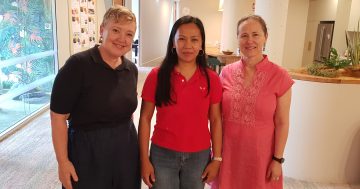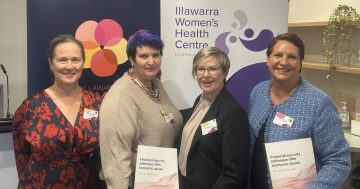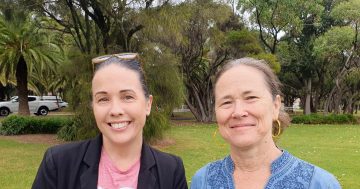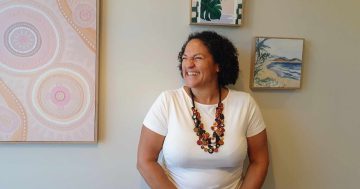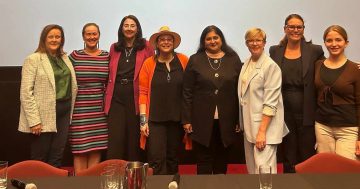

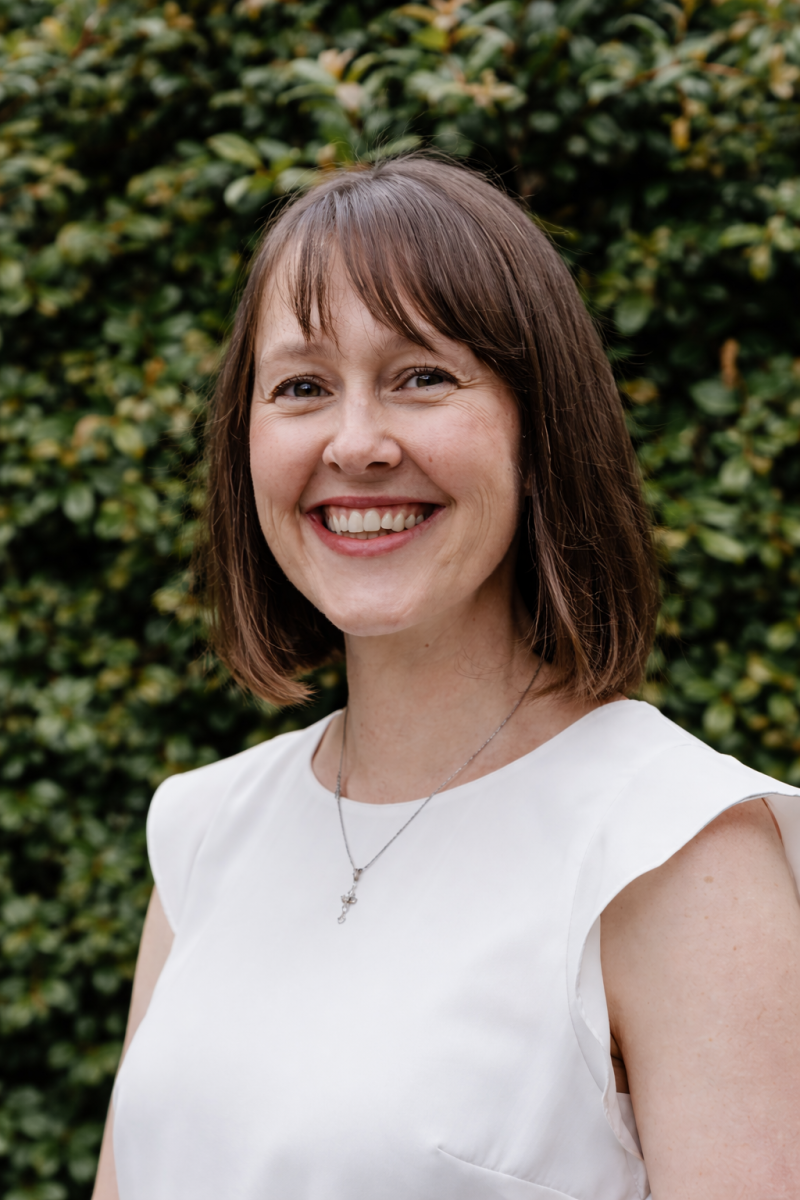
Elise Phillips has replaced Maree Kerr as the new CEO of the Illawarra Women’s Trauma Recovery Centre. Photo: Waples.
Illawarra woman Elise Phillips says her new job is such a dream come true she still pinches herself.
Elise is the new CEO of the Illawarra Women’s Trauma Recovery Centre, replacing Maree Kerr in the role.
Elise grew up in the Illawarra and completed a Bachelor of Psychology at the University of Wollongong before she began her career specialising in family, relationships and domestic violence.
She spent much of her time working to get frontline services the resources they needed – now she gets to spearhead a service that could change the way domestic violence support is delivered across the country.
“I’ve watched the campaign over such a long period of time, and now I’m really excited to be part of it,” she said.
“I’m so grateful to have a local role doing something innovative that hasn’t been done before.
“We know this model works, we know if you invest in women and children they do really well.
“It saves the government money as well as being the right thing to do.”
Elise has almost two decades of experience in clinical and leadership roles in the non-government sector, and was most recently deputy CEO and team manager of policy, research and advocacy at peak body Domestic Violence NSW.
When she’s not at work she loves tackling parkrun at Lake Illawarra or getting out kayaking and SUPing on the region’s waterways with her partner and kids.
Illawarra Women’s Health Centre Executive Director Sally Stevenson said Elise’s skills in strategic planning and implementation and workplace cultural strengthening were vital additions to the centre, which opened a little more than a year ago.
“This dedicated centre with wraparound support services was an Australian-first for the domestic, family and sexual violence sector,” Sally said.
“Now that the centre is established, it is entering a new phase of operation and growth and Elise is a natural fit to lead it into the future.
“She will be a strong advocate for victim-survivors while also navigating government relations to facilitate future practices and opportunities for the Women’s Trauma Recovery Centre.”
Elise acknowledged the centre had a lot riding on its success.
If it can prove wholistic, wrap-around support improves outcomes for women and children affected by domestic violence, the model could be used to roll out similar centres around Australia.
It needs to prove itself to secure committed, recurrent funds – and to find a new home.
“We’re in an interim site, and even though it’s beautifully fitted out and welcoming it’s not large enough for us to deliver our entire business case,” Elise said.
“If we want to deliver the best outcomes for women as originally envisaged we need a bigger space, and for that we need more funds.
“To get those funds we need to demonstrate good outcomes data.
“Success means that in five or six years the centre will have grown into a vital part of the service system and will have secured recurrent public funding.”
It took many years of research and advocacy to get state and federal governments to commit the funds needed for a five-year trial.
The centre is now subject to two evaluations, one focussed on data from the first year and another on longer-term outcomes, to identify if it’s having the hoped-for impact.
Elise said being part of a passionate team helped keep her enthusiastic about hitting those big targets.
“Not only do we have a great group of people at the centre, there’s a sense of standing on the shoulders of women who fought for this decades ago,” she said.
“We are advocating for people who don’t have a voice; we are in this together fighting for justice.
“We are not just delivering a service to people, we’re walking alongside them. We have created a sense of community and sisterhood I haven’t experienced anywhere else.
“When you have a strong sense of your vision and are working with other passionate feminists, that’s incredibly powerful.”