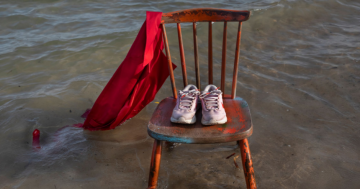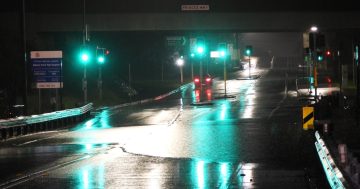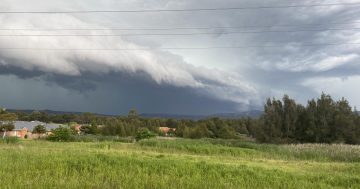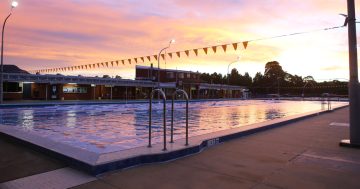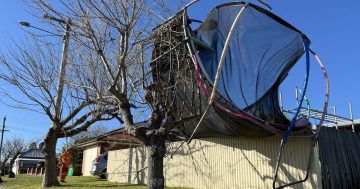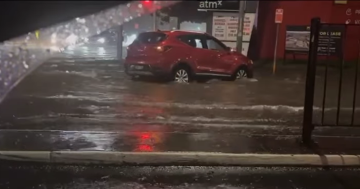

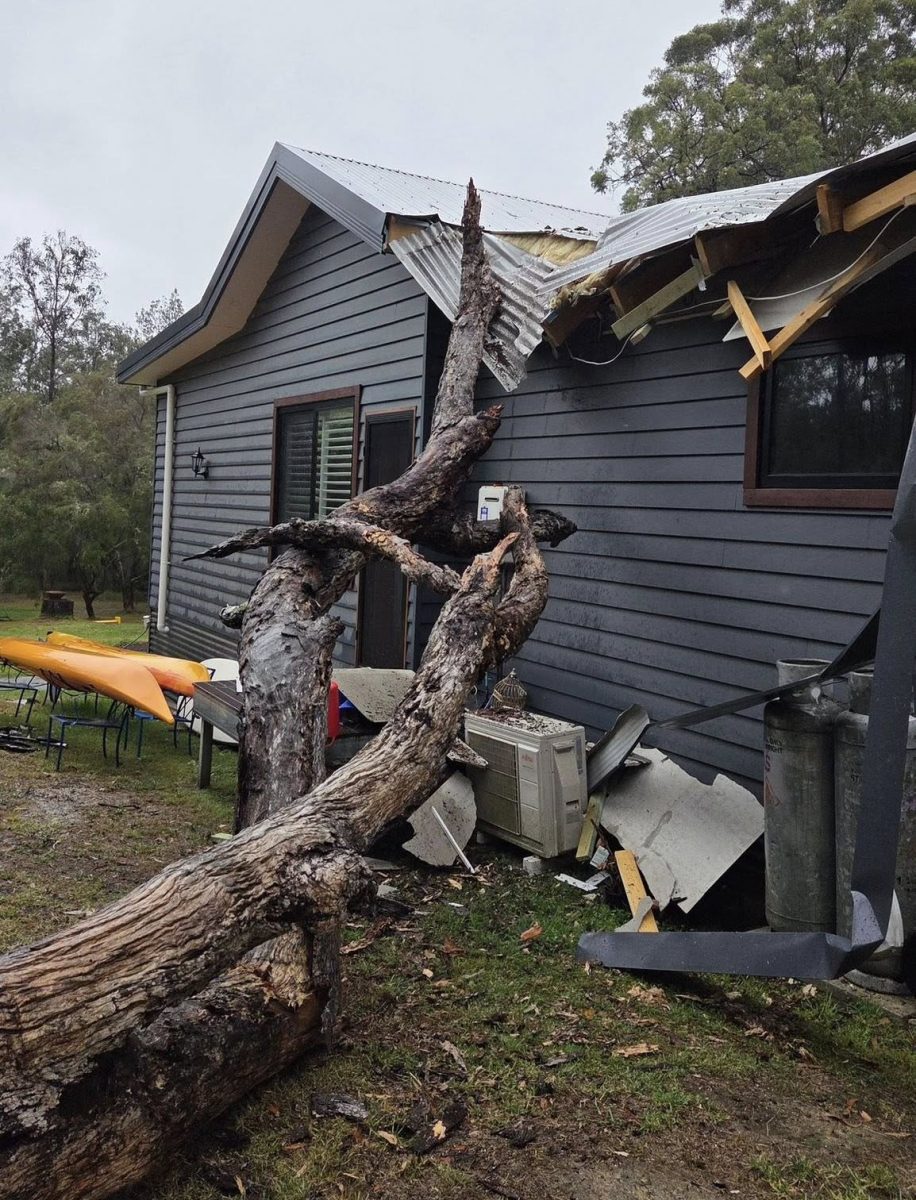
Dozens of calls to the NSW SES were made over the past few days, most being for property-related incidents, such as trees falling. Photo: NSW SES Bega Unit.
Southeast NSW communities are starting to clean up after heavy rain and winds lashed the region over the weekend.
A low-pressure trough arrived in southeast NSW and the ACT late last week, along with warnings of heavy rainfall, damaging wind and hail.
Bureau of Meteorology senior meteorologist Angus Hines said it brought drenching rain to parts of the Far South Coast, with some areas recording 200 millimetres of rain since Friday (16 January).
“The majority of that was coming through on Friday and Saturday … It looks like most of the heaviest falls were north of Moruya, towards the southern parts of the Illawarra.”
In the state’s south, areas with the highest rainfall totals since Thursday (15 January) included Mongarlowe (260 millimetres), Moruya (220 millimetres) and Porter’s Creek Dam (233 millimetres).
A NSW SES spokesperson said it meant crews were kept busy, with dozens of rescues across the South Coast and Illawarra regions.
Across Eurobodalla Shire, 45 call-outs were reported, in addition to 24 in Eden and eight in Merimbula.
“Those jobs were predominantly for leaking roofs, fallen trees or water coming into properties (from blocked drains and gutters),” they said.
“Most of those jobs are now all finished.”
A horse float and vehicle were caught in flash flooding at Albion Park at about 6 am on Saturday (17 January), while a woman had to be rescued from her car near Mount Ousley north of Wollongong.
On Friday afternoon, campers and caravanners across the Illawarra and South Coast were urged to move to higher ground to escape the storms.
On Saturday (17 January), a woman died after being struck by a falling tree branch on Macquarie Pass near Wollongong.
Heavy rainfall also forced a pause in firefighting efforts for the Brassknocker Firetrail blaze in the Wadbilliga National Park.
It was first reported to authorities earlier this month and is believed to have been ignited by dry lightning.
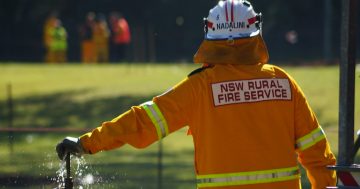
As part of their containment efforts, NSW RFS firefighters launched a backburning operation hoping to remove some fuel.
They were able to push through to Wednesday afternoon (14 January), when firefighters pulled back ahead of the rain’s arrival.
NSW RFS Acting District Manager for the Far South Coast Chris Anderson said this operation remained on hold until they could gather more information about the fireground’s condition.
“We’ve had 100 to 200 millimetres of rain across the fire ground,” he said.
“We’ve got that from our weather stations actually sitting in the fire ground itself, so we’re very confident in that rainfall.”
Firefighters tried to access the fireground today but were hampered by wet roads.
“It’s very wet out there and too dangerous for our agency personnel to access it,” he told Region.
They will continue to monitor the blaze over the coming days, using an infrared camera attached to a helicopter this week to identify hotspots still burning in the national park.
According to the NSW RFS Fires Near Me database, the fire remains at ‘Advice’ level and has burnt through more than 3560 hectares.
Mr Anderson said the fire is now classified as ‘Under control’, rather than ‘Contained’, which is a “big step forward”.
Mr Hines said a cold front could move over the NSW southeast, with possible (but more limited) rainfall.
“Already, parts of the south are seeing a little bit of sunshine.
“It’s still cloudy and wet between Newcastle [in the NSW Hunter region] and Moruya – but it’s just little showers, compared to the heavier spells of longer rain they’ve had recently.”
If you need assistance from the NSW SES, call 132 500. In life-threatening emergencies, call triple zero (000).
Original Article published by Claire Sams on About Regional.