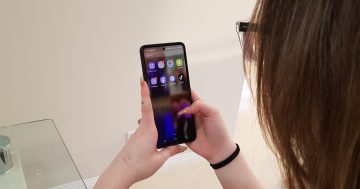

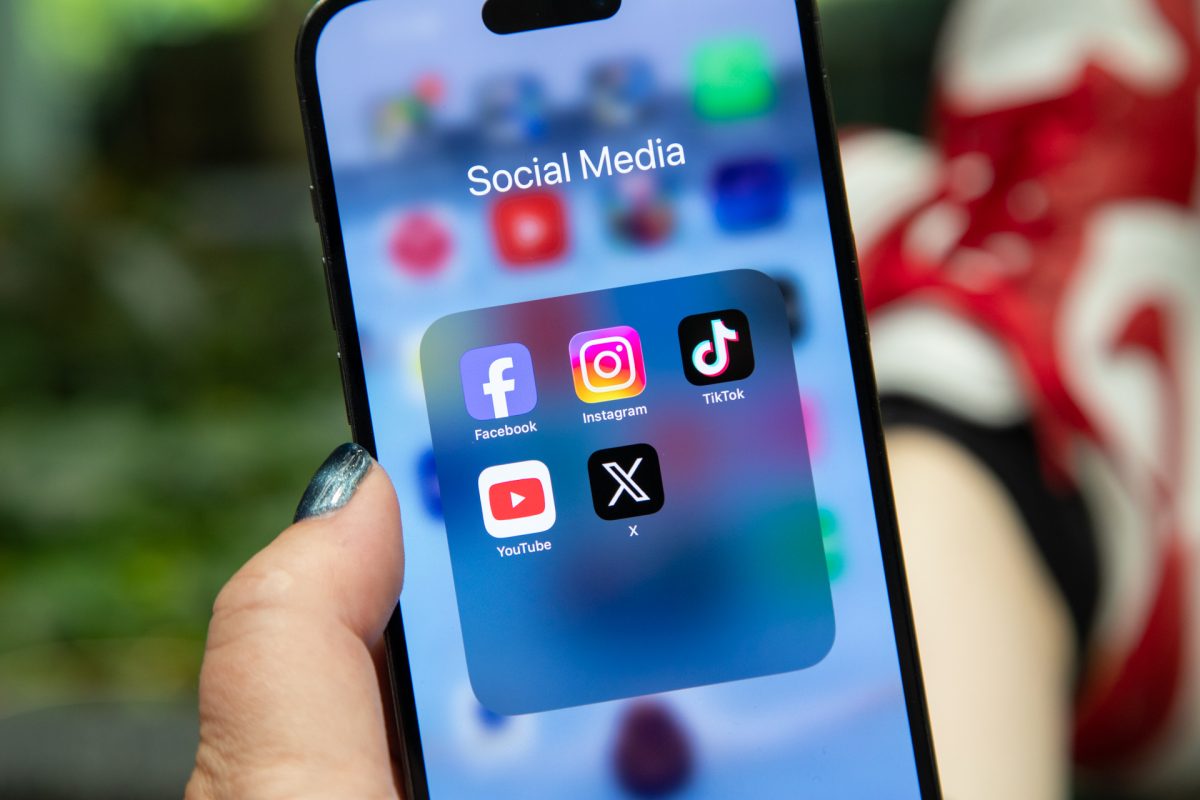
Young people are receiving contradictory, unqualified and emotional nutrition and health content on social media. Photo: Michelle Kroll.
Young Australians are increasingly relying on social media for diet and health advice which is frequently wrong and posted by unqualified content creators, a new study has found.
It also warned that in order to tackle the misinformation, dietitians and nutrition experts needed to improve their communication and messaging to grab the attention of young people to share credible information online.
The research, led by University of Wollongong nutrition and dietetics researchers and dietitians Denelle Cosier, Associate Professor Kelly Lambert and honours student Sophie Evans, said recent evidence suggested that the nutrition and health content promoted on social media was frequently inaccurate and not provided by health professionals.
“The influencers presented themselves as knowledgeable and authoritative, with content positioned as educational, insider, or revelatory, often including conflicting, contradictory, or pseudo-scientific claims,” the study found.
“An exploratory study found that 44.8 per cent of nutrition information posted by popular Instagram accounts contained inaccuracies, with brand accounts and fitness influencers having a higher likelihood of publishing misleading content.”
Denelle said social media, particularly Instagram and TikTok, was a key source of health information for young adults.
“Yet the credible information on these platforms is overshadowed by persuasive but unverified messages from content creators who do not have the qualifications to support it,” the PhD candidate said.
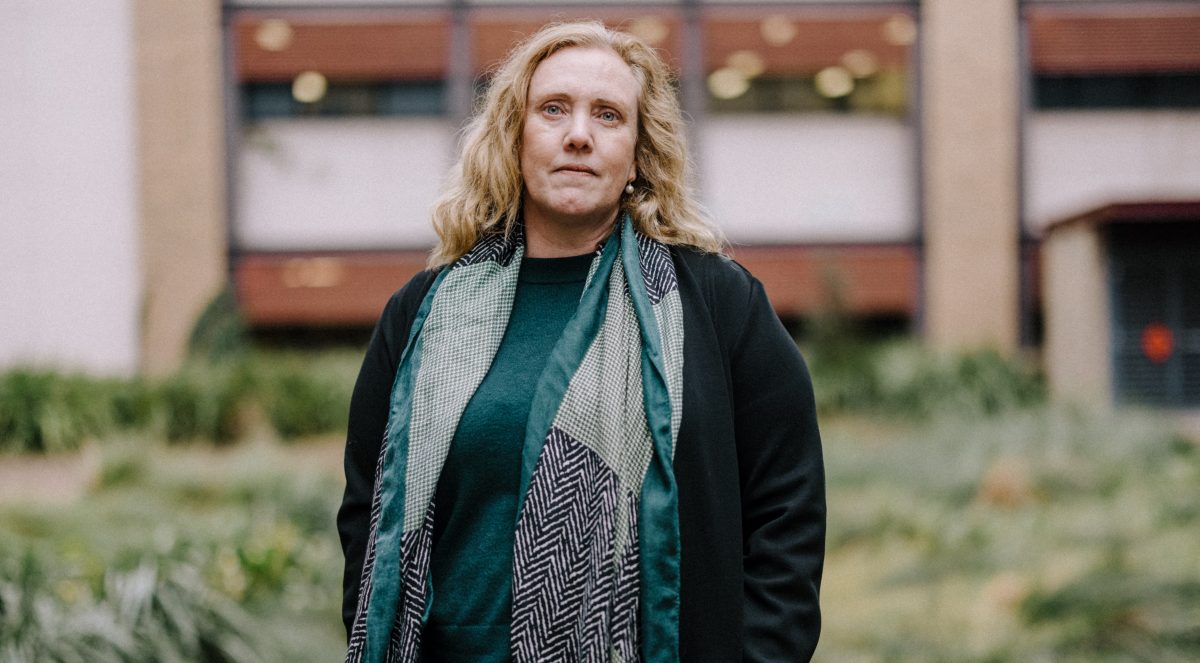
Associate Professor Kelly Lambert said health experts needed to change their approach to suit online audiences. Photo: UOW/Michael Gray.
The study surveyed about 60 people aged 18 to 30, and revealed that social media plays a moderate but meaningful role in shaping eating behaviours, influencing food choices, and changing how young people think about what it means to be healthy.
Survey participants shared their favourite health and fitness accounts with the researchers, who looked at more than 1400 Instagram posts from 71 popular content creators.
“Many of the posts were emotional, polished, and often contradictory, leaving users to sort through mixed messages and opinions to create their own understanding of what it means to be healthy,” the study found.
The researchers examined the language used in posts to understand how food and health messages are communicated and analysed posts to assess how well the information aligned with current nutrition science.
They recommended that qualified professionals needed to develop effective communication strategies to ensure trustworthy nutrition advice is visible and compelling on social media.
Associate Professor Lambert said dietitians and nutritionists were able to provide evidence-based advice that genuinely helped people.
“However, they need to adapt their approach to suit online audiences, using everyday, informal language that connects with viewers,” she said.
“Tailoring their language, content and communication styles to the social media world will help them reach more people.”
The researchers encourage social media users to exercise caution when receiving health advice from influencers, and to follow people with evidence-based qualifications including dietitians, university-trained nutritionists and medical doctors.