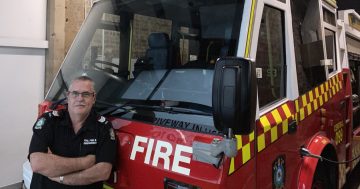

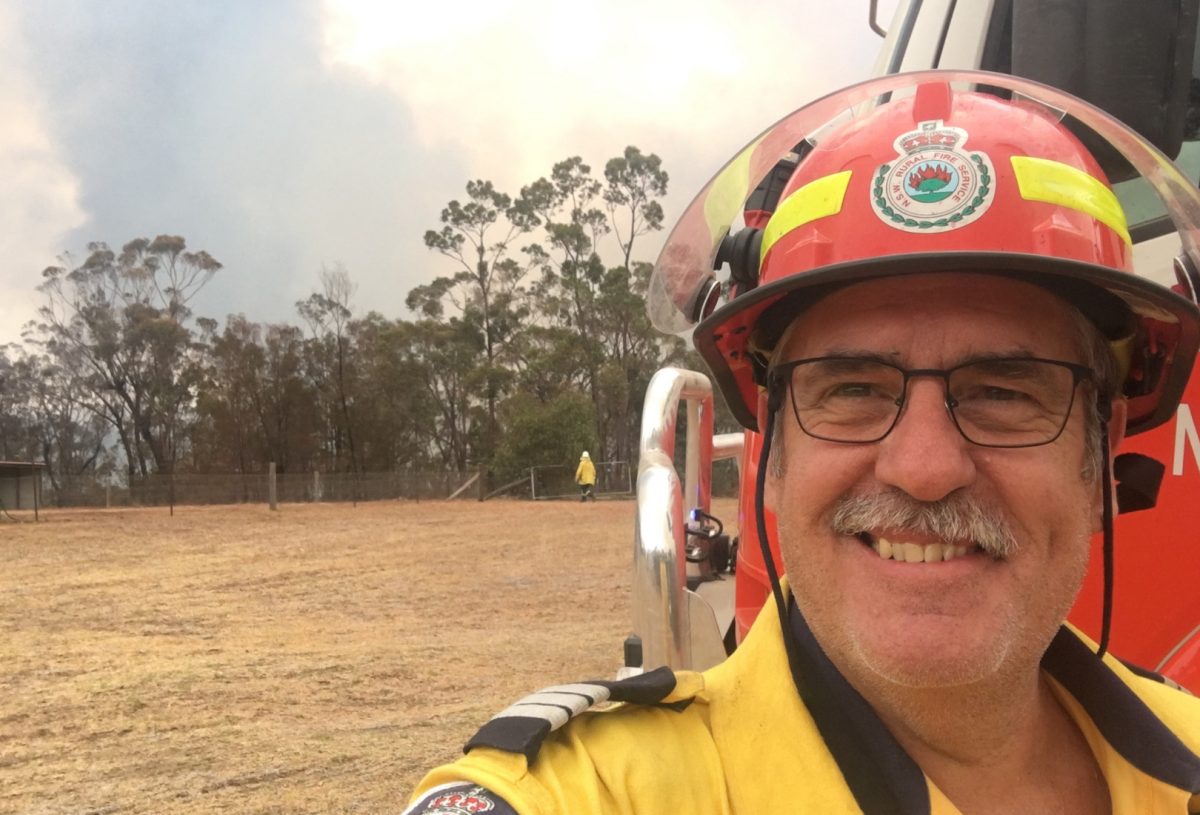
Gary Laker in his role as captain of Stanwell Park RFS at Balmoral in the Southern Highlands in 2020. Photo: Supplied.
For half a century, when smoke has risen over Stanwell Park and the 2508 district, Gary Laker has been among the first to answer the call — a volunteer who started at 14 and never stopped showing up.
Officially beginning with the Stanwell Park Rural Fire Brigade on 1 January, 1976, now 50 years on, the long-serving brigade captain was awarded the Australian Fire Service Medal in the 2026 Australia Day Honours, recognising a lifetime spent protecting his community.
“I grew up in the street where the fire station used to be,” Gary said.
“In Stanwell Park in those days, in the 70s, you either went to the surf club or the bushfire brigade.
“I wasn’t particularly interested in the surf club or the nippers, so I started going to the bushfire brigade and that’s pretty much where it all started.
“It was something I really enjoyed doing and am still quite passionate about.”
During those early years, he admits the juniors weren’t allowed near a fire.
“You could do most things, but they pretty much used you as truck washers and brass polishers,” he said, laughing.
“I think that was like your apprenticeship of the day. If you kept up and stayed keen with that, they’d entertain you later on.”
He said the prerequisite was simply to finish a year of high school, with no real regulations existing at that time.
Gary’s dedication saw him become brigade captain by age 20, a role he’s held on and off for more than 20 years.
Even after moving to Helensburgh, Gary remained loyal to Stanwell Park, a testament to his deep ties and commitment.
“I retired two and a half years ago from Sydney Trains and the last 17 years of that was with the rail fire and emergency unit, so for 17 years I was a member of two separate fire services,” he said.
As a NSW Rail Fire and Emergency firefighter, he leveraged his experience to connect Sydney Trains staff and NSW RFS personnel to improve knowledge and awareness around the area’s rail corridors.
“The rail industry history is probably a genetic defect, because I’m third generation,” he said.
“My dad used to repair steam trains and my grandfather before that was on the original Sydney trams.”
Across 50 years of service, Gary has tackled some of the region’s most devastating emergencies, including his first really big fire season, the 1994 Sydney fires.
However, some events have hit close to home, such as the 2001 Black Christmas bushfires that saw about 12 to 15 buildings lost in Helensburgh.
“The town was evacuated for a week,” he said.
“Friends of ours lost their house in Helensburgh so that made it a bit more personal.”
Another that affected him deeply was the 2003 Waterfall train disaster. The train derailed, killing seven people including the driver. Another 40 were injured.
“We were one of the first brigades to get to the actual train,” he said.
“Ironically, during my time with Sydney Trains, I was a train driver for 22 years and the actual train that was involved in that I’d only driven a couple of weeks before.
“The train driver from the Waterfall incident, he and I used to work together in the 80s – he was one of the guys that taught me to drive.”
Gary said long, difficult shifts were part of the job, describing 20-plus hour days as sometimes unavoidable, especially during major blazes.
He said one of the more recent long shifts was for fires in Bermagui in 2023.
“By the time we got home, we’d been away for 21 hours,” he said.
His impact reaches beyond leading firefighting efforts.
Gary has mentored and trained countless volunteers at an individual brigade level and 2508 brigade group level, including Darkes Forest, Otford, Helensburgh and Stanwell Park.
He said he was passionate about ushering in the next generation of firefighters, acknowledging the need for strong recruitment and retention as “the average age of RFS volunteers is getting older”.
Now retired from Sydney Trains and having entered “grey nomad” life, he said he remained passionate about serving Stanwell Park.
He jokes that there should be “a medal for spouses” in recognition of the sacrifices his wife has made through 40 years of firefighting, often managing the family alone while Gary was on call.
“Sometimes she wouldn’t hear from me for a day or more, especially if we were going away,” he said.
As he enters his travelling phase of life, Gary isn’t quite ready to “hang up the boots” just yet but looks forward to handing over the captaincy in due course.