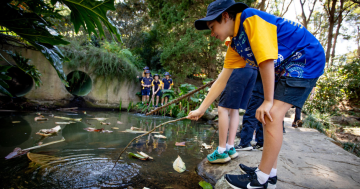
Albion Park High School’s yarning circle was created with the help of the Youth Community Greening project. Photo: Albion Park High School.
Sydney’s four botanic gardens may be miles from the Illawarra but their reach has extended into the grounds of many local schools as well as the hearts of students.
Youth Community Greening (YCG) is a hands-on environmental education program established by Botanic Gardens of Sydney in 2008.
It works with children and young people across the state in preschools, primary and high schools, migrant youth groups, young people with disability, youth justice centres and communities facing disadvantage.
Albion Park High School principal Neal Reed is a passionate advocate of the program, which helped students establish a yarning circle a few years ago.
“The partnership through the botanic gardens – for our school and for me as a person – was so much about kids connecting to nature, connecting to each other and connecting to culture,” Neal said.
YCG educators work with schools and other participants to design and build gardens, create food forests, biodiversity habitats and tiny forests. They provide equipment and knowledge while giving young people an opportunity to get their hands in the earth and feel the mental, physical and emotional benefits.
Neal said the YCG team listened to what the students wanted – “giving them a sense of voice was fantastic” – and then worked together to help co-design the space.
“There are some students for whom school is not necessarily their most favourite place, but what the project did was connect them to the school, that sense of purpose and something bigger than just who they are,” Neal said.
“It’s a bit of a legacy piece for them as well. There are just so many different layers to the whole project itself. It has continued to maintain relevance for the kids, so it’s been fantastic.”
Neal said about 10 per cent of students identified as Aboriginal but when he took up the role in 2021 he felt the school needed a stronger sense of culture. It was also post-COVID in a “world that desperately needed connection”.
“I think that’s probably where the fundamental piece of success has come from – the students just connected with each other,” he said.
“They connected with the team from the botanic gardens and those students who might have been teetering on the edge of where to next for them are now all either engaged or have moved on to post-school life with a really clear sense of purpose and a plan, whether it’s through TAFE or employment or whatever.
“It just ignited some fantastic outcomes for those kids.”

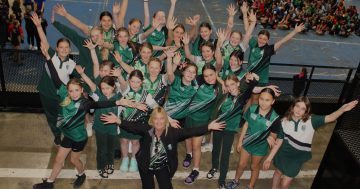
The yarning circle has provided a sense of connection and wellbeing. Photo: Albion Park High School.
Neal said the decision to create a yarning circle was “entirely consultative” among students, staff and Aboriginal educational staff.
“It’s supported student wellbeing, it’s supported the staff wellbeing and it’s actually located right next to our wellbeing hub, so it’s quite visible, but it’s also a place which is used authentically.”
Narelle Happ is an Illawarra garden designer and horticulturist and has been a YCG officer for the past 12 months.
During that time she’s worked with a number of schools on different gardening projects, including creating Illawarra grassy woodlands, which are disappearing from the region due to residential development and land clearing, along with the plant species and fauna that find homes in the woodlands.
“It gives the students a real connection to where they live and also the importance of ecology and caring for Country,” Narelle said.
“They’re going to leave school one day, but they’re leaving a lasting legacy for other students who come along.”
Narelle said many schools were keen to create cultural gardens, incorporating native bush food, that became learning spaces.
“We’ve got signage that we can put in with QR codes so the kids can learn a lot of information, but it becomes educational for them,” she said.
“It also has a knock-on effect in that it stays and becomes educational for children coming through, who then can develop it further.
“They’re really important spaces because some kids don’t identify with the classroom as well as others, so being in that natural outdoor space is really important to connect to their peers and to learn in a different environment.”
Neal said the yarning circle was the centrepiece of the school’s recent Reconciliation Week and Sorry Day ceremony, when students planted a plant with an elder or their parents.
“That metaphor of growth and planting and renewal is one that the kids genuinely took on and understood. It was just a lovely living metaphor,” he said.
For more information about Youth Community Greening and how to get involved, click here.