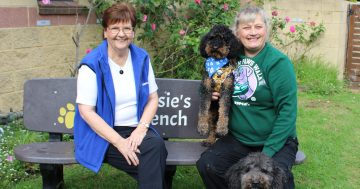
Animals could be impacted by the social circumstances of their owners, with RSPCA NSW exploring ways to improve outcomes. Photos: Keeli Dyson.
RSPCA NSW hopes a shift from “reactivity to prevention” will help to improve animal welfare in the region, with a new report revealing how the circumstances of pet owners could be impacting their animal companions.
The vulnerabilities of Wollongong’s community members could be putting animals at higher risk of neglect and cruelty according to RSPCA NSW’s first ever Welfare Report.
“There’s a growing body of evidence of the link between human and animal welfare, and it makes sense because companion animals share the same environments as their human caregivers and so the challenges that impact humans are going to impact their animals as well,” RSPCA NSW Veterinary Policy and Projects Officer Sarah Simpson said.
“We wanted to see could we identify LGAs that are experiencing specific pressures such as higher levels of economic disadvantage, higher levels of geographic isolation or domestic and family violence and then we wanted to see if the available animal welfare data had any correlation to those specific areas.
“If we could identify those areas we wanted to see if there was a way that we could deliver more targeted supports.”
The Wollongong LGA was identified as a potential area of concern for physical and mental health vulnerabilities due to 10 per cent of the community having a mental health condition including depression or anxiety, 24 per cent living in a lone person household and more than 14,400 people needing assistance with core activities.
These factors are believed to link to potential animal hoarding behaviours or the inability to care properly for a pet.
“People that are suffering from mental health challenges, much like physical health challenges, might not be able to provide the required care for the animal,” Sarah said.
“For example, people with certain mental health conditions will be less likely to go outside and walk their animals.”
The Wollongong LGA recorded the state’s third highest number of cruelty investigations in the 2025 financial year, with more than 700 inspectorate investigations and nearly 250 inspectorate intakes.
But many cases could have been influenced by the social determinants and cultural factors being explored.
“We had a high level of investigations for failure to provide appropriate vet services, but we know that the biggest reason that would occur is economic stressors at home,” Sarah said.
“Cruelty against animals, actual physical cruelty, we know that people living in domestic family violence households, perpetrators can use violence towards the animal as a way of coercive control.
“Particular communities will be less likely to report specific things and there might be a greater awareness in the Illawarra for specific things and that could also lead to a higher level of cruelty investigations but it might not mean there are actually higher levels of cruelty than other regions.”
The strong connection between the circumstances of owners and their pets is set to underpin RSPCA NSW’s approach moving forward.
“The greatest thing that we need to do, and what we got from this report, is that we need to connect with human services better,” Sarah said.
“When human services are providing services to people with mental health challenges, we need to be able to connect with them and be able to provide support to their animals as well.
“For example, we could go and walk their animal for them – but we need to know about it and that’s where that interconnectedness is really required.”
Community-based prevention is one of the organisation’s five priority initiatives alongside access to veterinary care, animal welfare safety net, targeted desexing and advocacy and engagement.
“We’re shifting away from reactivity to prevention, and we believe that’s where we can have the greatest impact,” Sarah said.
She hopes future reports demonstrate improvement as actions are implemented, but acknowledged gaps in the data – such as events happening behind closed doors and attitudes towards animals.
“Basically we would like to see that humans and animals are living together with dignity, respect and compassion, and that would translate to a reduction in the negative animal welfare impacts that we see in the data,” Sarah said.
“We want to see better data collection, and the collection around data around positive things with people interacting with their animals as well.
“And we want to see if our initiatives that we target to specific areas which we’ve identified within this report are actually having a meaningful impact and tailor our responses appropriately as better data becomes available.”
The full Welfare Report is available on the RSPCA NSW website.