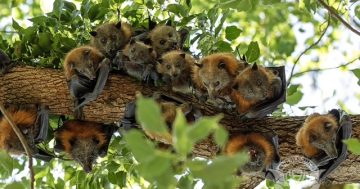
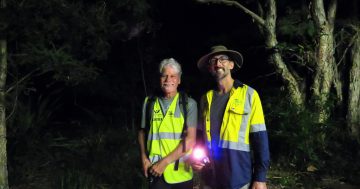
Flying foxes have been out in force around the Illawarra but they could soon be moving on. Photo: Alex Pike/DCCEEW.
Masses of flying foxes have flocked to areas around the Illawarra in recent months after a large food supply attracted greater than usual numbers of the bats.
Residents have reported seeing unusually large numbers of nomadic grey-headed flying foxes in the region after the full bloom of local eucalyptus trees increased the activity of the creatures in both expected and new areas.
“At council we’re hearing more from our community about flying fox activity across suburbs like Figtree and Dapto where there are established populations living in what’s known as camps,” Wollongong Lord Mayor Tania Brown said.
“These are nomadic creatures and they are known to move about throughout the year as they look for food. We’ve also heard from residents who have seen more flying foxes roosting in suburbs like Mangerton where there have not traditionally been camps.”
The creatures have a tendency to be both spectacular and disruptive, with dusk and dawn prime times for foraging and movement which can create noise and mess for nearby houses.
But the short-term disturbance also performs an important function for the local environment.
“Flying foxes are important pollinators and their eating and flying habits help to disperse seeds for many native plants, including rainforest species,’’ Cr Brown said.
“They’re listed as a threatened species because of their declining population so while they might be disruptive, it’s vital for our local environment that these fantastic creatures go about their daily routines without interruption.”
Now with the weather cooling down and the eucalyptus flowering less, many will move on.
“While we don’t know how flying foxes communicate about where to congregate, and how they know that there is plenty of food available in one place, we do know that the number of flying foxes in an area is almost always directly related to how much food is available – lots of food equals lots of flying foxes, is pretty much the rule of thumb,” DCCEEW Ecosystems and Threatened Species Illawarra senior team leader Lorraine Oliver said.
In the meantime she suggested that those nearby take steps – for instance, removing washing off the line before dusk and washing off flying fox droppings with a hose as soon as possible – to minimise the impact.
The community is also reminded to never touch a flying fox, dead or alive, as infected bats can spread diseases through scratches and bites.
Anyone who is concerned about having had exposure to a flying fox is urged to seek medical assistance immediately, with concerns or questions about health risks able to be directed to the public health unit on 1300 066 055.
If you see an injured flying fox, contact WIRES Rescue Line on 1300 094 737 or submit a rescue form or if you see a dead flying fox on accessible public land, call council on 4227 7111 so that it can be removed by trained staff.