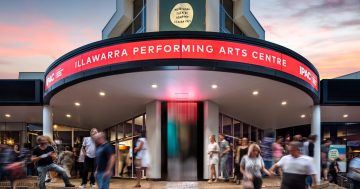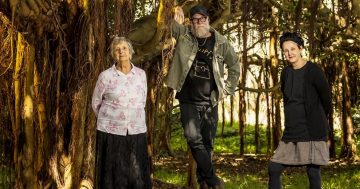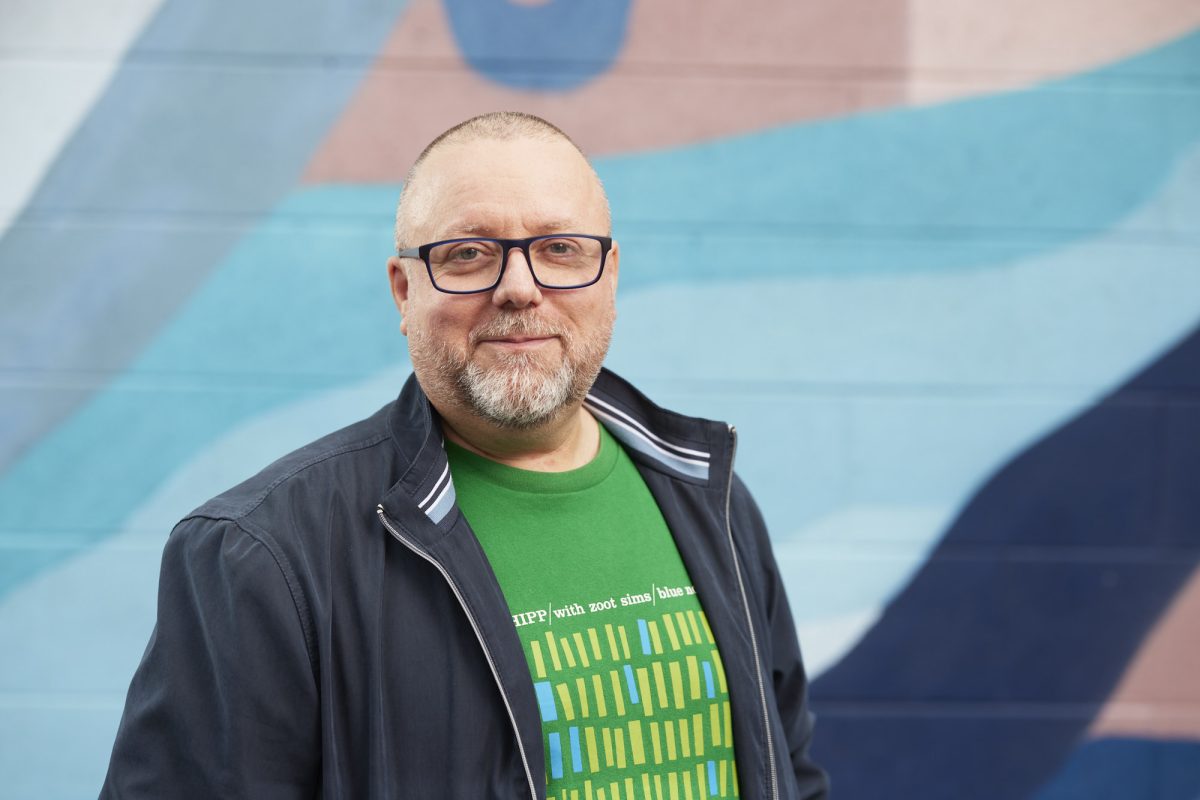
Merrigong artistic director and CEO Simon Hinton wants Wollongong to embrace its ‘second city’ status and the role it plays in the performing arts sector. Photo: Jeremy Park.
Merrigong Theatre Company has partnered with three other performing arts organisations to make bigger productions more sustainable outside of major cities and provide greater opportunities for audiences in ‘second cities’ like the Illawarra.
A landmark partnership between Wollongong’s Merrigong Theatre Company, Canberra Theatre Centre, Geelong Arts Centre and the Gold Coast’s Home of the Arts (HOTA) has received funding for the first two years of a proposed four-year pilot which provides a new model and opportunity for larger scale shows to thrive outside of major cities.
“We’re not a little regional town miles away from the big city where people are just happy to see smaller shows; they want to see works of scale, they want to see big, exciting things that are on in Sydney, Melbourne and Brisbane and the pipeline to make that happen has been quite difficult in the performing arts particularly in the past five to 10 years as costs have got greater and it requires a lot more coordination,” Merrigong artistic director and CEO Simon Hinton said.
“What we have been working towards is, rather than being a passive receiver of what gets produced for capital city seasons, we want to be much more proactive in actually generating those projects as a group because we have large and growing audiences, we know what they want to see and we need to ensure the kind of supply of those bigger, exciting shows.”
The Second Cities Producing Consortium formalises collaborative efforts that have been happening for years, to make putting on works more viable and balance the desire for bigger productions with the economical and logistic challenges.
The partnership is also about ensuring more shows of this scale can be produced with a clear pathway to optimise the success of productions and variety of regional offerings.
“In the last few years at Merrigong we’ve moved more and more towards … yes we have a range of different things and different scales of work that we present to our audience, but there has been an increasing focus on the blockbuster season which in our context is currently a two-week season and they’re big expensive shows and they need to show a lot of tickets to recover those costs,” Simon said.
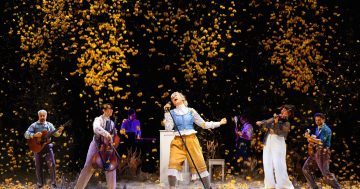
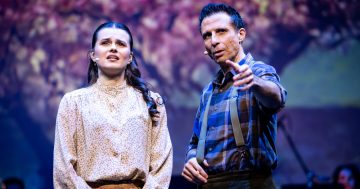
“From an audience point of view if you looked at our seasons of things like My Brilliant Career, The Dictionary of Lost Words and Trent Dalton’s Love Stories and those sort of larger scale shows, we want to do more of that work, but in order to do that, those shows need to be produced, and there’s huge risk and difficulty in doing that, so we want to partner with those producers in part to make it more viable and sustainable but also to be able to think about the audience right from the beginning of the process.”
But the announcement is about more than just boosting the opportunities for these regional areas, with the new models proposed aimed at supporting the struggling sector which has recently seen major productions end their runs early.
“There’s a recognition that we’ve got to develop markets for the performing arts. It’s not enough to say, ‘The costs have gone up and we can’t sell enough tickets’ – it’s about what are the answers and what are the models that can change that?” Simon said.
“And one of them is recognising that our population is distributed widely across this country and that a sustainable sector is going to need to take work outside two or three big cities in order to make them viable projects.
“It doesn’t mean we’re going to bring shows of the scale of The Lion King, because that can’t actually physically or financially work in particular because of our venue size, but there’s a signal in what’s going on with those big shows that it is becoming less and less viable for people to produce works that would be able to cover their costs only by playing in Sydney, Melbourne, Brisbane for example.
“So actually the development of a strong second tier market, for the large-scale but not full Broadway scale show is really crucial to the sector, not only for us and our audiences but more broadly.”
The first shows are expected to open in 2028 following co-investment and commitment to creative development, adapting existing works and new projects.
While the number of feasible productions developed is a key indicator of the pilot’s success, the main factor will be how the community responds through ticket sales.
“The absolute key measure is actually audience growth,” Simon said.
“And in Wollongong what that means is currently those blockbuster shows play to generally between 4500 and 6000 people when they come – and that makes sense for us on a certain scale of show on a two-week season – but by the end of the pilot we want that to be three-week seasons looking more at 7000 to 9000.
“Firstly because the economics of that works better but also we think that that’s a real measure that the work is the type of work that is exciting for audiences.”
Second Cities Producing Consortium pilot initiatives will be announced in the coming year.