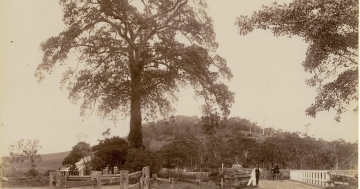
A postcard of Broughton Creek, postmarked 1907. Broughton was an Aboriginal man who assisted Alexander Berry. Photo: Supplied.
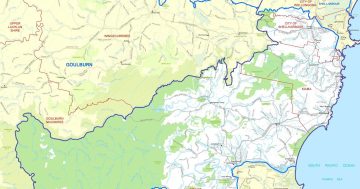
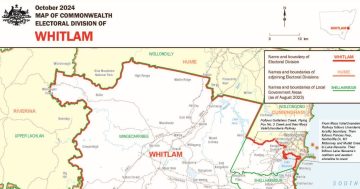
In June 1822 Alexander Berry left Sydney without his business partner Edward Wollstonecraft but in company with 10 of his assigned convicts to take up their massive 10,000 acre (4046 ha) land grant on the Shoalhaven River at Coolangatta (Cullunghutti) Mountain.
It would soon be worked with lots more convicts and also a surprising number of Aboriginal people – the latter increasingly becoming a sort of reserve workforce.
But in 1824 some of the Aboriginal workers allegedly stole some corn, potatoes and other items.
Berry’s overseer David Souter formed a search party, which located the items at a campsite. Souter later told Berry that at least one Indigenous person was killed during the dispute that ensued.
A man named Dr Charles Throsby, however, had adopted a more humane approach to Indigenous people although also, like Berry, he was actively engaged in dispossession of Aboriginal land.
But Throsby was certainly much more sympathetic than Governor Macquarie who in 1816 declared Martial Law and launched the dreadful Appin massacre.
Throsby, who was then living at Glenfield (some 24 kilometres from Campbelltown), provided a report of the horrific treatment of Aboriginal people. For example, on 5 April 1816, he wrote to Acting Provost Marshall Wentworth about his fears for three Indigenous men named Bitugally, Duel and Yettoomong. He also wrote about the appalling fate of Yettoomong’s wife and children.
Throsby concluded that he did not wonder at the ”savages then seeking revenge in retaliation” and urged Governor Macquarie not to pursue any punitive expeditions against Indigenous people.
Nonetheless, Dr Throsby also assisted Alexander Berry and wrote a letter telling him that the property on which he wished to settle was known as Boon-ga-ree by its original owners. Presumably hoping that Berry would be kind to the local Indigenous people, Throsby’s letter was delivered to Berry at Shoalhaven by an Indigenous man Throsby had given the English name Broughton.

A portrait of Broughton in 1819 by Jacques Etienne Victor Arago, which was published as “Broten” in 1825 as a line engraving by Jean Coutant. Image: Mitchell Library/State Library of NSW.
This man had already acted as a guide and translator on several of Throsby’s explorations of the southern tablelands.
Broughton’s original name may have been something like Toodood, Toodwik or Toodwit or even Broten when not being addressed by the whites as Billy Broughton.
Broughton (c1798-c1850) seems to have been born at the Shoalhaven and later ended up mostly staying there with Berry.
An Indigenous man named Broger (c1800-1830) who lived in the Kangaroo Valley area also frequented Coolangatta. He too could speak some English but, whatever his precise connection to Broughton, Broger (variously spelt) seems to have been less enthusiastic about assisting Berry than Broughton.
Nonetheless, in 1824 when Edward Wollstonecraft first saw Coolangatta he also visited the Kangaroo Ground with Broger as his guide.
Berry’s initial aim was to try to solve the problem of his and his partner’s rather substantial debts by selling lots of Shoalhaven cedar.
In total, Berry, using convict and Indigenous labour, may have extracted as much as three million super feet of cedar – super feet being an old measure of timber one foot long, one foot wide and one inch thick.

Alexander Berry in about 1856. Photo: Wikipedia.
Although eventually incredibly profitable, Berry’s settlement of the Shoalhaven had begun with tragedy when Thomas Davison (whom Berry had rescued as a boy after the massacre of The Boyd in New Zealand) crossing the Shoalhaven bar fell overboard and drowned.
Things also went bad in 1829. Broger, in company with an Indigenous man given the name Murphy, took two sawyers, named Rivett and Hicks, into the bush to locate cedar.
One of Berry’s overseers, David Souter, soon reported an alleged murder of a sawyer by Broger. And by 26 June 1829 “a reward of ten pounds and a ticket of leave” was offered “for the apprehension of Broger and George Murphy, two black natives, suspected of being concerned in the murder of John Rivetts”.
Berry requested that Broughton track down Broger, but Broughton very sensibly avoided finding him.
Broger, however, was eventually captured and hanged at Campbelltown in August 1830. Unable to swear on the Bible, the court did not even give Broger permission to speak in his own defence.
Broger’s and Brougton’s names, however, live on in both Brogers Creek and Broughton Creek and lots of postcards of the loveliness of the latter survive.
Unfortunately Jacques Arago never sketched an image of Broger and no early postcard images of Broger’s creek survive. And the whereabouts of a breastplate given by Berry to Broughton as “Native Constable of Shoalhaven” is today unknown.