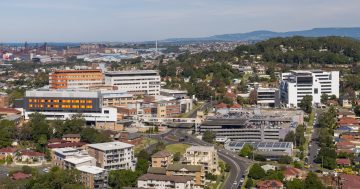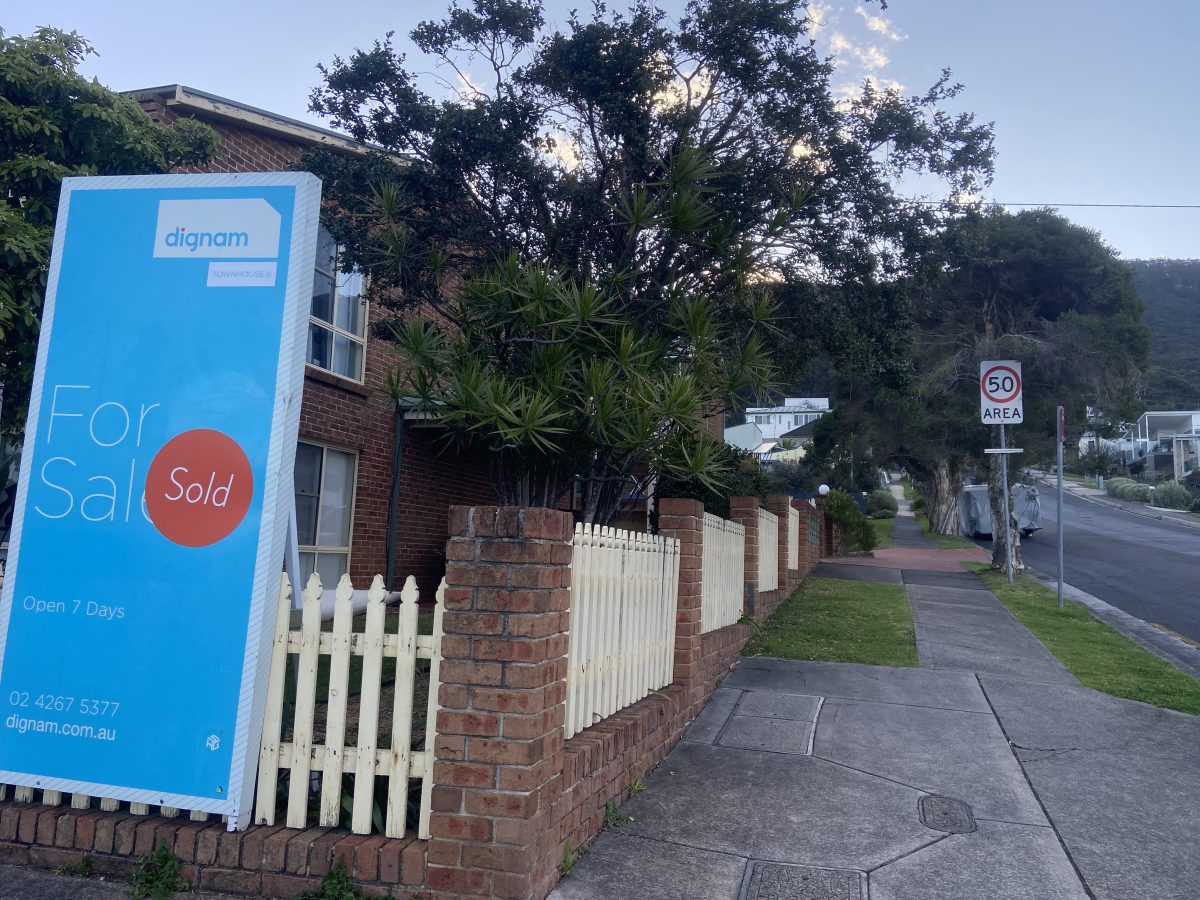
Coledale led the Illawarra’s house market downturn over the past quarter, dropping 8.3 per cent. Photo: Region.
Headwinds may be mounting against the Illawarra’s property market, marked by subdued consumer confidence, elevated interest rates and expanding days on market, but a closer look at the data presents a more reassuring picture for homeowners and buyers alike.
Cotality’s latest Home Value Index shows national property values slipped 1.1 per cent in September, marking a sixth consecutive month of decline. In a shift from recent trends, the Illawarra region slightly underperformed its nearest capital, with dwelling values falling 1.5 per cent compared to Sydney’s 1.4 per cent drop.
But it’s a matter of context and perspective, according to Cotality Asia-Pacific Executive Research Director Tim Lawless.
“The median value across the Illawarra for houses and units combined has been holding above the $1 million mark since April of 2025. It’s still above the $1 million mark,” he said.
“Over the past five years, values are up about 10 per cent. So for most people in the market, even though values are falling, they’ve accumulated a pretty decent buffer in equity given how strong the market’s been up until April.
“For buyers, this is great news. It means that prices are finally coming down, which means affordability is improving.”
This is not yet reflected in buyer activity. Low confidence and high serviceability barriers remain a real challenge to getting into the market, but Mr Lawless said it wouldn’t last forever.
Already, conditions are setting buyers up to step into the driver’s seat. Total listings across the Illawarra are up nearly 6 per cent year-on-year and sit about 11 per cent above the 10-year average, offering prospective buyers broader choice and increased leverage at the negotiating table.
At the same time, vendor concessions are broadening. Average discounting rates — the gap between initial asking price and final contract price — have widened from a tight 2.8 per cent at the market peak in March to 4.4 per cent today.
“Based on those vendor discounting numbers, there’s clearly a lot more negotiating happening in the market, which is a real positive story for buyers,” Mr Lawless said.
“Homes are taking about 42 days to sell in the Illawarra. In March, it was 23 days. We’ve seen nearly a doubling in the number of days it takes to sell a home, and that’ll continue to rise given inventory levels have become higher.
In the house segment, Coledale spearheaded the region’s quarterly decline with an 8.3 per cent drop, followed by Kiama (-7 per cent) and Keiraville (-6.7 per cent). Huntley stood out as the lone bright spot, posting a slight 0.2 per cent increase.
Units held up better across the board. Oak Flats led a handful of gaining submarkets with a 2 per cent rise, followed by Avondale (1.4 per cent) and Tullimbar (1.1 per cent). At the other end of the spectrum, Thirroul units fell 4.6 per cent, with Helensburgh (-3.7 per cent) and Figtree (-3.2 per cent) also tracking lower.
Looking ahead, dwelling values are projected to continue their trend downward into 2027. However, chronic undersupply and a resilient labour market are expected to provide a crucial floor for prices.
While Mr Lawless speculated on a potential national peak-to-trough decline of up to 15 per cent, he said sustained demographic tailwinds and a price advantage over Sydney may shield the Illawarra from a steeper downturn.
“It simply comes back to supply levels … We’re still seeing a post-pandemic structural difference in how many people are moving to the Illawarra region through internal migration, which tends to support demand. Obviously, we’re not building enough homes anywhere in the country, and that includes the Illawarra,” he said.
“Though the affordability gap has narrowed between Sydney and the Illawarra over the past five years, Sydney’s median dwelling value is $1.2 million, whereas the Illawarra has a median dwelling value of $1.035 million,” Mr Lawless said. “For that reason, we’ll continue to see the Illawarra in reasonably strong demand, at least once confidence returns to the market and interest rates start to stabilise.”