

Waterways have been a popular way to cool down as the heat hits, but on Saturday authorities are urging people to stay inside. Photo: Keeli Dyson.
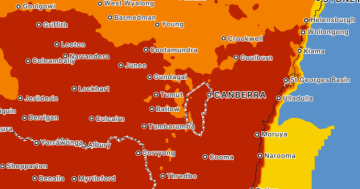
Heat and holidays may seem like the perfect combination to hit the beach, but with dangerous temperatures forecast for tomorrow (Saturday 10 January) in the Illawarra, authorities are warning people to limit time outside and take extra precautions to stay safe.
Beachgoers flocked to waterways on Thursday and Friday (8 and 9 January) as the gauge climbed into the 30s, with many families using the summer surf to cool off and help the kids expend some energy.
But while the outdoors served as a space for a little reprieve during the week, authorities are urging the community not to take unnecessary risks as temperatures are set to get even hotter with the effects from the heat potentially having made a hidden impact over recent days.
“I can’t stress enough that the cumulative effect on people over heatwave periods can sneak up on you,” NSW Ambulance Associate Director of Emergency Management Chief Superintendent Steve Vaughan said.
“The effects of health can impact everyone regardless of your age, your gender, your level of fitness or your overall health.
“I would encourage people to have a really good think about whether today is the actual day to be out in the sun on the hot sand, away from cool spaces.”
Many may already be planning to avoid activities in the middle of the day, but the forecast heat is actually set to peak in the early afternoon, with the Bureau of Meteorology reporting most of the region will still be experiencing 40-degree heat at 5 pm, with real reprieve not expected until after 9 pm.
These conditions are particularly dangerous for vulnerable people including children, so while it may seem like a good idea to cool the kids off in a pool or at the beach, it could be a dangerous choice.
“Babies and young children are particularly susceptible to the impacts of hot weather and it can lead to serious health problems,” Chief Superintendent Vaughan said.
“They just don’t have the thermoregulation maturity in their brain for their body to deal with it.
“If you’re out with children make sure that everyone is staying hydrated.”
Continuously hydrating, even if you aren’t thirsty, is an important way to minimise the risk of suffering from heat illness.
“In heatwave conditions everyone needs to look at increasing their water intake so if you generally don’t drink enough water day to day and then you’re faced with these heatwave conditions you’re probably already starting a little bit behind the race,” Chief Superintendent Vaughan said.
“We’re trying to encourage everyone to be aware of the conditions and just continue to drink water throughout the day.
“The caveat to that is if you have a pre-existing medical condition and a doctor has advised you to restrict your fluid intake you should probably have a conversation with your doctor about whether it is safe for you to increase your water intake during a heatwave.”
When it comes to heat, situations can escalate quickly and everyday activities could have serious health implications.
Heat is also amplified in certain spaces and particularly in cars.
“It can be catastrophic within minutes,” Chief Superintendent Vaughan said.
“There is no safe time to leave children, pets or anyone in a car.
“If you are paying for petrol, if you are just whipping in to pick up milk and bread, they have to come out of the car with you.”
Closing windows and blinds can help keep homes cooler which may not be fitted with air conditioning or fans, but if the temperature is to climb inside your house, a shopping centre or library may be more appropriate.
Checking in with those who may not be able to travel independently or live alone is also crucial at this time.
And even though temperatures are soon set to drop, knowing the signs of heat illness could still be vital in the coming days.
“With that cumulative effect over time, it may be that if this change comes through as is planned on Saturday night and Sunday, that Monday you might start to feel some of those symptoms of heat related illness,” Chief Superintendent Vaughan said.
“You might have some of those mild symptoms of headaches or dizziness, nausea and vomiting or fatigue and cramps.
“If they don’t pass or progress to more severe symptoms like confusion or slurred speech or loss of consciousness, seizure activity or even just hot, dry skin, those are medical emergencies and people should seek assistance via triple zero immediately.”
For more information about heatwave safety and the latest warnings visit the NSW Ambulance website.