

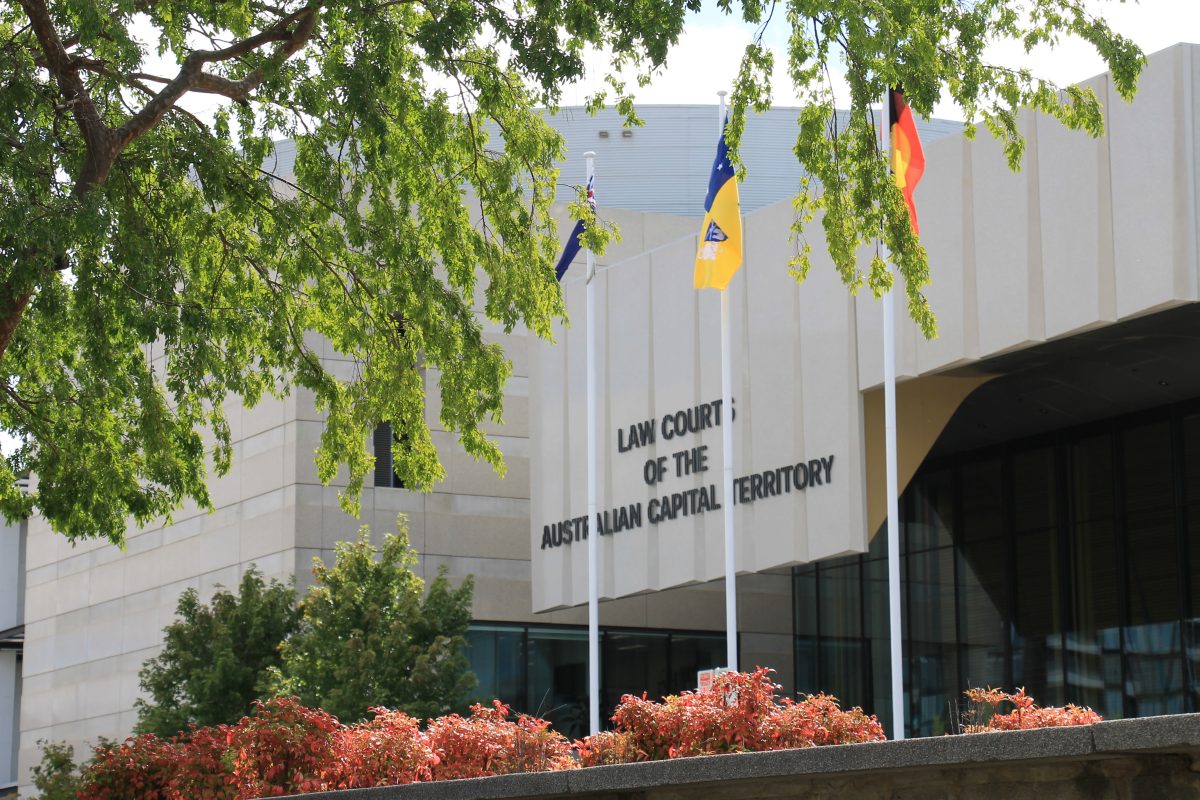
A judge noted how a woman had her life “torn apart” when her partner died just 36 hours before she brought an application to the ACT Supreme Court. Photo: Albert McKnight.
An ACT court has allowed a woman to store her dead partner’s sperm in case she wants to try to have his baby in the future, due to the limits of the relevant legislation in NSW.
The man died unexpectedly 36 hours before the woman made her application to the ACT Supreme Court and she said his death left her “devastated and heartbroken beyond words”.
According to a recently released decision, she asked the court for approval to store her dead de-facto partner’s sperm so she could use it if she decided to try to have his biological child in the future.
Chief Justice Lucy McCallum said the woman was told that for the sample to be viable, it needed to be extracted within 72 hours of her partner’s death.
The woman authorised in vitro fertilisation (IVF) provider Genea to collect and store the sample. But she was told that under NSW’s legislation she could not store the gametes, which are reproductive cells, in that state because her partner did not consent to their removal in writing.
“The application was accordingly urgent because the sperm has been collected in NSW but cannot lawfully be stored in that jurisdiction,” Chief Justice McCallum said.
Genea’s CEO Tim Yeoh confirmed his company was able to provide storage and treatment.
“He indicates that, having regard to the sudden and unexpected circumstances of the death of the applicant’s partner, the formal intake process with the applicant has not yet been undertaken but will be undertaken as soon as possible,” the chief justice said.
The woman told the court she did not know if she planned to use the sample.
“I have not had the head space or time to consider it properly,” she said.
“I do know I would like to preserve the option of having [his] child or children posthumously in the future.”
The woman also told the court that, although they never directly discussed IVF, she believed her partner would have supported such treatment had they required it.
“[He] and I discussed the desire to have children together from the very start of our relationship,” she said.
“[It] was never a question or grey area.”
Chief Justice McCallum noted how the woman’s “life has just been torn apart” and she was not in a position to make a decision about whether she did want to apply to use the sample.
“She has not yet undergone appropriate counselling but that should not foreclose an order authorising the storage of the gametes in the meantime,” she said.
The chief justice allowed Genea to store the man’s sample and adjourned the matter to May 2026.
It is understood that while the woman has been allowed to store the sample, she must also apply to use it in the future, if she decides she wants to do so.
The identities of the man and the woman were redacted by the court.
Original Article published by Albert McKnight on Region Canberra.