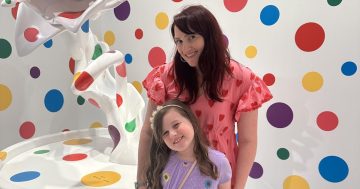
Dr Danielle Camer, who recently won the Regional Impact Award at the 2026 Women Changing the World Global Awards, has launched The Human Medical Writer. Photo: Dr Danielle Camer.
A medical journal article with the right authors, the right publication, even the right formatting. There was just one problem: it didn’t exist.
For Dr Danielle Camer, a senior medical writer with more than a decade in healthcare advertising, the fabricated clinical reference was another warning sign in a rapidly shifting industry now grappling with the rise of artificial intelligence.
As AI tools flood medicine and healthcare communications, she says the technology is already blurring the line between efficiency and misinformation, with potentially dangerous consequences.
“The particular problem with AI that I’ve been noticing is the way people have been relying on it to source facts which end up not being facts at all,” she says.
“In the medical industry, that could be catastrophic, for example, if it’s telling you the wrong thing about a disease or how to dose a particular drug.”
The problem with artificial intelligence in medicine isn’t just that it can get things wrong — it’s that it can get things wrong convincingly.
Dr Camer has seen everything from images of AI-generated anatomical figures with organs in the wrong place to fabricated references to clinical papers that look credible.
It had her spooked.
“I started thinking about the snowball effect of people citing these fake papers, generating misinformation online and ultimately eroding confidence in medicine,” she says.
“I could see this getting into really dangerous territory, and it did scare me a lot.”
That’s why she created The Human Medical Writer.
The Human Medical Writer does not advocate for a total ban on AI in medicine.
“That would be unrealistic,” Dr Camer says. “AI is everywhere, and it can be useful, particularly for increasing efficiency and productivity through the outsourcing of repetitive, basic tasks.”
Human Medical Writer creates credible, engaging medical content for healthcare professionals or consumers that is AI-informed but 100 per cent human-led.
While AI can be used as a sounding board for marketing strategy, and basic tasks such as spell check and formatting, every single thing must be verified by Dr Camer herself, who has a PhD in medicine.
It underscores the two rules she says should always apply wherever AI is materially used.
“Disclose it and always ensure it’s verified by a credible source,” she says.