An early photo of the Electrolytic Refining and Smelting Co of Australia (ER&S) Ltd at Port Kembla. Photo: University of Wollongong Archives.
The Electrolytic Refining and Smelting Company of Australia (ER&S) at Port Kembla was the first industry to begin to transform Illawarra from a predominately agricultural region into an industrial hub.
Construction began in 1908 and smelting operations in 1909.
But, like the earlier failed Kanahooka smelter, Port Kembla’s ER&S was financed with foreign capital – this time as a joint venture with the German metallurgical firm Aron Hirsch und Sohn of Halberstadt in Saxony.
Australian copper was dominated by this company and it was clearly in its interests to have a large shareholding at Port Kembla.
But when war with Germany broke out in 1914 and the Australian Prime Minister Joseph Cook dopily declared Australia would defend Britain “to the last man and the last shilling”, foreign ownership of Australian industry began to be perceived by some as a problem.
Surprisingly, however, Australian copper contracts with Aron Hirsch were not formally cancelled until 1915. And, even more surprisingly, a new contract was then made with Francis H Snow (1854-1930) who had been Hirsch’s agent in Australia since 1899.
At the September 1909 opening ceremony at Port Kembla’s ER&S works, Snow told the assembled multitude that “what they had seen that day could not be seen anywhere else in the British Empire; not even in Germany”.
Unfortunately for Snow, in Australia there were a number of rabid devotees of the British Empire such as the new Prime Minister Billy Hughes who, in order to further fuel up anti-German sentiment, decided to have Snow prosecuted for trading with the enemy.
Snow had obviously provoked some powerful enemies. And, as it turns out even in the milieu of the rampant imperial capitalist fortress then operating in Adelaide, a highly successful and respected businessmen like Snow was soon to get bitten by business and political rivals using patriotism as an excuse to try do him in.
Snow’s enemies’ chance came after a decision in England ruled that “all commercial intercourse with the enemy was trading or attempting to trade with the enemy” and the British acolytes in Australia followed suit.
A slight problem with prosecuting Francis Snow was that “some of the letters” said to prove his guilt “were written before the passing of the Trading with the Enemy Act”. Regardless, some considered an example needed to be made so that any other Australian capitalists might begin to tremble in their cotton (or, hopefully, merino wool) socks.
One nice big public conviction of Snow would also provide evidence that the government did stuff – even if it may well have been ignoring similar transgressions by other better-connected capitalists with better friends in powerful places.

The original 64 m high ER&S stack at Port Kembla being scarily scaled by a steeplejack in a remarkable 1918 photograph by Wollongong’s George Oyston. From the collections of Wollongong Library and the Illawarra Historical Society – P01/P01723.
The difficulty for Snow was that his trials dragged on and on and by 1916 war hysteria and anti-German sentiment had been whipped up further, particularly in relation to trading with the enemy.
Things were even worse in South Australia where Snow was based because of its relatively high population of German immigrants.
Back in England in 1916, however, the London partner in a Greek shipping firm was also charged with trading with the enemy, yet only copped a fine of £450. And so the very wealthy Francis Snow might have then felt he was safe.
But in September 1919, he was eventually found guilty of back in 1914 having attempted to trade with the enemy although it was said “several points of law have yet to be argued”.
On the advice of his counsel, however, Snow “abandoned the law points raised on his behalf, and was fined £2000”. But costs for nearly five years of court appearances were then also awarded against him.
This meant that any further appeals to the High Court and the Privy Council might have made Snow’s fines astronomical.
In the meantime a new company, Metal Manufactures, had emerged by 1916. With the aid of guaranteed government contracts and high levels of tariff protection, it became one of the largest manufacturing companies in Australia, supplying almost the entire Australian demand for copper products.
It had supposedly been formed to reduce reliance on overseas companies but Australian investors had nonetheless partnered with British Insulated & Helsby Cables Ltd to build its Port Kembla site.
Although he remained wealthy, the whole affair damaged both Francis Snow’s health and reputation. Yet it seems to have done little to ensure that industries at Port Kembla would ever be completely independent of the imperial commercial ambitions of other nations.
But why Francis Snow became the No 1 “trading with the enemy” fall-guy for crimes supposedly undertaken at Port Kembla is a genuine puzzle – particularly when one would assume that if an act is committed before it is declared a crime then it’s probably not actually a crime.
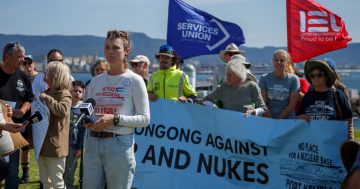
Fast forward to 2026 with mainland China now Australia’s major trading party (and Port Kembla apparently being mooted by some as a potential east coast base for America’s AUKUS nuclear submarines) the Port of Kembla may yet again become a focus for continuing puzzles and questions about Australia’s international relations.