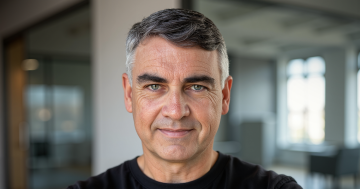

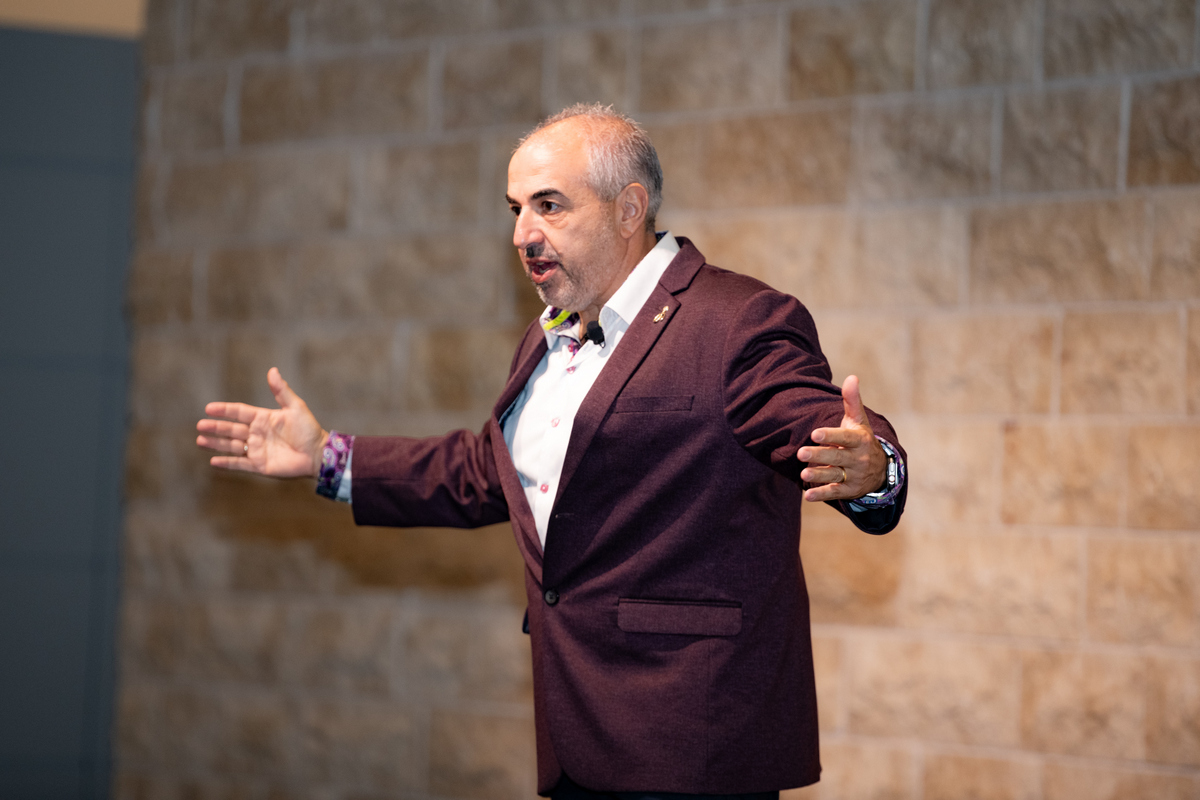
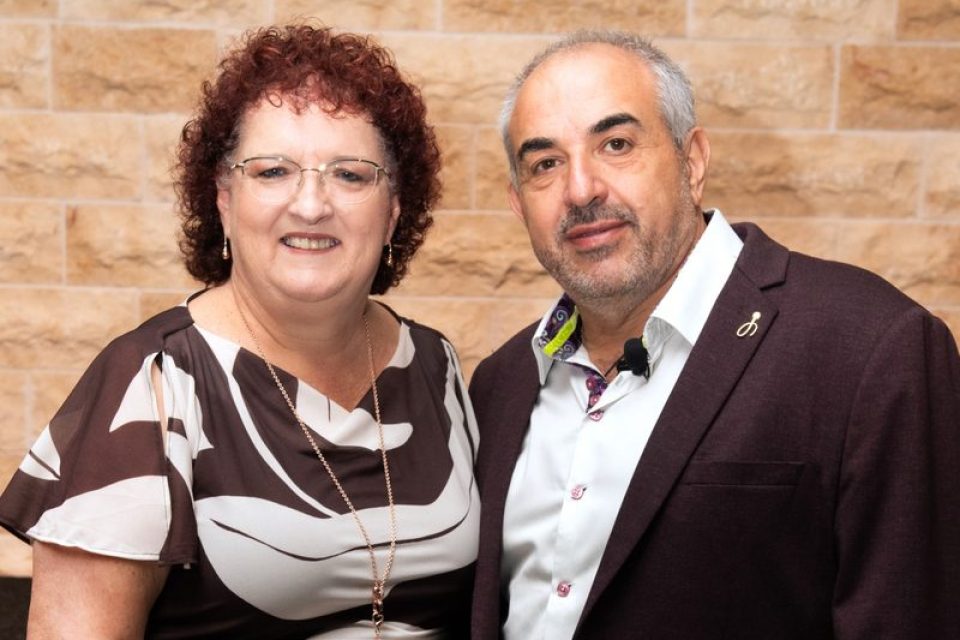
Entrepreneur Rael Bricker at The Illawarra Connection dinner … “AI is not eliminating work, it’s changing how work gets done.” Photo: Brad Chilby.
Rael Bricker has a reassuring message for workers worried that the rise of artificial intelligence (AI) will steal their jobs.
The entrepreneur, author and business expert was guest speaker at the latest The Illawarra Connection (TIC) dinner, where he talked about the future impact of AI on workplaces.
He stressed that although jobs will be lost, even more jobs will be created.
“For the last few years, all we’ve heard about is this change. What is the change? That jobs are going to disappear?” he said.
“If you read back three to four years, all the articles on AI spoke about this automation, everything’s going on to autopilot. You have to do everything on autopilot.
“The current thinking today is copilot – and that’s not the software I’m talking about – we’re talking about the relationship between humans and AI.
“AI is not eliminating work, it’s changing how work gets done.”
He referred to a World Economic Forum report called The Future of Jobs, which analysed how organisations expect the labour market to evolve up to 2030.
It found AI and information processing technologies were expected to have the biggest impact on workforce over the next few years, with 86 per cent of respondents expecting these technologies to transform their business.
“What it says is that the redesign of tasks is going to be the future of work and the future of AI,” Rael said.
“The report also says that about 100 million jobs are going to be lost through AI, but 200 million jobs will be created. Every report that’s coming out now … is saying jobs won’t be lost, but jobs will be created.”
Rael has worked in gold and diamond mines in South Africa, created a higher education college and became one of Australia’s leading mortgage brokers. He has two master’s degrees, including one in software engineering which he gained in 1990.
But he says it was a health scare in 2013 that helped him find his purpose in life.
After a series of triathlons, Rael decided to run a marathon – all part of a plan to achieve before turning 50.
However each time he ran he experienced neck pain and it was discovered that he had two blocked arteries.
“I was the lucky one – I dodged a bullet and ended up with two stents. This experience helped me to find my purpose in life. I found my purpose in sharing the experiences of journeying and achieving excellence with business owners and entrepreneurs around the world,” he says on his website.
He became a professional public speaker, started a podcast called Business Excellence and published a book, Dive In, in 2018.
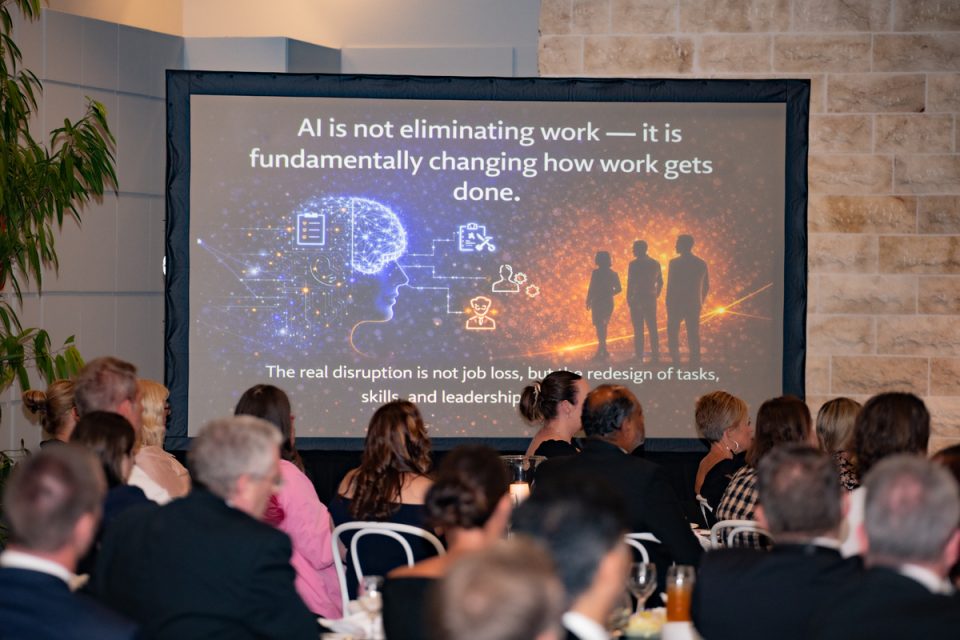




He told business leaders at the dinner that AI arrived in the world “by stealth”.
“The truth is that AI didn’t arrive with flashing lights, it didn’t knock on the door and AI definitely didn’t ask for permission to come in,” he said.
“AI arrived. AI arrived in our lives with stealth. First it was in search engines, then it was in recommendation engines and suddenly we woke up.
“The future of AI is not about technology. It’s about people and it’s about how people are going to relate to AI … and how our children and grandchildren will relate to AI.
“The most important people will not be the most technical.
“They will be the people who can interface with technology, not the most technical.
“There are still going to be people to learn how to program, there are still people who better learn how to code and can write all this stuff.
“You can employ technical people. You can’t employ management or leadership. You can’t replace them. In other words, the workload will be spread evenly between humans and computers.”
He demonstrated how AI can be used in the workplace, particularly to ease the burden of more mundane jobs which in turn frees up employees for more creative or innovative work.
“If AI can remove only 20 per cent of your routine thinking tomorrow … that’s what I believe the future is,” he said.
“It’s not taking away 100 per cent of your thinking, because humans are critical to this interaction.
“But if 20 per cent of your time was freed up tomorrow, what would you do with that time? Just think about the implications for all of our busy lives if you had 20 per cent more time, because that’s what AI can effectively give you in your day to day, week to week.”
Rael said AI software was constantly evolving and new tools were coming on the market every day.
He’s even using AI to rewrite previous speeches and blogs which were originally written by AI.
“There’s an AI for that is an AI generated website. It is AI finding new tools on the market. When I did this slide three weeks ago, there were 44,947 AI tools listed on that website. When I looked at it this afternoon, there were 45,900,” he said.
“I’ve tried thousands of them. I download them, I try them. Some of them are horrible. But nevertheless, that’s a huge number of tools out there.
“You don’t need to know how to code, you just need to know how to speak or talk to use AI. It’s only limited by your imagination, by the human content.”