
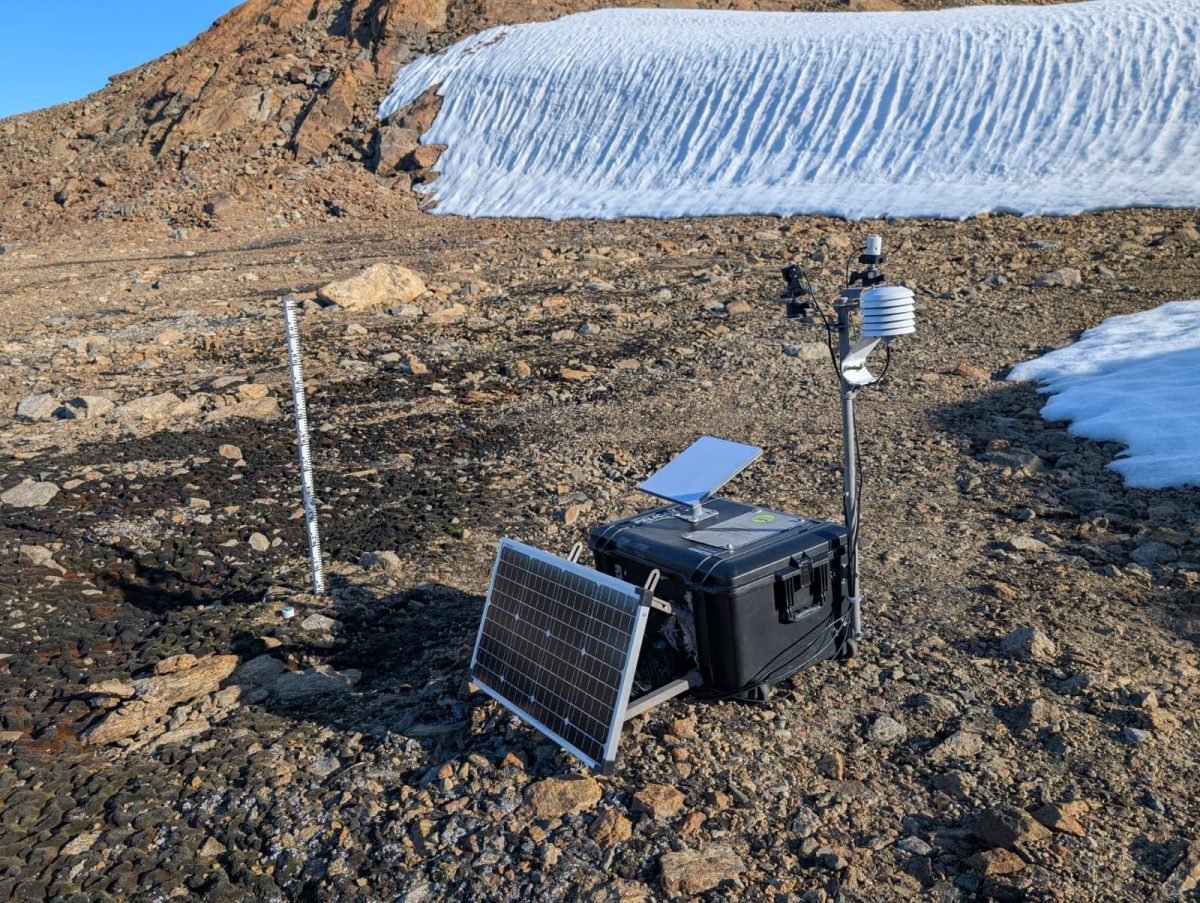
This little box might look unprepossessing, but with its help Antarctic researchers will be able to access parts of the continent that are too harsh for humans. Photo: Johan Barthelemy.
Parts of Antarctica are too wild for human research but a Wollongong creation will help us better understand the mysteries of the continent.
Mechatronic engineer Cameron Angus is part of a cross-university, multi-disciplinary team combining AI with robust technology to learn more about the Antarctic desert.
Based in Wollongong, Cameron is responsible for creating hardware that can withstand harsh Antarctic conditions, run on minimal power and upload valuable data.
The solution? High-tech, adaptable boxes, with artificial intelligence built in.
Cameron said the tools could help go where no man has gone before.
“One of the challenges in Antarctica is people can only do science over summer because winter is too harsh for fieldwork,” he said.
“It’s just not possible to get people out to do 10 km hikes every day to sit through minus 60 degree blizzards and take measurements of moss.
“With these really rugged boxes that can be dropped off and operate year-round we get much better data sets and I can sit and monitor it from my desk.”
The first ones have already been deployed in the Schirmacher Oasis.
The oasis is a prisitine environment Cameron described as “like a National Park on steroids”.
The restrictions on access make low-impact research techniques even more valuable.
The project is measuring the health and growth of moss in the oasis.
It might sound about as exciting as watching grass grow, but Cameron said it can give us a lot of information about the health of the local environment and the climate.
Deploying the boxes was his personal NASA launch.
“You put all this work into something, you put it out there and if it doesn’t work, too bad,” he said.
“It’s so satisfying to see it all come together, to get the initial data back and know it works.”
The boxes use AI to help reduce the amount of data they need to send back.
That in turn helps the boxes to use more energy and work longer during Antarctica’s cold, dark winter.
“One of the key components is an NVIDIA Jetson Orin Nano,” Cameron said.
“It’s an edge computer, a mini low-power computer designed to operate at the edge of networks that can handle small AI models.
“The AI models interpret the photos in situ and report back the results of the interpretation.
“That means the information we send back over satellite is smaller so we can save more power and have the platform last longer.
“There’s no sunlight for a solar panel in winter, so it takes a lot of optimising to keep running.”
If the project is successful the boxes can be deployed for monitoring all sorts of different things, from ecologically sensitive sites to wild animal populations.
They have room for different plug-ins that can do anything from take photos, measure solar radiation and record penguin calls.
The project is part of an Australian Research Council-funded entity called Securing Antarctica’s Environment Future.
Cameron said the scientists, researchers and engineers working on the program were united by their belief in the importance of Antarctic research for humanity’s future and the health of our planet.
“If Antarctica doesn’t thrive then humanity will suffer,” he said.
“Being able to understand and protect it is a first-line defence to everything else.
“I work with amazing people, I get to do techy work I love and have it make an impact, it’s such a win.”