
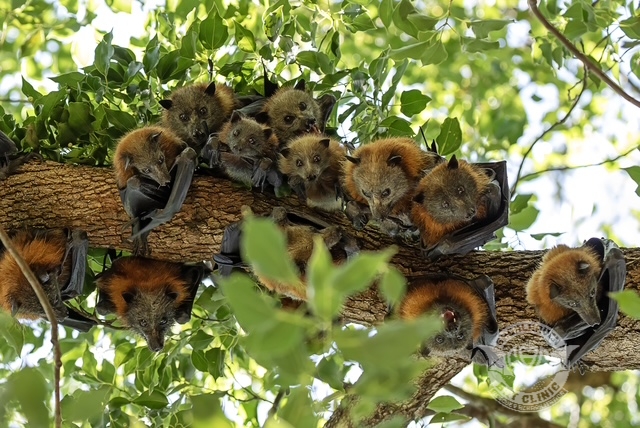
Some of the flying foxes Wildlife Rescue South Coast cared for through Sunday’s high temperatures. Photo: Trista Kyriacou.
If you spent Sunday feeling hot, hot, hot, spare a thought for our most vulnerable native wildlife.
Flying fox populations across NSW and the ACT were hammered by temperatures in the 40s. There were mass deaths.
Wollongong colonies were particularly hard hit. WIRES reported up to 1000 may have died across two camps in Dapto and Figtree.
It’s bad news for our ecosystems – flying foxes are a keystone species responsible for pollinating coastal forests across vast distances.
Their large, noisy camps create the impression of an abundant population, but their total numbers are very low.
The grey-headed flying fox is listed as vulnerable to extinction due to habitat loss, which forces colonies closer to people.
Stephen Bartos, one of the coordinators for flying foxes for ACT Wildlife, said flying foxes were especially vulnerable to high temperatures.
“Like dogs, they don’t sweat, so it’s very hard for them to get rid of heat,” he said.
“They can pant and flap their wings to generate a breeze, but once it gets above 40 degrees the energy it uses to do that heats them up more than they can cool themselves down.
“If it’s hot and humid it’s even worse.”
Stephen said when flying foxes overheated they sought shelter and cooler temperatures closer to the ground.
This can result in a large number of animals packed into a small space as they compete for the coolest spots.
The shared body heat then raises their temperatures even higher.
He said if you noticed large numbers of flying foxes low down on trees to contact your local wildlife rescue – they would likely have a plan.
Wildlife Rescue South Coast flying fox and microbat coordinator Trista Kyriacou spent Sunday caring for vulnerable camps at Berry and Kangaroo Valley.
She and her team had monitored five camps between Mollymook and Kangaroo Valley in the lead-up to identify which would need the most support.
“Sometimes intervention isn’t possible, depending on where the colony is,” she said.
“If you have a camp of 1000 and to get access to 20 struggling you spook the rest of them and put them at higher risk, you have to take a step back.
“We provided some mild misting to help them cool down and have a drink, and assisted some bats that were struggling.
“Only two came into care, another four were treated and released on the day, and there were less than 50 deaths in total.”
Stephen said the Canberra camp also coped really well, thanks to understory planting and misters installed by the National Capital Authority.
If you’d like to help these vital, iconic Australian critters survive the next heatwave, the best way to do so is by volunteering with a wildlife rescue.
Unlike many backyard birds and animals, flying foxes don’t usually come close enough to the ground to benefit from food or water left out for them, although if you’re able to pop a sprinkler up a tall tree it might help.
Unless you’re vaccinated for the potentially fatal lyssavirus some carry you shouldn’t touch them.
Dedicated, trained volunteers provide the best chance at survival for flying fox camps in catastrophic conditions.
“We need more volunteers, from rescuers who go out and help animals in distress to carers who can look after orphaned or injured animals,” Stephen said.
“Flying foxes are a very intelligent, affectionate, social animal.
“They live together in big groups, look after each other, and are really good mothers.
“Their importance is terribly badly underestimated.
“If you want to save the koalas, help save the flying foxes, because without them there would be precious little koala habitat.
“There are so many good things about them, they should be valued and respected.”