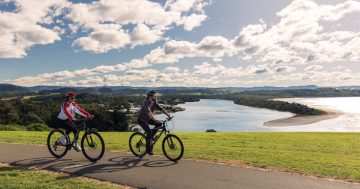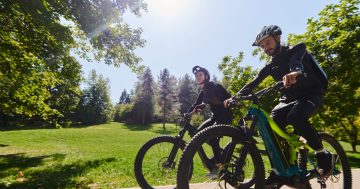

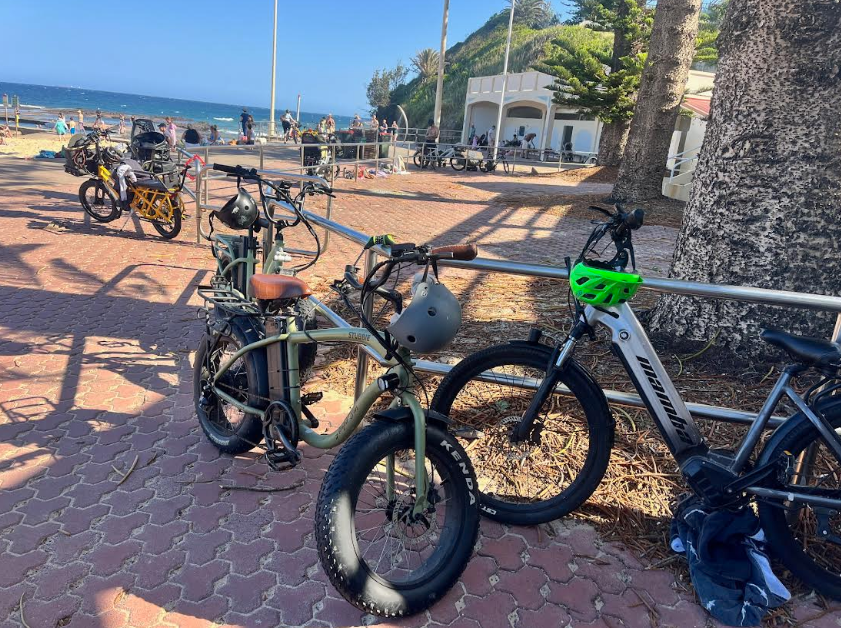
E-bikes have surged in popularity in the past few years. Photo: IBUG.
The Illawarra Bicycle Users Group (IBUG) has released its position statement calling for a “balanced, evidence-based approach” to regulating e-bikes and throttle-powered e-mobility devices, commonly known as “fat bikes”.
E-bikes were a hot topic during 2025, with prolific discussions about safety and regulation taking place in council chambers, among communities and all across social media.
IBUG president Edward Birt said they have transformed local transportation.
“As much as there are problems associated with e-bikes that we need to work through, these affordable devices are reducing car trips, cutting congestion and pollution and giving families a real alternative for school and work commutes,” he said.
“With Wollongong’s own transport strategy showing that 48 per cent of trips less than 5 km are made by car, these affordable devices are reducing car trips, cutting congestion and pollution and giving families a real alternative for school and work commutes,” he said.
“This is the start of our contribution to what we hope will be more sophisticated and nuanced community conversations around the topic.”
Among key points in its statement, IBUG wants to see a review of road speed limits to align with regulations imposed on e-bikes.
NSW regulations state electrically powered-assisted bicycles must have a maximum continuous rated power of up to 500 watts and must cut off when the bicycle reaches a speed of 25 km per hour.
“The chances of a pedestrian surviving when hit by a car doing 50 km are 10 per cent. At 30 km, it flips to 90 per cent. So we would love to see a 30 km limit around, for example, schools and urban areas in line with the Better Street campaign,” Mr Birt said.
“At the same time I think 30 km is a more appropriate speed limit for e-bikes than 25 km per hour. I don’t own an e-bike, but I often reach those speeds on my standard bicycle.”
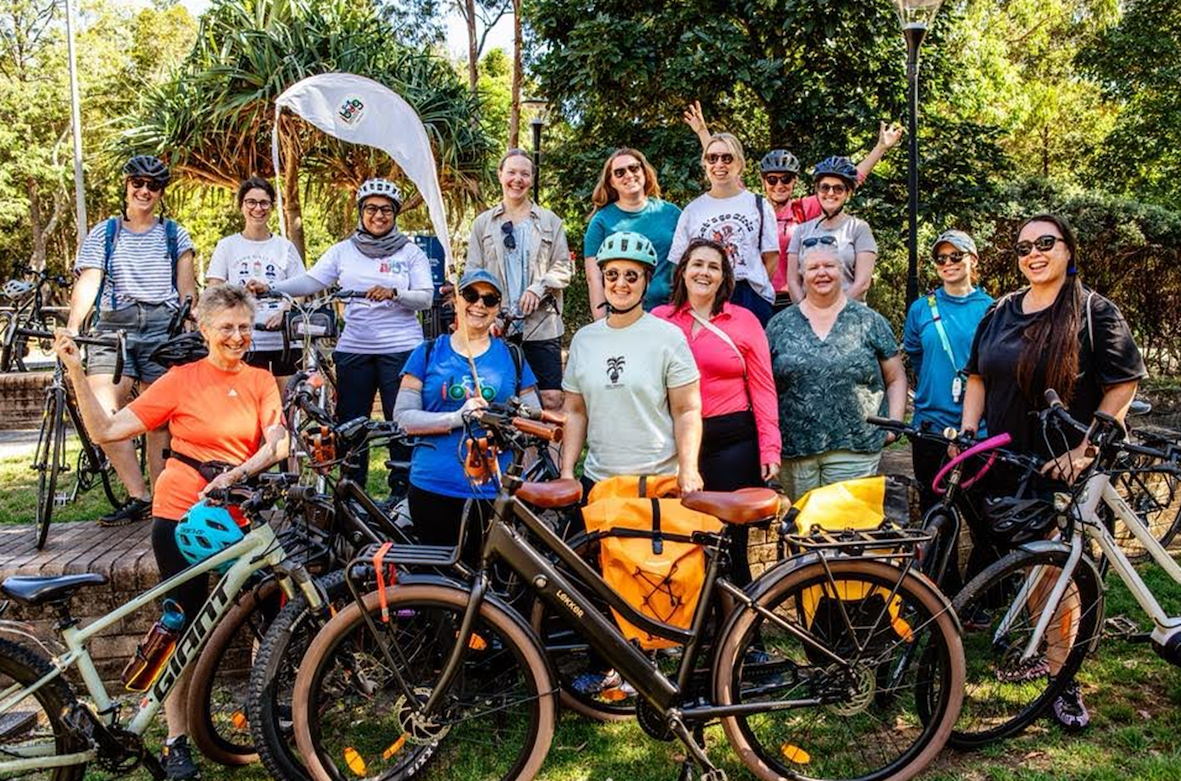
IBUG advocates for safe and responsible cycling and e-mobility in the Illawarra region. Photo: IBUG.
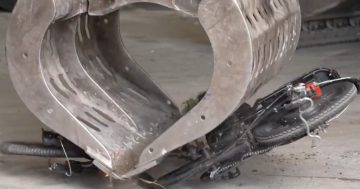
Stricter e-bike regulations were announced following the death of a man in an e-bike collision with a garbage truck in the Sydney CBD last month.
Mr Birt called out the inappropriate use of bicycle deaths to justify further regulation.
“We need to show greater respect for those injured or killed in bicycle accidents, not exploit their deaths for political purposes,” he said.
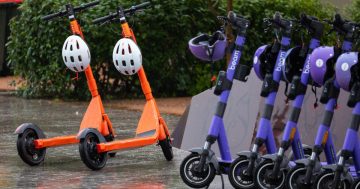
“There was talk of an outright ban of fat bikes after that tragic incident in Sydney, but given the person killed was riding a legal share bike, that talk was misguided.
“E-mobility devices are part of the solution to our car dependency crisis … we need smart regulation, not knee-jerk bans.”
The IBUG position statement supports existing laws for e-bicycles and advocates for a lighter touch than outright bans: a registration and licensing system for riders aged 12 and over, including power and speed limits (in line with other e-bikes), mandatory safety education and a one-off registration fee at purchase.
The group also opposed the disparagement of young riders, which Mr Birt said was prevalent in the discourse around e-bikes.
IBUG noted the vast majority of youths used the e-vehicles responsibly and “should not be characterised as troublemakers”.
“I think it’s important to remember these are kids enjoying their independence. If we want to help our youths use bicycles, e-bicycles or other e-vehicles responsibly, rather than talking about them, we should be talking to them,” he said.
“The reality is 99 per cent of the time, they’re terrific with their use of these vehicles and are aware of how fortunate they are to have them.”
More broadly, IBUG has called on the government to demonstrate broader road safety leadership by removing tax breaks that encourage the purchase of oversized vehicles and committing 20 per cent of Transport for NSW investment to cycling and active transport infrastructure, to match the UN Environment Programme recommendations.
“We spend maybe one or two per cent of our transport infrastructure investment on active transport — not even close to what’s recommended and what countries around the world are doing,” Mr Birt said.
“As a result, while e-bike use is up, our active transport infrastructure has not improved. So naturally, the paths are getting crowded and more dangerous.
“If we’re serious about improved safety, we need to remove tax incentives for these large vehicles that have been proven to be more likely to be involved in fatal road accidents and make more space for two-wheeled vehicles.”