
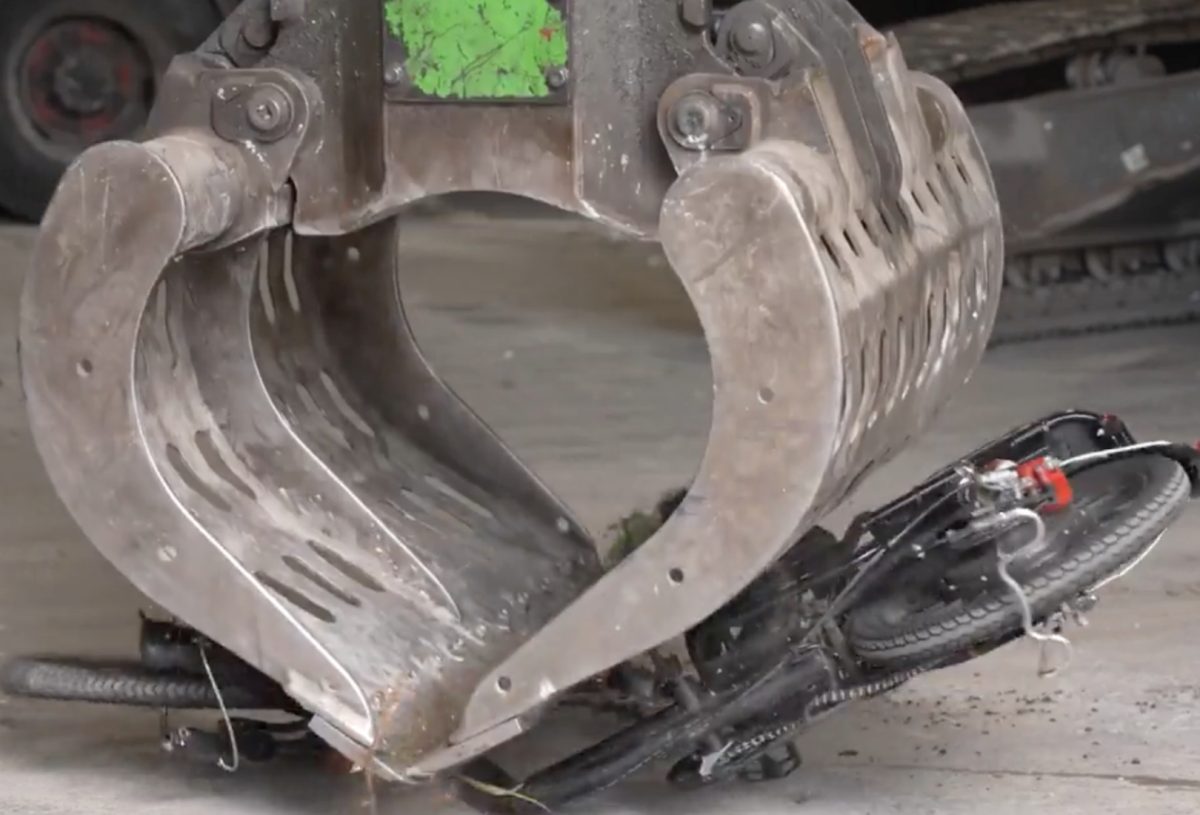
A still taken from a NSW Government video showing a seized and crushed e-bike. Image: NSW Government.
Plans to seize and crush illegal e-bikes has sparked pushback in the Illawarra, with local e-mobility advocates arguing education and modification — not destruction — is the smarter path to safety.
NSW Transport Minister John Graham announced this week illegal e-bikes would be seized and crushed to stop the use of throttle-only, high-powered and doctored bikes that perform more like motorbikes than bicycles.
Mr Graham said strengthened seizure and crushing powers for NSW Police would target these bikes that are fuelling anti-social behaviour, community frustration and serious injuries.
However, Illawarra Bicycle Users Group (IBUG) president Edward Birt has spoken against the campaign, saying it’s “heavy-handed” and needed a “better community conversation about it and a reasonable approach”.
“We’ve certainly made the point that we want to see a reduction in speeds and support for improved behaviour, which will involve education,” Mr Birt said.
“We also think that a light-touch registration is going to be needed for those throttle-controlled e-bikes, like the Fat Bikes, so you can trace who’s riding them and that they have had some education around correct behaviour and how to use them.
“We also think that the response of crushing and banning is really heavy-handed.”
He said the issue had been known about for years, but there had been no improvements to separated infrastructure for two-wheel transport.
“The investment just isn’t there. It’s not safe for people to ride on the roads, so we just have this constant conflict with pedestrians and cyclists fighting over two and a half metres of concrete,” he said.
“If we want to support an evolution in transportation, which these vehicles represent, then we need more resources for better infrastructure.”
He said there was a lot of denigration of people on e-bikes, but “if you call somebody a ratbag, you know how they’re going to behave”.
“There’s got to be an approach that’s educational and, by all means, let’s enforce good behaviour,” he said.
“There will be times when somebody’s a repeat offender and is driving really fast and endangering people, and there might be the need for a more serious consequence to that person.”
Mr Birt said the thousands of e-bikes now in the region were changing people’s lives, having witnessed older people, people with disabilities, couples going out for dinner, and even a dad with two boys riding to school.
“We’ve got hundreds of people in the community who are really passionate about cycling and two-wheel transport, and always available to engage with ministers or bureaucrats,” he said.
He said despite repeated invitations to IBUG meetings, they never attended.
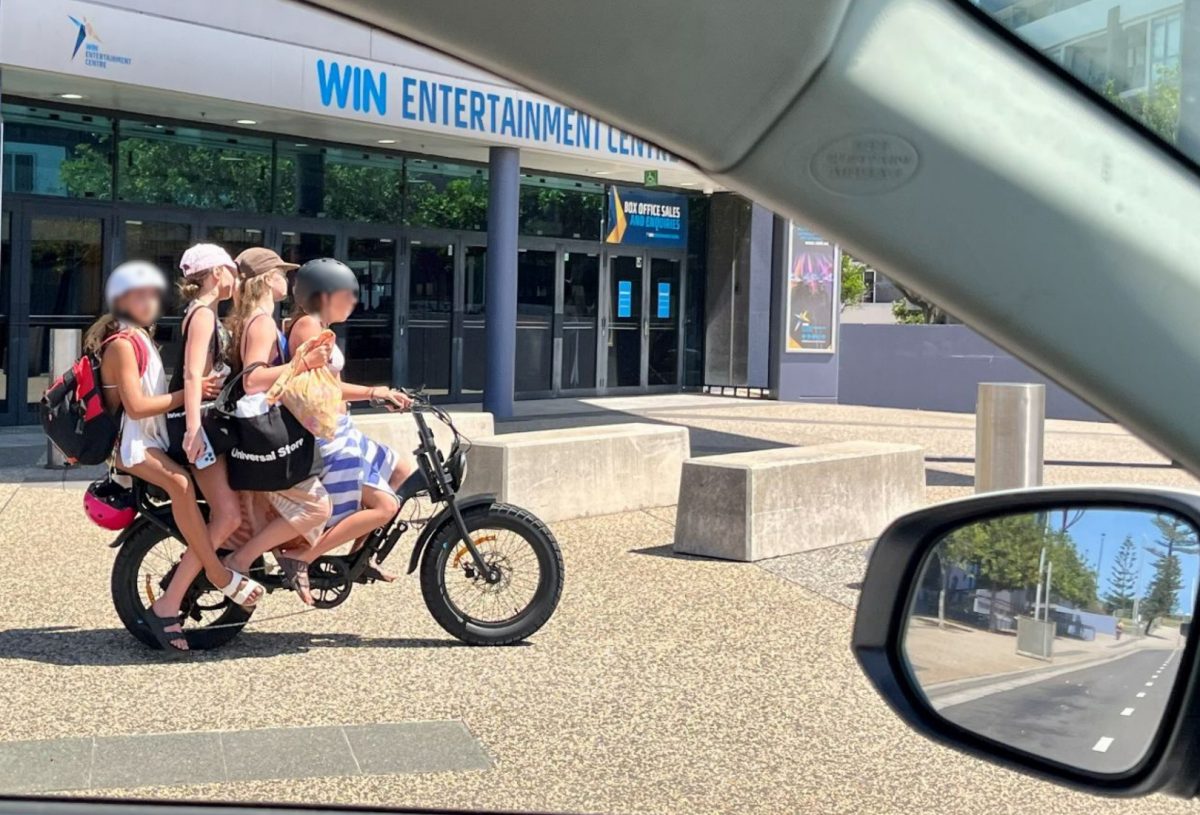
Girls riding an e-bike through Wollongong. Photo: Kirk Gilmour.
Wollongong Greens councillor and e-mobility advocate Jess Whittaker has also spoken out, believing the campaign boasted about seizing and “crushing” non-compliant e-bikes with heavy machinery, rather than investing in meaningful education and road safety campaigning.
“Minns’ Labor government has failed to engage with their federal counterparts to better regulate import standards, while underinvesting in active transport infrastructure to separate bikes from cars and pedestrians,” she said.
“They also failed to deliver meaningful education and road safety campaigning to go alongside the uptake of e-mobility technology.”
She said there were safety and behaviour issues with modified e-bikes but, like any new technology, the transition took leadership and stewardship.
“Riders of the non-compliant e-bikes should instead be handed an infringement, and if seizure is necessary, these bikes could be modified back to being compliant and still provide transportation to people that is more sustainable and safer than a motor vehicle,” she said.
As part of the campaign, a number of portable ‘dyno units’ will be used to measure whether an e-bike’s power assistance cuts out at 25 km/h as per the current law in NSW.
Not all e-bikes sold in shops are legal for use on streets, with many being illegal electric motorbikes, with throttle operation without pedalling above 6 km/h, excessive power output or modified speed limiters.
Mr Graham said the move was in response to community concerns about souped-up e-bikes and the anti-social behaviour that had appeared to go hand in hand.
“Riders and owners of illegal e-bikes should now hear us loud and clear: if you are breaking the rules, and your bike does not meet the very clear specifications of a pedal-assisted e-bike, expect it to be removed from your possession and crushed,” he said.
He said the reform went beyond the NSW Liberals’ idea for tiny number plates that “validates and entrenches the most dangerous e-bikes”.
Member for Shellharbour Anna Watson said they wanted young people outdoors, but would not tolerate illegal e-motorbikes putting lives at risk.
“There is more to do but these practical changes will keep e-bikes safe, legal and fit for our shared paths, while supporting people who want a cleaner, cheaper way to get around the Shellharbour electorate,” Ms Watson said.
NSW Police Minister Yasmin Catley said they were backing police with the tools they needed, with it being about “stopping dangerous bikes from being handed back only to pop up again next week”.
Further measures will be announced in coming weeks.