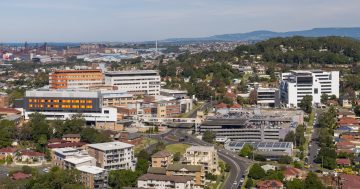
With unit values dropping by 1.1 per cent, Dapto joined a broader trend in which Illawarra houses outperformed units for a change. Photo: Region.
The Illawarra housing market is holding its ground against a brewing national property downturn, defying a steep slump in neighbouring Sydney — though only just.
Fresh Cotality data reveals local property values notched a marginal 0.1 per cent increase in May. While flat on paper, the result represents a remarkably resilient performance compared to the national average (0.0 per cent growth) and Sydney, where values plummeted 0.9 per cent over the month to lead the nation’s downturn.
Zooming into regional areas, however, a different picture emerges. Combined regional markets rose by 0.6 per cent nationally, while regional NSW managed a modest 0.2 per cent lift.
“The Illawarra was marginally weaker than the rest of regional NSW, which likely speaks to the relative cost of the area,” Cotality head of research Gerard Burg said. “The Illawarra is a bit more expensive than many of the more affordable regional markets elsewhere.”
Curiously, May saw a flip in market dynamics in the Illawarra, with house values (up 0.2 per cent) outperforming units (down 0.5 per cent).
“That actually pushes against the broader affordability theme we’ve been seeing nationally as well,” Gerard said.
Values aside, Cotality data also indicated a cooling demand translating into weaker sales volumes.
Compared to late last year, Gerard said the market is shifting toward a more balanced position.
“Late last year it was very much a seller’s market, with the number of properties available for sale around the country generally well below average,” he said.
“The market is now seeing listing numbers move closer to the five-year average. In Sydney, for example, stock is well above that average, which is one of the primary factors driving down values there, alongside a similar story unfolding in Melbourne.”

Gerard Burg said the market was shifting to a more balanced position between buyers and sellers. Photo: Cotality.
Taking pole position for regional growth were houses in Mangerton, Balgownie and Windang, alongside Blackbutt units, which all surged 1.3 per cent for the month.
At the back of the pack, Warilla units dropped 2.1 per cent, Russell Vale dwellings fell 1.6 per cent, Kanahooka units dipped 1.2 per cent and Dapto units slid 1.1 per cent.
“Interestingly, these represent some of the more affordable markets,” Gerard said.
“Dapto units sit sub-$700,000, yet they still underperformed. It fits heavily into the story of units struggling across the region this month.”
While some fear the national flatline marks the start of a downturn triggered by recent capital gains tax and negative gearing reforms, Gerard said it was too early to blame those policy changes.
“We are likely to see investors leaving the market compared to where they were late last year, early this year, but that’s in the context of multiple headwinds, including three rate rises, stretched affordability and loss of sentiment, partly related to the higher energy costs,” he said.
“It’s really hard to say it’s investors versus any other factor.”
The national shift has been stark, moving from 1.2 per cent and 1.3 per cent monthly jumps in spring to a total flatline, with experts predicting the cooling trend will culminate in a broader national downturn.
While forecasting the duration of a downturn is notoriously difficult, history offers a reassuring message for local homeowners: don’t panic.
“In the last 40 years, there have been 10 downturns in the Australian property market, and only three of them have lasted longer than 12 months,” Gerard said.
“The largest peak-to-trough decline we’ve seen historically was about 8 per cent. When you factor in the sizeable gains most markets have enjoyed over the past five years, the majority of owners have plenty of buffer room.
“While anyone who bought at the absolute peak will feel some strain, most homeowners still have a significant buildup of equity.”