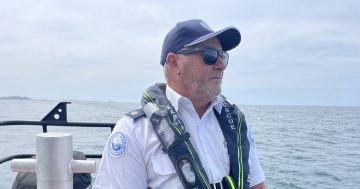
Paul Delamont will represent NSW Ambulance as part of the seven-member Rotary Vocational Training Team going to Tonga. Photo: Supplied.
An Illawarra paramedic who has responded to some of Australia’s biggest bushfires, floods and international disasters is preparing to take his expertise to Tonga, helping strengthen the Pacific nation’s emergency response capabilities.
Corrimal’s Paul Delamont has been selected to join a seven-member Rotary Vocational Training Team (VTT) that will spend four weeks in August working alongside Tongan emergency services, sharing practical skills and helping communities better prepare for natural disasters.
Paul, a team leader in the Special Operations Unit with NSW Ambulance, said the project was tied to RESCA (Rotary Emergency Services Community Awards) and grew out of scholarships for mental health initiatives in emergency services, before expanding into an Asia-Pacific partnership focused on disaster preparedness.
“We quickly realised we’re the bigger cousin with the greater resources and that we can help these smaller cousins of ours,” he said.
“They looked at which nations are most at high risk and Vanuatu was number one, so a similar vocational training team went to Vanuatu two years ago, and Tonga was second on the list.”
Paul said team leaders undertook a preparatory visit last year to map contacts and scope needs, and now the seven-member team representing all registered NSW emergency services would travel to Tonga from 8 August.
“We’re going over there holistically to look at what systems, what resources, what capabilities they have, and then draw on our expertise about how we can develop it,” he said.
Paul said his experience combined frontline leadership, specialist rescue operations and training paramedics for high-risk emergencies.
He said he had extensive experience responding to major floods, bushfires such as Victoria’s 2009 Black Saturday fires and other disasters across NSW and Victoria, while also working in rescue, helicopter retrieval and supporting police tactical operations.
“In 2009, when the tsunami hit Samoa, I was part of the state medical disaster response team,” he said.
“I was there on the ground, basically just either rendering first aid for the first couple of days, and then helping the local medical centres get back up to speed.
“Then we were going in and doing wound care and follow-ups with patients, so this is really close to home.
“I really enjoyed what we did and what capabilities we took over there, but it made me also appreciate we couldn’t just assimilate for the way we do things, we had to bring our skills and introduce them into their culture, which was quite fascinating.”
He said this was about using all the components of his background and expertise, which was critical care in an out-of-hospital setting, to help the Tongan people.
Paul said Tonga’s geography and exposure to extreme weather made it particularly vulnerable.
“The Kingdom of Tonga is made up of about 146 islands, but only 43 are inhabited,” he said.
“While it’s not a large population, 80 per cent of the population lives within two kilometres of the coastline and then large proportions of the land mass are two metres below sea level.
“So it doesn’t take much of a tsunami or weather event to actually create a lot of havoc and a lot of damage.
“They just don’t have the expertise and the experience, so we’re mapping a lot of basic skills we think will be easily transferable.”
Paul said the team was travelling as guests of the Tongan Fire Commissioner, whose agency was the main frontline responder in major incidents, with the focus being on simple medical skills.
“Their ambulance service skills and capability is nothing that we would be used to,” he said of Tonga’s lower skillset.
“I’m looking at stuff we do day-to-day that’s simple and transferable … without taking expensive pieces of equipment over that are difficult to train for and difficult to maintain.”
He said the training approach would be tiered, working first with senior personnel and then supporting them to roll training out across their smaller towns and villages.
A similar model in Vanuatu proved popular.
“On the first day there, 30 people showed up, on the second day there were 50, and on the third day there were 80, because they just saw such value and were so fascinated they wanted to be part of it,” he said.
“It was a real sharing of knowledge, and sharing of culture.”
He said beyond the technical work, he was looking forward to learning more about Tonga’s culture and its people.
“Australia, in the big picture when you compare us to Europe, is quite a juvenile nation, but when you look at our Pacific neighbours, we’ve got a lot to offer. I think it’s really important that we do that.”