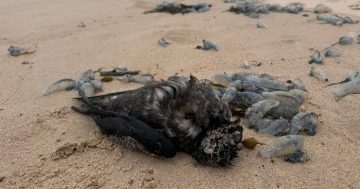
Lake Illawarra’s iconic black swans could be at risk if a widespread bird flu outbreak was to occur. Photo: Wollongong City Council.
The Illawarra community is being urged to look out for any abnormal animal behaviour and be vigilant if interacting with wildlife after the first positive case of H5N1 bird flu strain was detected in NSW.
However, experts are reassuring residents that there’s no need to panic or overreact.
The detection of a highly pathogenic and dangerous strain of avian influenza on NSW shores is causing anxiety for pet owners, environmental advocates and the broader Illawarra community.
After five years of it spreading across the globe, experts knew it was creeping closer to Australia.
“Because of how rapidly it can be transmitted, it was always a matter of when rather than if,” UOW senior lecturer in the School of Earth, Atmospheric and Life Sciences Bethany Hoye said.
While the strain has not been detected in the Illawarra, residents are being urged to stay on high alert for any unusual behaviour in birds or animals.
“The most important thing is to be really vigilant, to look out for any signs of either dead wildlife, or wildlife not behaving normally,” Dr Hoye said.
“That doesn’t mean just looking at birds, it can also mean looking at mammals or occasionally reptiles that you see.
“If they’re showing neurological signs – which means they’re not moving how they would and they’re not responding to people approaching them – if your gut feeling says this is not how they normally behave then don’t touch them, just call the national diseases hotline and make sure what you’re seeing is being reported to people who can come and test for it safely.”
Dr Hoye also stressed that there was no need for alarm or any extreme action, with no widespread outbreaks currently reported. She said the birds that have been detected with the disease had wandering patterns rather than migratory and that they’ve likely only made it onto our shores because they’ve been unable to make it further due to illness.
“You wouldn’t normally ever see them on the beach unless they’re worn out,” Dr Hoye said.
“The problem is when they come to land and die and don’t get picked up.
“Say that happens at one of our massive seabird breeding colonies on an offshore island, no-one sees the dead petrel or the dead skua bird that comes and dies there and then other birds interact with it and you start to have an outbreak situation.
“I think once we start to see outbreak situations, so transmission happening in the Australian-inhabited territories, that’s when you’d start to think about bringing your birds in and bringing your other animals in.
“The overall message would always be to be alert and aware.”
Wollongong Lord Mayor Tania Brown has concerns about the region’s extensive coastline and seabird migration habitats.
“Having a confirmed case in NSW means we all need to be vigilant. The Wollongong Local Government Area covers a large coastline home to the black swan, the endangered pied oystercatcher, and many migratory species,” Cr Brown said.
“To protect our wildlife, we need everyone to be alert for signs of H5 bird flu – particularly as we head into the seabird migratory season – and to keep children and pets clear of sick and dead birds.”
And after seeing the devastation overseas, Wollongong Council has been preparing for the possibility of an outbreak.
“Our multi-phased plan is informed by advice from the Australian Government, NSW Government and industry experts and includes training key staff should we have sick birds found in the city,” Cr Brown said.
“With the confirmed arrival of the H5N1 bird flu in Australia, we will continue to work with the state and federal governments who are closely monitoring the situation.”
But the extent of the potential impact remains unknown, with little blueprint to how it could actually impact local wildlife if it were to spread.
“It’s really variable, so even within birds, there’s 10,000 species of birds globally and we know that some of them show very, very little disease and mortality even with this highly pathogenic strain, and other species are nearly completely wiped out,” Dr Hoye said.
“The problem is a lot of Australia’s fauna, so a lot of the birds, mammals, reptiles and everything else that we have, are quite different – they evolved here a really long time ago and many of them have what are considered long evolutionary branches and really different biology to things from other places.”
Anyone who comes across sick or dead birds or other animals which cause concern should call the 24-hour emergency animal disease hotline on 1800 675 888.
“They shouldn’t pick it up, they shouldn’t bring it into care, they just need to call the hotline,” Dr Hoye said.