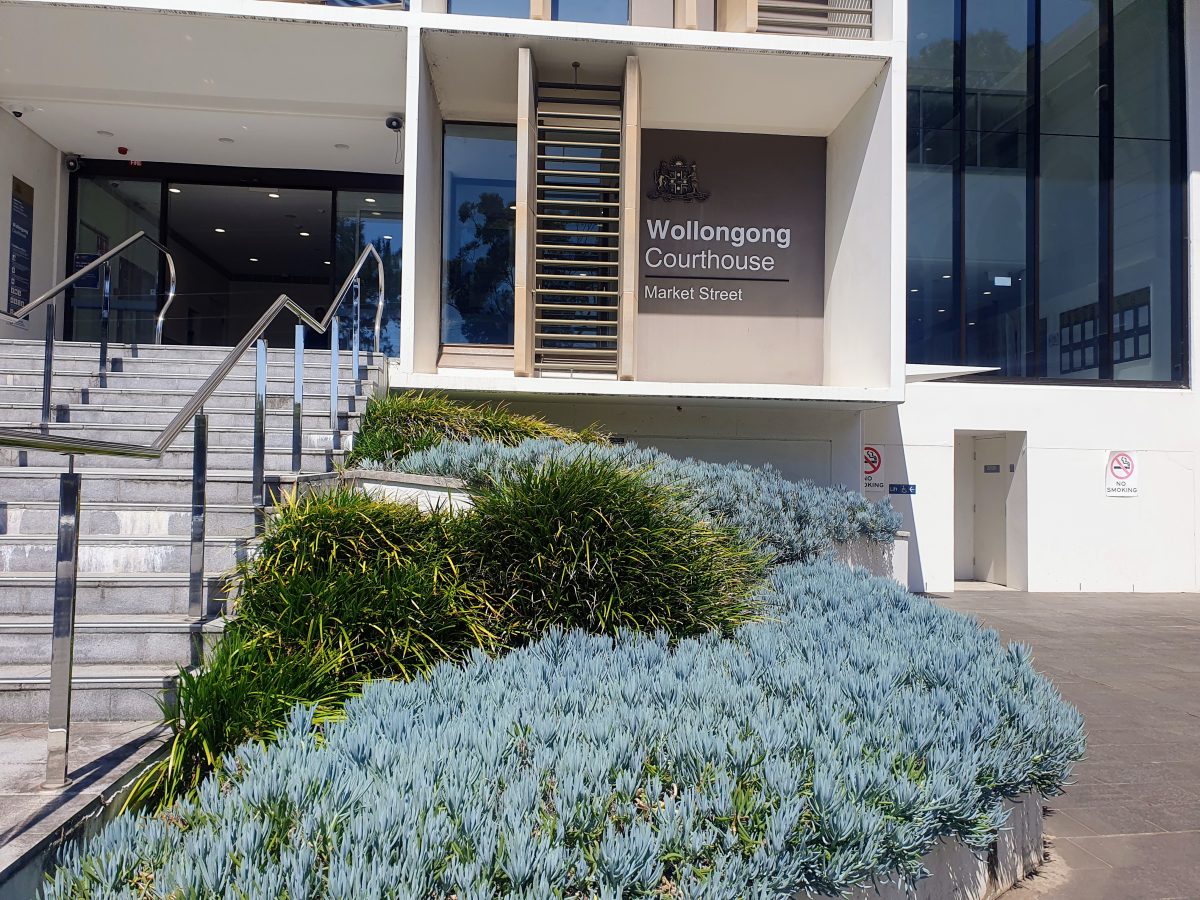
Wollongong Court could trial new rules during sexual assault cases. Photo: Zoe Cartwright.
Sexual assault victim-survivors could face less distressing questioning in court and fewer demands to recount their experiences under proposed changes to be trialled in Wollongong.
Wollongong District Court has been chosen as one of three NSW courts to test new rules governing how complainants are questioned, including how long questioning can last and what topics can be covered.
Illawarra Women’s Trauma Recovery Centre has welcomed the proposed reforms, which would be trialled from 2027 to 2030 if passed by NSW Parliament, as an important step towards making the justice system less traumatic for victim-survivors.
Illawarra Women’s Trauma Recovery Centre CEO Elise Phillips said the reforms recognised that seeking justice could sometimes compound the harm victim-survivors had already experienced.
“This is a step in the right direction towards a more trauma-informed legal process for women who report sexual assault,” Ms Phillips said.
“We welcome the selection of Wollongong District Court as a pilot location for these reforms.”
Backed by $4.8 million in government funding, ground rules hearings would allow the court to set directions about the questioning and support needs in a bid to provide clearer expectations and reduce inappropriate or irrelevant questioning.
Separate proposed changes would allow recorded police interviews to be used as a complainant’s initial evidence in sexual assault trials, reducing the need to repeat their account in court.
A statutory review of the Child Sexual Offence Evidence Program, due to begin in early 2027, will also consider the feasibility of allowing adult sexual assault complainants to pre-record all their evidence.
Ms Phillips said the pilot and review would be important opportunities to assess how the justice system could better support victim-survivors.
“We look forward to seeing the results of this pilot,” she said.
“Combined with the review of the Child Sexual Offence Evidence Program, we expect there to be strong evidence that pre-recorded evidence, including cross-examination and re-examination, is the best practice to minimise trauma for victim-survivors.”
Set to operate in Parramatta, Wollongong and Dubbo district courts, the changes are aimed at helping improve the overall quality of evidence in sexual assault trials, without compromising the accused’s right to test the prosecution case.
Attorney General Michael Daley said these “commonsense reforms” would go a long way towards minimising trauma for sexual assault complainants seeking justice.
“Sexual assault complainants and witnesses are especially vulnerable in our justice system,” Mr Daley said.
“We want to help them give their best evidence by ensuring they do not need to tell their story multiple times and deterring inappropriate and irrelevant questioning in court.
“These changes will make the trial process more robust, mirroring practices already in place for child sexual assault prosecutions.
“It is part of the government’s ongoing work to improve the experience of complainants in the criminal justice system.”
NSW Women and Prevention of Domestic Violence and Sexual Assault Minister Jodie Harrison said victim-survivors often found reporting sexual assaults incredibly hard and the justice process could sometimes be distressing.
“These reforms are an important part of the wider work we are doing to support victim-survivors, through justice system navigators and in healing and recovery,” Ms Harrison said.
Women’s Safety Commissioner Hannah Tonkin said many sexual assault complainants were required to give detailed evidence years after their assault and were often subjected to inappropriate questioning that was of little relevance to the issues in dispute.
“This takes an immense toll on their wellbeing, healing and recovery,” Dr Tonkin said.
“Allowing complainants’ pre-recorded evidence in chief to be used during sexual assault trials will enable them to give their account much earlier, in a safe setting and to start rebuilding their lives sooner.
“This will significantly reduce the trauma experienced by those pursuing justice, while also improving the quality of their evidence.
“Similarly, the introduction of ground rules hearings will reduce stress for complainants and improve the precision of their evidence and the efficiency of trials by ensuring that questions directed at the complainant are appropriate, relevant, and focused on the issues in dispute.”
Unions NSW secretary Thomas Costa said sexual assault complaints were too often subjected to treatment that was humiliating, harmful and, in many cases, cruel.
“Unions NSW supports the appointment of an Independent Commissioner in NSW to advocate for people who experience crime, including sexual assault,” Mr Costa said.
If this story has raised any concerns for you, 1800RESPECT, the national 24-hour sexual assault, family and domestic violence counselling line, can be contacted on 1800 737 732 and Lifeline on 13 11 14. In an emergency, call Triple Zero.