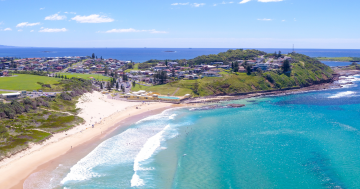
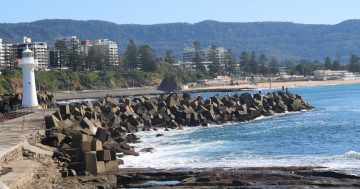
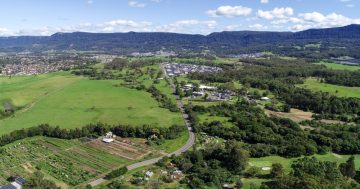
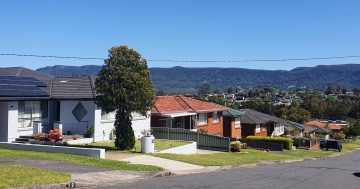
One of the region’s most expensive markets is leading the Illawarra’s downturn. Photo: Region.
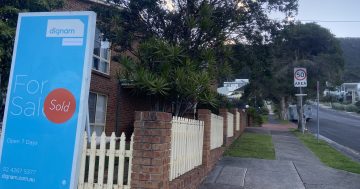
Vendors across the Illawarra are deepening price discounts as homes take nearly twice as long to sell compared to six months ago.
According to CoreLogic’s October data, median days on market surged from 23 in April to 44 in October, forcing sellers to expand discounting margins from 2.8 per cent to 4.5 per cent.
CoreLogic Research Director Tim Lawless noted that total stock levels reflected a clear softening in buyer appetite.
“Listing numbers are quite clearly trending higher, with total listings in October sitting at 1675 — 11.6 per cent higher than a year ago, and tracking 19 per cent above the 10-year average,” he said.
“But it’s not because there’s been a rush of new listings coming to market. New listings are actually down 6 per cent compared to a year ago. The reason is we’re seeing less demand in the marketplace.”
Mr Lawless cited rising borrowing costs and broader economic pressures as the primary drivers eroding buyer confidence and purchasing power.
“Interest rates may ultimately start coming down maybe a year or so from now; that’s probably when we’ll start to see buyers taking advantage of the improvements in affordability,” he said.
More broadly, the Illawarra is shadowing Sydney’s property downturn on a standard regional lag. Sydney values have fallen 10.1 per cent from their February peak, while the Illawarra has slipped 6 per cent from its April peak. With the region’s annual rate of decline steepening from -0.2 per cent to -2.2 per cent in a single month, further drops appear inevitable.
The coastal enclave is not an isolated case.
“We’re seeing very similar trends across each of what you might describe as the satellite cities that are adjacent to the capital city metro market,” Mr Lawless said. “Newcastle, pretty similar results, following Sydney’s lead; the Gold Coast and Sunshine Coast generally following Brisbane’s lead.”
Within the region, premium postcodes are absorbing the sharpest corrections. For detached houses, the area’s most expensive suburb led the decline: Coledale values fell 8.1 per cent over the past year, followed by Austinmer (-4.9 per cent), Russell Vale (-4.3 per cent), Keiraville (-4.2 per cent) and Mount Keira (-4.1 per cent).
The unit market experienced similar high-end softness. Shell Cove recorded the steepest decline at -9.1 per cent, followed by Shellharbour (-8.2 per cent), Kiama (-7.3 per cent), Warilla (-6 per cent), and Shellharbour City Centre (-4.1 per cent).
By contrast, lower-priced pockets have offered more insulation. While they have softened over recent months, many retain modest annual gains. House values in Albion Park remain up 5.3 per cent over the past 12 months, followed by Oak Flats (4.2 per cent) and Warilla (4.1 per cent). Unit performances were similarly resilient in East Corrimal (up 5.4 per cent), Helensburgh (up 4.3 per cent), and Tullimbar (up 3.8 per cent).
As market conditions tilt in favour of buyers and listing durations stretch out, transacting in this cooling climate requires a more defensive strategy, Mr Lawless said.
“For people looking to upgrade in the market, the only thing I’d say is it’s probably a good idea to sell before you buy, just given the uncertainty of how long it’s going to take to offload the property,” he said.
“If you’re reliant on accessing credit and having the equity from the home sale to repurchase, you probably want the certainty of having that sale completed before you start getting serious about buying the upgraded property.”