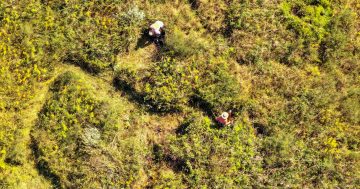
Illawarra Shoalhaven Joint Organisation’s Illawarra District Weeds Authority Chief Weeds Officer David Pomery removes invasive yellow burrhead from a Shellharbour backyard. Photo: NSW Government.
An invasive water weed has been seized from a backyard in Shellharbour, more than three years after authorities were first alerted that the plant may be being illegally sold in the area.
Two yellow burrhead plants were discovered at the Shellharbour backyard last month, marking the first time mature plants of this species have ever been found in the state.
“The successful detection highlights the strength of NSW’s proactive and strategic approach under the New Weed Incursion Plan and NSW Invasive Species Plan to exclude, eradicate and contain new invasive weed species before they pose a threat to agriculture, our environment, economy and communities,” NSW Department of Primary Industries and Regional Development (DPIRD) Chief Invasive Species Officer Scott Charlton said.
Online intelligence monitoring by biosecurity officers in Queensland alerted DPIRD to the possibility the weed was being illegally sold in Lismore, Newcastle and Shellharbour in late 2022.
Four suspected sites were identified and monitored by relevant local control authorities.
Detective work by the Illawarra Shoalhaven Joint Organisation’s Illawarra District Weeds Authority then led to the plants being uncovered in the region, with the identification confirmed as yellow burrhead plants by the Botanic Gardens of Sydney’s National Herbarium of New South Wales.

Yellow burrhead plants can have serious environmental and agricultural impacts. Photo: NSW Government.
Community intelligence indicated that a Sydney street market could be the potential source of the seized plant.
“Showcasing biosecurity detective work at its best, the combined efforts of on-ground inspections, market surveillance, community reporting, online intelligence monitoring, scientific verification and forensic DNA tracing are now helping to intercept and destroy this damaging weed before it can establish here,” Mr Charlton said.
Yellow burrhead plants are illegal to possess, sell or knowingly distribute due to severe environmental and agricultural risks.
The weed outcompetes native aquatic plants, reduces food and habitat for fish and aquatic animals, causes silt build-up in waterways, slows or blocks water flow in natural waterways, agricultural channels and drains, restricts access to the water for people and animals, and creates mosquito habitats.
With a national eradication program in place for northern Australian infestations, yellow burrhead has the potential to invade northern NSW.
But despite being an invasive and problematic plant, introduction pathways include some cultivating the yellow burrhead as an ornamental plant or vegetable, who may be unaware that it is a severe weed.
DPIRD will continue surveillance for yellow burrhead and encourages the community to report any suspected yellow burrhead sightings to the NSW Biosecurity Helpline on 1800 680 244.
For more information visit the NSW WeedWise website.