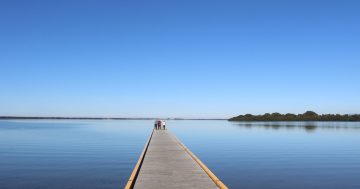
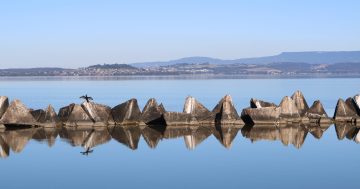
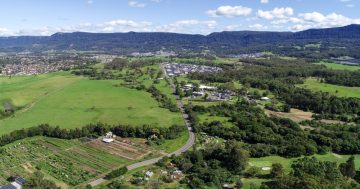
Lake Illawarra’s annual report card has revealed its strengths and vulnerabilities, with the overall quality rating dropping. Photo: Wollongong City Council.
The overall water quality and condition of Lake Illawarra has declined in the past year according to a new report, with gradings varying from ‘very good’ to ‘poor’ across the areas tested at the popular body of water.
An annual assessment of the water clarity, nutrient levels and algal growth at Lake Illawarra has revealed the sites with the poorest quality, with the overall grading of the lake dropping from the standard it’s held in previous years.
The 2025-26 Estuary Health and Water Quality Report Card determined the health of the lake to be a ‘C’ or ‘Fair’ grade, compared to the ‘B’ or ‘Good’ grade it previously held, but individual sampling sites yielded mixed results.
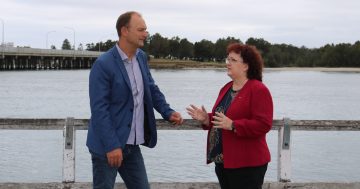
“Seven of the nine sites achieving good or very good ratings is an encouraging result and shows much of Lake Illawarra continues to support a healthy aquatic environment,” Wollongong Lord Mayor Tania Brown said.
“This report isn’t just a health check; it’s a road map. It highlights what’s working, where the pressure points are and how we can target future investment to achieve the greatest benefit for Lake Illawarra.”
The change in grading has been attributed to elevated chlorophyll-a and turbidity levels during summer at Burro and Griffins bays.
Significant rainfall during the monitoring period was also said to have led to elevated nutrient levels and reduced water clarity, particularly at the north-east and south-west tips of the lake.
The lake entrance at Windang and central basin received the highest rating, while other parts near Oak Flats and Warrawong were determined to be ‘Poor’.
Three sites were also assessed for their enterococci levels to give an indication of recreational water quality for primary (safe for swimming) and secondary contact (safe for boating and watercraft activities only).
The Kanahooka foreshore was deemed suitable for primary and secondary contact 85 per cent of the time, Ski Way Park was determined suitable for primary contact 76 per cent of the time and secondary contact 92 per cent of the time, and Purry Burry was suitable for primary contact 62 per cent of the time and secondary contact 92 per cent of the time.
The results for primary contact were lower than previous years, however fewer samples were taken during the monitoring period.
For estuarine sites it is also recommended not to swim for three days after rain.
Wollongong and Shellharbour City councils are working with the NSW Government and local stakeholders on catchment restoration, revegetation and water quality improvement projects aimed at reducing pollutants entering the lake as part of the Lake Illawarra Coastal Management Program.
This report highlighted the strengths and vulnerabilities to help guide future action and maintenance.
“Lake Illawarra doesn’t stop at a council boundary, which is why collaboration between councils and our partners is so important,” Shellharbour Mayor Chris Homer said.
“These results show the work we’re doing across the catchment is making a difference but also underscore that protecting the lake requires a sustained, long-term commitment.”
“A risk-based stormwater management framework introduced in 2025 is helping protect Lake Illawarra as West Dapto grows. Council is also auditing existing stormwater treatment devices and requires new developments to include measures that improve water quality,” Cr Brown said.
“The lake is one of our region’s defining natural assets, and we’re committed to working together to protect it.”
The 2025-26 report card and ratings from previous years are available on the Wollongong City Council website.