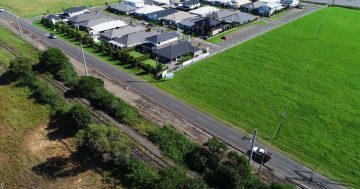
Microbats have been discovered during construction of West Dapto Road, delaying the project. Photo: Pavel German/DCCEEW (Supplied by Wollongong City Council).
The year-long closure of West Dapto Road will be extended after a colony of threatened microbats was discovered in a culvert set to be demolished as part of works along the key connection.
A colony of Southern Myotis microbats, discovered following the demolition of a pavement between Shone Avenue and Rainbird Drive, will delay the long-awaited reopening of West Dapto Road, with work on the section unable to continue until the bats move on.
“It’s the nature of these projects to expect hurdles and issues will arise, but it’s fair to say microbats are an unwelcome hurdle as we reached this stage of construction,” Wollongong Lord Mayor Tania Brown said.
“We understand it’s extremely frustrating for residents who’ve already shown so much patience and understanding through the road closure.
“It’s something entirely unexpected, but we do have to act in an environmentally responsible way in all we do, particularly when it comes to threatened species.”
The microbats are among only 10,000 surviving Southern Myotis bats in Australia and are listed as a threatened species. Any unlawful harming, killing, or intentional damage of a colony’s roost can result in significant fines for individuals or corporations.
The culvert in which they are residing was inspected as part of environmental assessments undertaken prior to works starting, with no indication of microbats found.
However their presence became apparent once demolition of the culvert began when the bats, which weigh up to 40 grams, were found in narrow gaps within the concrete structure.
Now council has to wait until the bats depart before they can continue construction on the culvert, with a Microbat Management Plan being developed to seek approval from the Department of Climate Change, Energy, the Environment and Water to proceed with relocation measures.
But with the species known to hibernate over winter, there is no fixed timeline to when they may move on.
“We’ll put a plan in place to manage the presence of the bats and make sure we take all the right steps to mitigate the impacts on the project, bearing in mind that we can’t put a definitive timeline on their departure,” Cr Brown said.
“We’re working with our contractors to limit the impact of these issues and minimise delays as much as possible through changing the order of works and looking at project staging to work around the sensitive site.”
Although work will continue to the east and west of the microbat habitat, the road, which has been closed since last July and was due to open mid-2026, cannot be reopened to traffic until the culvert where the microbats were discovered is reconstructed.
“We still have fixed detours in place so people can reliably plan their journeys, and we’ll continue to look at options to reopen the road to traffic as soon as possible,” Cr Brown said.
“I thank West Dapto residents for their continued patience as we deliver this vital road upgrade to meet the long-term needs of this rapidly growing community.”
A new timeline for the reopening of the road is set to be revealed following the development of the Microbat Management Plan.
Project updates are available through the Wollongong Council website.