Wollongong MP Paul Scully, Environment Minister Penny Sharpe and Heathcote MP Maryanne Stuart welcomed the findings of the noise camera trial. Photo: Environment Minister Office.
A noise camera trial in Wollongong has revealed repeat offenders and motorcyclists are causing the most disturbances for the community, with the findings now being further investigated so that legislative consequences can be enforced.
Aggressive driving and intentional disruption has been at the core of noisy vehicles disturbing the peace on roads around the region according to initial results from a noise camera trial, with the government now exploring the next steps to cracking down on hoons on the roads.
Wollongong MP Paul Scully said while there were relatively small number of incidences of noise events, they were either repeat offenders or motorbikes who were taking out the predominate numbers.
Data from the trial, which was also conducted in the Bayside Local Government Area, showed 55 per cent of all noisy events were caused by the same group of vehicles that passed by noise cameras at different times and days, sometimes at more than one noise camera location.
It also revealed trends of noisy driving being most prevalent at night and on weekends with driver behaviour a factor in all noisy events.
Motorcycles were responsible for about 55 per cent of noise events, despite only representing around four per cent of registered vehicles in the state.
Environment Minister Penny Sharpe said the trial tracked more than 7.7 million vehicle movements and over 3500 detections of it being too noisy and disturbing the peace.
“It’s shown us what in some ways these communities already know – there are people that are driving deliberately and riding their motorcycles in a way that is disturbing the peace particularly in the evening and on weekends,” she said.
“What this trial is telling us and what we’re looking at now is how we can better regulate this into the future.”
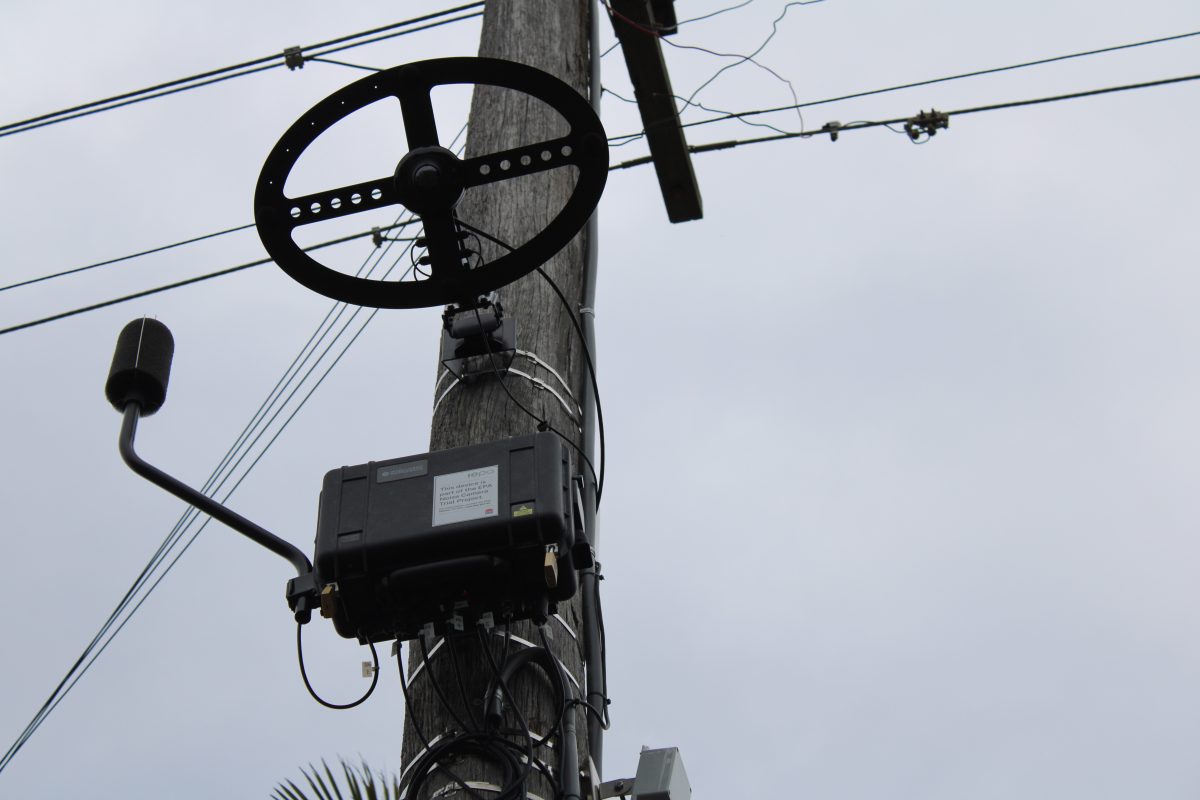
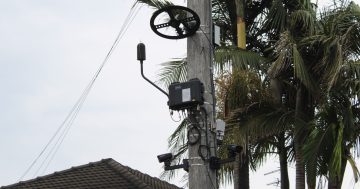
The noise cameras were installed in undisclosed locations around Wollongong and Bayside LGAs. Photo: Keeli Dyson.
The cameras were installed in Wollongong late in 2024 and were part of the first trial of its kind in the country.
While fines were not issued during the trial period, a review was undertaken to see if the cameras could be used for enforcement in the future.
“Noise challenges in and around Wollongong CBD aren’t a new thing, they’ve been around for a long time but of course with additional density in the CBD, more people are hearing it more often,” Mr Scully said.
“The technology appears to be promising but of course the technology alone is not the solution. We’ve got to make sure that if we’re going to pursue this there’s going to be a legislative path so that the fine activity can happen.”
As well as the camera trial, the EPA, NSW Police and Transport for NSW have worked together to target noisy and illegally modified vehicles in areas known to be frequented by offenders.
Late last year, random inspections on vehicles suspected of being modified and assessments of their compliance with noise regulations led to 16 vehicles being issued with defective vehicle notices in Bulli and Rockdale.
And despite the trial now being finished, Heathcote MP Maryanne Stuart still encouraged the community to speak out.
“I’ve heard from constituents about the noise levels along Lawrence Hargrave Drive, it’s a beautiful coastline area of course with the Seacliff Bridge, but it’s used as a speedway,” she said.
“Now through the trial we’ll be able to assess those results and looking forward I really encourage residents to continue to reach out to the NSW Police and the EPA to log those calls, this work is not finished.”
The EPA is conducting a detailed analysis of the trial data to help determine the next steps.