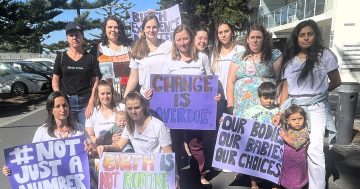
An estimated seven out of 10 women and birthing parents in Australia are missing out on a key mitigating factor in birth trauma. Photo: Cara Burns.
More than two years after Illawarra families shared deep traumas with a landmark state inquiry, advocates warn the NSW Government is dragging its feet, having fully implemented only one of the inquiry’s 43 recommendations.
Better Births Illawarra (BBI) — the community volunteer organisation that represented the region and generated the majority of the state’s submissions for the NSW Legislative Council inquiry into birth trauma — warned this week that a fragmented maternity system continues to leave local mothers exposed to birth trauma.
To date, the appointment of NSW’s first Chief Midwife remains the sole recommendation fulfilled. Closer to home, BBI welcomed the expansion of Midwifery Group Practice (MGP) at Wollongong Hospital and the creation of a new MGP at Shoalhaven Hospital, alongside a transition toward models that meet more diverse needs.
However, after representing more than 4200 women who shared stories of being ignored, pressured, coerced and disrespected, an estimated seven out of 10 women and birthing parents in Australia are missing out on what BBI calls a key mitigating factor in birth trauma — continuity of care.
BBI President Sharon Settecasse said while these local advancements were both hard-won and welcome, they still fell short of the most critical milestone.
“An expansion in one place and a new service in another still isn’t universal access,” she said. “Every woman and birthing parent in the Illawarra and Shoalhaven deserves access to a known midwife through their pregnancy, birth and postpartum, not just the ones who happen to get a place.”
Speaking from experience following the trauma of her first birth, Ms Settecasse emphasised that the value of having a consistent midwife through pregnancy, birth, and postpartum cannot be overstated.
“Our mission does not end until this is delivered,” she said.
International studies link midwifery continuity of care to a 16 per cent reduction in pregnancy loss and neonatal death, a 24 per cent lower chance of pre-term birth, and a 15 per cent reduction in the need for regional analgesia.
It is a proven measure for improving maternal and infant outcomes, saving money, increasing midwife job satisfaction and delivering culturally responsive care for Aboriginal and Torres Strait Islander women.

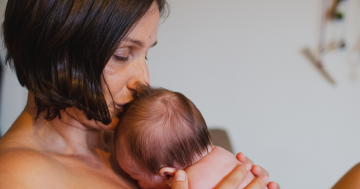
Studies link midwifery continuity of care to significant reductions in pregnancy loss, neonatal death, pre-term birth and the need for regional analgesia. Photo: Bear Hunt Photography.
Illawarra mum of two Julia Woodside can attest to the benefits of a known midwife, having experienced it for both her pregnancies and childbirths.
Not only did she have antenatal and postnatal checkups at her home, but the relationship she built with her midwives no doubt played a key role in her positive birthing experiences.
“I didn’t even have a birth plan written down. We’d talked through it all so much that I knew what I wanted, my husband knew what I wanted, and my midwife knew what I wanted,” she said.
“Because we discussed it all with no judgment — just acceptance of the choices that we were making — when I was giving birth, I was fully supported. I was able to just be there in the moment and do what I needed to do.
“I had quite a long pushing stage, and also because I’m an IVF mum and I was having a VBAC, I’m sure that if I’d had fragmented care, I would have been offered and probably pushed into a lot more intervention than what I wanted and needed.
Ms Woodside noted it was “unfair” that her experience was widely confined to people who could afford private care.
“I was in a financial position to make sure that I got that care … the fact that we aren’t ensuring from a health perspective that women have access to continuity of care with a known midwife really worries me.”
Dr Hazel Keedle, author of the landmark Birth Experience Study, said this gaping gap left far too many women exposed to unacceptable risks.
“If we’re serious about reducing birth trauma, investment in continuity models has to be a priority, not an afterthought,” she said.
Moving forward, Ms Settecasse said BBI would maintain pressure on the government to disclose its progress on the remaining recommendations from the Select Committee on Birth Trauma.
“We’ll keep pushing government to tell our community exactly where these recommendations stand, and to invest in the model we know prevents birth trauma: midwifery continuity of care for every woman and birthing parent across Australia,” she said.