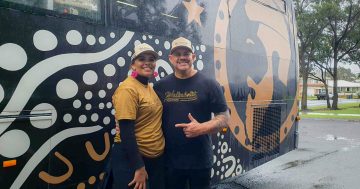
A panel speaking during the launch of Peers at the Table podcast in Canberra. Photo: COORDINARE – South Eastern NSW PHN.
What if some of the best insights into improving mental health care came from the people who have experienced the system themselves?
That’s the thinking behind new podcast Peers at the Table, where people with lived and living experience are being handed the microphone to share stories and insights designed to challenge assumptions and help shape more person-centred mental health services.
Developed by COORDINARE – South Eastern NSW PHN (Primary Health Networks) in partnership with Co-Equal’s Phil Crawford, the series comes as the peer workforce within PHN-funded mental health and suicide prevention services across South Eastern NSW has almost tripled since 2021.
That region includes the Illawarra and Shoalhaven.
The podcast was launched at Parliament House in Canberra this month and featured a live panel discussion and airing of the first episode, Rethinking Recovery.
COORDINARE regional peer workforce project coordinator Courtney Cross said the series aimed to challenge assumptions, build empathy and encourage new ways of thinking about mental health and recovery.
“Through storytelling, we hope to amplify lived experience voices, foster greater understanding of peer work and inspire new approaches to designing and delivering services,” Ms Cross said.
“We hope each episode encourages people to listen differently and appreciate what becomes possible when people with lived and living experience are genuinely at the table.”
She thanked the contributors who shared their experiences throughout the series, highlighting that “sharing lived and living experience is an act of courage”.
COORDINARE CEO Prudence Buist said the series provided important real-world perspectives on accessing mental health services and contributed ideas to improve help-seeking experiences.
“Through the experiences and expertise shared by contributors, the series encourages conversations about how mental health services can be more person-centred, recovery-oriented and responsive to the needs of people who use them,” Ms Buist said.
She said the podcast was designed to be an educational resource to help mental health service providers learn from lived experience and deliver care that better responded to each person’s needs and experiences.
“The peer workforce in South Eastern NSW has grown significantly over recent years, reflecting increasing recognition of the important role lived experience plays in supporting recovery and shaping the future of mental health care,” she said.
Since 2021, the number of peer workers delivering services within South Eastern NSW PHN-funded mental health and suicide prevention services has grown from 70 to more than 200, while the number of PHN-commissioned services incorporating peer roles has increased from 15 to 39.
Peer workers now deliver about 27 to 28 per cent of care across commissioned services employing peer workers, compared with about 5 per cent five years ago.
The launch at Parliament House featured the premiere episode, Rethinking Recovery, which explores what recovery-oriented practice looks like from a lived experience perspective.
Peer worker Mark Thompson, who features alongside Neil Fraser in the episode, said being involved in the podcast was a privilege and an opportunity to share knowledge gained through lived experience.
“When we look at things from a relational perspective, we not only have the opportunity to support others, but to find new ways of seeing, thinking and doing for ourselves,” he said.
“It is an inescapable fact that what peers do, and the way peers do it, changes lives for the better.”
The podcast was launched by Assistant Minister for Mental Health and Suicide Prevention Emma McBride and is supported by funding from COORDINARE – South Eastern NSW PHN through the Australian Government’s PHN Program.
Listen to the first episode in the Peers at the Table: Sharing stories, busting myths, transforming care series, titled Rethinking Recovery.