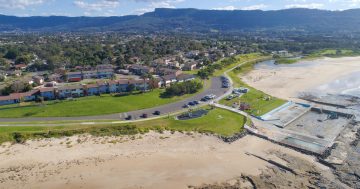
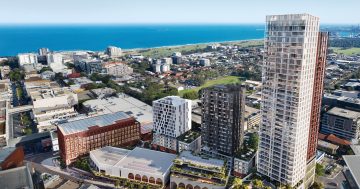
Homes NSW can now progress with plans to develop hundreds of social and affordable dwellings in Gwynneville. Photo: Wollongong City Council.
A proposal to increase the housing density allowance in Gwynneville to accommodate more social and affordable homes will progress in a reduced form, with the move still raising concerns.
One hundred and twenty-eight lots in Gwynneville’s Irvine Street, Madoline Street, Sidney Street, Paulsgrove Street, Hoskins Street, Leahy Crescent, Spearing Parade and Murphys Avenue will soon be rezoned as part of a planning proposal which could lead to an estimated 1250 dwellings developed in the area, with 50 per cent proposed to be social and affordable rental housing.
“This is not change for change sake, it is to meet a good policy objective which is to increase the stock of social and affordable housing in our city,” councillor David Brown said.
The lots and roads in the impacted precinct were largely created in a 1951 Housing Commission subdivision, but over time many social housing lots have been sold to tenants and private owners.
Today, Homes NSW owns 75 lots and 61 are privately owned. The majority of lots still contain single dwelling houses.
An initial plan proposed the zoning be increased from R2 Low Density to R4 High Density, but after backlash from the community it was scaled back to R3 Medium Density, with the majority of the buildings to be three to four storeys, with taller five- to six-storey buildings to be located near the university.
“The good thing about this proposal is it absolutely responds to the reality of the housing in our city in a meaningful way, a housing crisis which has spilled over into a homelessness crisis,” councillor Kit Docker said.
“It better utilises existing public land for a reasonable level of density, and unlike many other proposals we are seeing throughout our city, this one comes far closer to getting the balance right when it comes to delivering social and affordable housing for the community.”
The support from Wollongong Council will allow Homes NSW to create and lodge development applications (DAs) for the site as early as next year, with further opportunities for the community to provide feedback over time through development control plans, planning agreements and on specific DAs.
“This does take time to implement,” Homes NSW spokesperson Klint Rivett said.
“The planning will see a slow and steady redevelopment of the area.
“The planning proposal and particularly the rezoning down to R3 enables planning for private residence as well to be acquired by developers as well as seeing social homes come into the mix in the redevelopment.”
But while the need for further social housing was not debated, private property owners were concerned about the lack of a specific framework identified for them throughout years of construction.
“When I purchased this property my plan was to make it my long-term home, somewhere I could age in place,” Hoskins Street homeowner Bettina Frankham said.
“Yes, we need more housing and I support that goal but the people already living in this precinct matter too.
“Now I find myself unable to plan ahead, uncertain how far into the future I can commit to being here, reluctant to invest further and unsure whether I will ever receive fair compensation if I do eventually have to leave.
“That uncertainty has a real human cost that doesn’t appear anywhere in the planning documents.”
Councillors also acknowledged the transport infrastructure challenges that would need to be addressed as part of long-term planning to accommodate for the increase in residents calling the area home.
“The housing built here will not exist in isolation; people will need to move around from this to this point, to work, to school, to shops, to medical appointments into the CBD and that does raise concerns because I don’t believe right now as the plan sits, the transport response doesn’t match the scale of what’s being proposed,” Cr Docker said.
“If we’re serious about reducing car dependency in this area, and that’s what we need to make it work, we do need a clearer, more robust transport plan.”
The draft Development Control Plan and draft Planning Agreement with Homes NSW for Gwynneville will also go on public exhibition for two months.