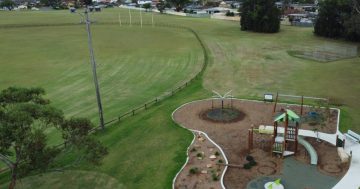
Shellharbour Village is regarded as having the most freely available public parking in Shellharbour. Photo: Kellie O’Brien.
Shellharbour residents will be encouraged to have their say on how parking should be managed across the city’s key centres as population growth and rising car ownership put increasing pressure on limited spaces.
A draft parking strategy adopted by Shellharbour City Council in February will go on public exhibition soon, outlining a long-term plan to balance free parking, business needs and alternative transport options.
In moving the item, councillor John Davey questioned how effective any strategy could be without robust enforcement, asking what “visible and/or substantive changes” residents could expect in compliance management once the strategy was endorsed.
Staff responded that council already operated a car parking patrol program to monitor and regulate timed parking, with the new strategy reallocating and revising timed parking spaces and enforcement continuing under existing patrol arrangements to support parking turnover.
Cr Davey also questioned why the report did not address e‑bikes, citing their increasing presence and impact on transport patterns.
Council staff clarified that while the parking strategy does not directly deal with e‑bikes, they are a key part of the separate Active Transport Strategy already adopted by council, which identified e‑bike storage facilities and other supporting infrastructure for e‑bike use.
Cr Davey said the strategy was being developed against a backdrop of strong population growth, with population forecast to rise from about 49,000 residents in 2021 to 73,000 by 2036.
He said this growth, combined with high car ownership, was placing increasing pressure on finite parking spaces, particularly in popular areas and during the busy summer period.
“Community value parking that is free, accessible and convenient,” he said.
“I do wonder though if free parking is, and should be, sustainable in some of our city’s higher utilised areas, given congestion and increasing demands upon finite spaces.
“Illegal parking is a recurrent theme, and this report notes community calling for more consistent enforcement.”
Cr Davey said greater support for active transport was essential to relieve pressure on parking, particularly in centres that lacked safe and dedicated shared pathways.
He highlighted Oak Flats as an example where a dedicated cycleway along Central Avenue, feeding riders from surrounding areas, could encourage residents to shop by bicycle rather than car.
Concerns about streets “increasingly choked” by multi‑lot townhouse developments, along with boats, trailers, motorhomes and caravans was also one of his concerns.
Cr Kellie Marsh encouraged the public to lodge their submissions, envisaging the draft plan would further develop after community input.
“When it does come back, I want to make sure that it’s included in the strategy, that there’s no paid parking in Shellharbour,” Cr Marsh said.
“I think that’s something that’s very important to our residents, and also sets us apart from Wollongong.”
Cr Rob Petreski, who has been advocating for a parking strategy since the previous council term, welcomed the report and echoed calls for strong community engagement and for parking to remain free.
“I think there’s a significant disconnect between some public perceived parking that’s not owned by Shellharbour City Council and the parking that people use on a daily basis,” he said.
He cited two examples, including the large carpark across from council at Stockland Shellharbour and the carpark at the former council chambers at Lamerton Crescent.
“That’s a spot that people think is public parking, but it’s actually not public parking,” he said.
“So it’s really important that the perceptions and expectations are laid bare for everyone to understand when they look at this strategy.”
Cr Petreski also referred to a table in the report that showed Shellharbour Village had generous public parking compared with other centres.
He said that once new walking bridges and connectivity pathways were completed, there were opportunities to better link Shellharbour Village and the already busy Shell Cove, sharing parking capacity between them.
Mayor Chris Homer said he was surprised by the report’s findings on parking availability in Shellharbour Village, particularly given concerns raised by residents about it having limited spaces.
Cr Homer said the village had two large parking lots behind either side of the main street.
“I was still, myself, quite surprised by the incoming operational statistics that have found that the village did have by far the most freely available public parking spaces in the city, including the CBD,” he said.
“It seems that maybe most people don’t see the freely available parking in the village, and usually are looking on the main street.
“Yes, we’ve got Stockland there and that provides the bulk of a lot of free parking [in the city], but that is the private sector.”
He said he was sure it was part of Stockland Shellharbour’s business model to keep it free, with much commentary about Wollongong and Shellharbour and free parking versus paid parking.
The Shellharbour Parking Strategy will go on public exhibition for 28 days, with a date to be determined.