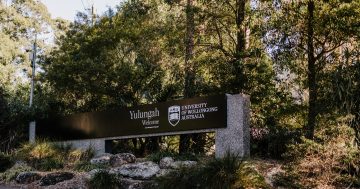
An interim report on an inquiry into NSW’s university sector is critical of the University of Wollongong. Photo: UOW.
A NSW parliamentary inquiry into the university sector has called for a ministerial report into the University of Wollongong’s commercial activities, particularly its operation of overseas campuses.
It has also raised questions about the university’s handling of the major 2025 restructuring and the resultant substantial staff cuts, following evidence about the “quality of consultation, transparency in governance, concentration of decision-making authority and the pace of organisational change”.
The Standing Committee on Social Issues has released an interim report on the inquiry, raising “serious concerns about governance failures, weak oversight and inadequate public transparency across NSW universities”.
The interim report focuses on evidence received by the inquiry in its first three hearings, particularly in relation to the University of Technology Sydney (UTS) and the University of Wollongong (UOW).
Committee chair Sarah Kaine said the interim report found that existing governance and reporting mechanisms at NSW universities were not fit for purpose, particularly when universities engaged in complex commercial activities and large‑scale organisational decision‑making using public resources.
“These are publicly funded institutions, entrusted with billions of dollars and significant public assets,” Dr Kaine said.
“Yet the systems that are meant to ensure transparency, accountability and alignment with the public interest are demonstrably inadequate.
“Transparency around commercial decision‑making and consultant use is not optional – it is essential.”
Dr Kaine said the report’s four recommendations highlighted deep accountability gaps in publicly funded universities, particularly where complex commercial activity and external consultants were involved.
The recommendations are:
- That the NSW Auditor‑General conduct a performance audit of the University of Technology, with a focus on governance integrity, financial management, the use of consultants in decision‑making, workforce management, psychosocial risk oversight and the governance of controlled entities
- That the Minister for Skills, TAFE and Tertiary Education exercise the power under section 21D of the University of Wollongong Act 1989 to request a report from the University of Wollongong Council on the commercial activities of the University of Wollongong and its related entities, including University of Wollongong Global Enterprises
- Changes to NSW Treasury Policy and Guidelines (TPG25-10a) to remove exemptions for university councils and require full disclosure of all consultant expenditure by universities
- A review of the application of the Government Information (Public Access) Act 2009 to ensure contract registers provide meaningful public transparency.
Under section 21D, the minister can request a report from the university council in relation to university commercial activities, including any particular commercial activity or aspect of such activities and the council must respond.
The inquiry heard complaints about the role and membership of UOW’s council, amid confusion from various witnesses about the actual number of members.
“UOW’s published information indicates that the university council comprises 13 members, including one ministerially appointed member and no undergraduate student representative, reflecting a reduction in elected student participation,” the interim report said.
“Although the act identifies serving the Illawarra region as one of UOW’s functions, it does not require council members to be from the Illawarra, nor does it mandate any form of regional representation on the university council.
“Evidence to the inquiry suggested that limited regional connection among senior office-holders may affect the council’s understanding of local impacts.”
National Tertiary Education Union (NTEU) branch president Dr Susan Engel told the inquiry: “I’ve always been surprised that our last chancellors and deputy chancellors have mostly had very little connection to the Illawarra region. They’re often fly in, fly out … I’ve certainly felt that lack of connection has been a part of some of the poor decision-making and not understanding how much those decisions impact the region.”
The report raised concerns about UOW Global Enterprises (UOWGE), a subsidiary responsible for operating the university’s offshore campuses and how its activities may pose risks to the UOW’s legislated public mission as well as its obligations to the Illawarra region.
UOWGE owns and operates overseas campuses in Dubai, Hong Kong, Malaysia and India, as well as the UOW College Australia. UOW is also progressing plans to establish a new international campus in Riyadh, Saudi Arabia.
The UOWGE board oversees the campuses and reports, ultimately, to the university council.
Evidence to the inquiry indicated that the council retains delegated authority over UOWGE’s major strategic decisions, including the establishment of new campuses and controlled entities.
However, concerns were raised at the inquiry about undeclared commercial interests held by members of the university council connected to UOWGE’s offshore entities. It was alleged that two members of the university council – who also served as directors of one of UOW’s overseas campuses – were each receiving about $50,000 in salaries that had not been declared to the council, nor publicly recorded.
Academic witnesses told the inquiry they were concerned that the university’s international expansion may conflict with UOW’s legislated regional mission – “having particular regard to the needs of the Illawarra region”.
In her evidence, former NTEU UOW branch president Fiona Probyn-Rapsey questioned whether offshore expansion was occurring at the expense of domestic teaching and research, particularly in the Illawarra and South Coast.
“While UOW in the Illawarra and South Coast shrinks its offerings, it opens yet another overseas campus. Of all New South Wales universities, UOW operates the most overseas-controlled entities,” she said.
The inquiry heard from a number of witnesses who were critical of UOW for its use of consultants and was told that spending on consultants was difficult to identify in the university’s financial reporting.
“As a result, staff, students and members of the public may have limited visibility of the scale, purpose and value of consultant engagements,” the report said.
Dr Kaine said further evidence would be considered before final recommendations were made.
“This interim report signals serious issues that require urgent attention, but the inquiry is not finished,” she said.
“Further evidence will be examined and universities should be preparing for closer scrutiny.”
The committee will continue to take evidence and expects to release its final report with further findings and recommendations later in the year.