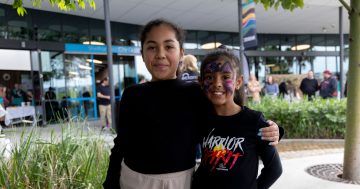
Students performed, shared stories and heard from elders as they came together for the annual reconciliation walk. Photos: Keeli Dyson.
Respect, connection and understanding were at the core of a reconciliation walk which brought hundreds of students and community members together at Koonawarra Bay, with the celebration of culture and recognition of the past hoping to help the next generation move forward in unity.
Walking side by side, young people led the way as the community showed the importance of coming together to take steps towards reconciliation.
“You young kids here, you are the future generations coming through and I hope that you get a little bit of an understanding about Aboriginal culture and where you come from, where you’re going to and what you’re going to be in the future,” Uncle Richard Davis said to the crowd of schoolchildren.
“What happened in the past, a lot of it wasn’t good, so what we need to do is learn about it so we can move forward as a community, move forward as a nation.”
Driven by this year’s theme of ‘All In’, some of our youngest community members demonstrated pride in embracing First Nations culture, through dance, music and sharing their own stories.
“I am a proud Bindal Nation boy with ties to the Moa Island in the Torres Strait,” Hayes Park Public School’s Kayden Demos said.
“I carry these incredible cultures within me and every single day that makes me proud.
“Reconciliation to me means more than just a word, it meanings looking at the person standing next to you and saying, ‘I see you, I respect you, and I’m glad you are here.”


He spoke of how his culture extends beyond just his family’s history and rather is something he lives with every day, and he emphasised the significance of supporting each other.
“It is about all of us, every culture, every background, every story because at the end of the day we all belong here, and when you choose to respect each other, when you choose to walk together instead of apart, that is when something truly powerful happens,” Kayden said.
His friend Avery Fiez was firmly by his side.
“Growing up alongside my mate Kayden, I have learned a little bit about his culture and why it is important to him. I think it is really cool to learn about different traditions, stories, languages and ways of seeing the world,” he said.
“For me reconciliation means taking the time to listen and understand, even when something is not a part of your own story.
“It means taking the time to learn about the past, including the parts that were unfair, and try and make it better in the future.
“I may not share Kayden’s culture but I respect it, and I am proud to walk beside my mate today.”

Kayden and Avery shared their stories of connecting with culture and through friendship.
The Koonawarra Reconciliation Walk was the sixth annual event to be held by CareWays, with slow beginnings following the pandemic quickly growing into an all inclusive and crucial community event, with primary schools, high schools, early childhood centres and representatives from Wollongong City Council, St George Illawarra Dragons and NSW Police all now involved.
“It’s really meaningful to get all the schools in the community together,” CareWays Aboriginal community program officer Brendan Newton said.
“It shows just a powerful display of the community connectedness.
“Everyone needs to be included, not just Indigenous students, non-Indigenous students too – we need everybody to take part to pave the way for future generations … seeing it come from a couple of hundred people to basically today we had almost a thousand people.”
But Brendan said the power of the event and what CareWays did through its programs, wasn’t just about one day, with students engaging to have a deeper understanding and respect of First Nations cultures and stories to ensure they weren’t lost through time.
“It’s great to see all the smiles on the kids’ faces but it’s also being able to deliver cultural programs throughout the year which lead into these events,” he said.
“So teaching dance, teaching students how to make their own didgeridoos, which we call yidikis in this area, and basically just teaching the core foundations of Aboriginal culture and getting them back to the grassroots of what our culture is all about.
“Then using those skills not just at this event but their school NAIDOC and reconciliation events – so it’s also growing them as individuals.”