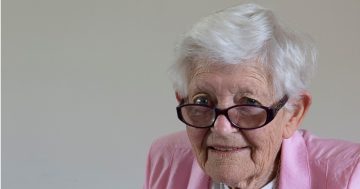
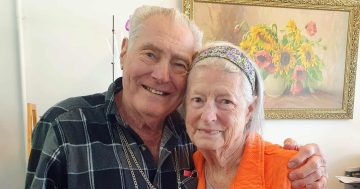
Susan Wallis said she was “honoured and humbled” to receive Community Industry Group’s Social Justice Champion Award. Photos: Jen White.
In a room full of passionate people dedicated to community and social justice, one champion stood out: Susan Wallis.
Susan was selected from an inspiring field of six finalists to receive Community Industry Group’s Social Justice Champion Award at its annual lunch on Tuesday (22 September).
Described as a “passionate advocate, fundraiser, board leader and community connector who has spent many years creating opportunities for people with disability and other vulnerable members of the community”, Susan said the title was an unexpected honour.
“I looked at the nominees and the finalists who are really incredible people doing great things. So I’m very honored and humbled,” an emotional Susan said.
Last year’s inaugural winner, aged care advocate Val Fell, was one of the judges for this year’s award, presented at the lunch attended by business and community members, advocates, leaders and change-makers.
Community Industry Group CEO Nicky Sloan said this year’s nominees were beacons of hope, demonstrating the power of compassion, courage and community leadership to create positive change.
“It can be easy to feel overwhelmed by the challenges facing our communities, but the people nominated for this award remind us that hope is found in action,” she said.
“Their commitment to stand up for others, create opportunities and tackle injustice demonstrates the incredible impact individuals can have when they choose to make a difference.”

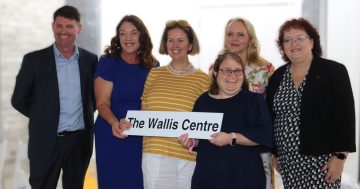
Susan Wallis (with flowers) with fellow finalists, judges, MPs Alison Byrnes and Carol Berry and Community Industry Group CEO Nicky Sloan (far right).
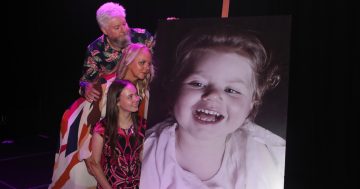
It was a bittersweet award for Susan, whose daughter Gracie died just short of her 13th birthday in 2018. Born with a hypoxic brain injury and cerebral palsy, Gracie and her mum became the local faces of the NDIS campaign Every Australian Counts.
After Gracie’s passing, Susan, husband Mark and daughter Sophie established the Gracie Wallis Scholarship, an initiative handed out at the International Women’s Day lunch event since 2019 that honours young women with a disability and helps them achieve their dreams.
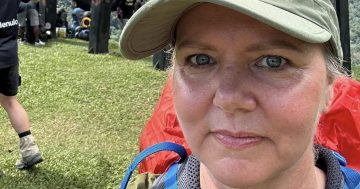
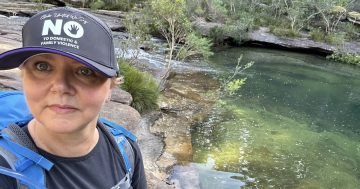
Susan chairs Interchange Illawarra, where the Wallis Centre was named in honour of her family and she has raised funds through her challenging achievement of walking the Kokoda Track and taking on the Great Illawarra Walk.
“Gracie proved that you don’t need to be able to walk and talk to leave an impact and I’ve been driven by her memory and making sure that her life meant something and she certainly has done that,” Susan said in her thank-you speech.
“My beautiful girl, wherever you are, I shouldn’t be receiving this because you should be here.
“I’d just like to remind people that disabled doesn’t mean lesser; it’s just different. And if Gracie Wallis can make the world better, so can all of you. And you are doing that. So thank you very much. You’re all social justice champions.”
The other five finalists were Bill Dowson, Professor Kathy Eagar, Penny Dordoy, Sharon Callaghan and Margaret Bowen.

Nas Campanella told guests at the lunch that their work in social justice had never been more important.
Guest speaker was ABC National Disability Affairs Reporter Nas Campanella, who lost her vision when she was six months old after blood vessels burst in the back of her eyes, detaching her retinas.
At the age of 10 she was diagnosed with Charcot-Marie-Tooth neuropathy, a neurological condition that affects her balance and the sensitivity in her hands, arms, legs and feet.
“For a long time, [a] teacher used to say to my parents that I was just a lazy child, that I didn’t try hard enough, or that my parents made excuses for me and weren’t pushing me hard enough,” she said.
“But when I got the diagnosis of my secondary disability, it was actually a huge blessing in disguise … We had a new teacher come to the school and she was able to introduce all forms of new technology: screen readers, little voices on computer screens, little screen reading programs that would read text into my ears, and I would listen and I would repeat what I was hearing.”
That teacher stayed with Nas until Year 12 and with her support, Nas became dux of the school.
She was also the one who encouraged Nas’ interest in radio, taking her to a community radio station every week and helping her learn how to use the panel and buttons.
Nas attained her university degree in journalism and then did more than four years of unpaid internships, doing everything from making the coffee and cleaning up fashion cupboards before finally having stories published in magazines and newspapers.
Her CV and published work impressed many potential employers, but often she didn’t get the job – “simply because I had a disability”.
“I walked into the interview room and that would be the first time that anyone learnt that I had a disability because I walked in with my white cane,” she said.
“I had decided never to disclose my disability in a job application because it did not matter. But often people would say to me, ‘How can you be a journalist when you can’t see?’”
Nas landed a job as newsreader on Triple J and the screen reading software she had used at school came to the fore.
“It was loaded onto my computer screen and I would listen to the stories in my headphones, and I would repeat what I had to say.
“And it wasn’t the only little bit of audio that was coming in my headphones. There was also a clock telling me when to start and finish. There was the little snippets of audio that I needed to play during the bulletin and finally there was myself coming through the microphone. But on top of that, I was also panelling the desk.”
She admits it was a “bit of a train wreck in the beginning”, but the refined software is now used around the world by people who are vision impaired to become newsreaders.
After more than seven years with Triple J she was ready to move on. It was about that time that the Royal Commission into Violence, Abuse, Neglect and Exploitation of People with Disability was due to start.
She put together a proposal and presentation for the ABC managing director and board and convinced them of the need for a National Disability Affairs Reporter who would be visible on TV.
“In the back of my mind, I thought, ‘well, here’s this opportunity where I need to be a visible person with disability on television and we’ll find a way by picking the right team to put around me and we can do TV together.’”
Nas said covering the royal commission was the “best and worst time” of her career.
“It was the best because each and every day I met some of the most brave and incredible people who shared some of their most deeply intimate and personal experiences with not just me but the world.
“But it was the worst time because often I had to sit through harrowing and distressing testimony, not of occurrences from the past, but often things that are still happening to people today.”
Nas told guests that although they might feel despairing about the state of social justice, they needed to remember that progress was happening.
“Even though sometimes it is hard to see or feel or experience, that is never a reason to stop what we are doing to try and progress social justice, because your work has never been more important.”