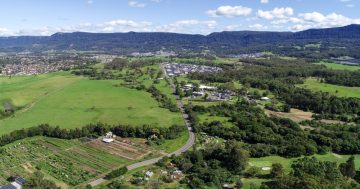
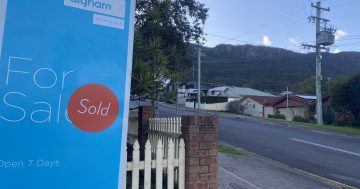
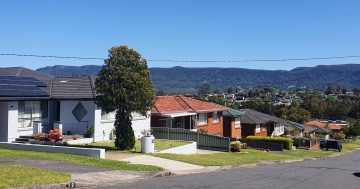
The wide open spaces and bucolic beauty of one Illawarra suburb has no doubt contributed to its massive gains in the past year. (Pictured: 57 Allowrie Street, Jamberoo). Photo: First National Coast & Country.
You’d be forgiven for feeling despondent about the Australian property market. Almost across the board, conditions are cooling, flatlining or contracting, marked by falling auction clearance rates and rising withdrawal numbers.
Under the pressure of repeated interest rate hikes, cost-of-living stresses, broader economic uncertainty and shifting regulatory policies, consumer confidence remains subdued.
While the Illawarra region hasn’t quite matched the momentum of some of the state’s more budget-friendly inland areas, it has demonstrated notable resilience compared to neighbouring Sydney. According to Cotality data however, last month the region’s figures ultimately aligned with the broader national downturn.
Yet a macro perspective reveals a far more nuanced, optimistic picture.
Zooming out to examine Cotality’s latest data shows that numerous local suburbs remain in a significantly stronger position than they were 12 months ago.
In fact, more than a dozen suburbs across the region continue to post double-digit annual capital growth.
Growth kicked off in the southern corridors, with Albion Park Rail posting a solid 10 per cent annual rise, Tullimbar pipping it with 10.1 per cent and Flinders recording a 10.7 per cent gain.
Up in the northern suburbs, Bulli — boasting a premium median value of $1,640,479 and an 11 per cent value increase in the 12 months to date — proved that capital gains aren’t strictly confined to lower price points. It was closely shadowed by Helensburgh (11.1 per cent) and Gerringong (11.5 per cent).
Further south, a corridor of strong performers emerged along Lake Illawarra, with Albion Park rising 11.6 per cent, Mount Warrigal up 11.7 per cent, and Oak Flats recording an 11.8 per cent gain over the past year.
Which brings us to the region’s top three standout suburbs over the past 12 months.

Large blocks and pastoral outlooks are par for the course in Jamberoo. (Pictured: 664 Jamberoo Road, Jamberoo). Photo: First National Coast & Country.
It comes as no surprise to Patrick Ciocca that Calderwood claimed the bronze spot, posting an impressive 12.9 per cent surge in capital growth over the past year.
Ciocca, regional sales manager at Urban Real Estate – an agency that recently demonstrated its own vote of confidence in the area by opening a new Calderwood branch – attributes this localised growth wave to a sweet spot of price point and lifestyle appeal.
“Having the right land price as well as the right builder means that a lot of very in-demand products are being delivered in the area,” he says.
“But also, Calderwood is a thriving community hub. You’ve got the new town centre there which is operational. It has Woolworths, all your specialty stores including a barber, cafes, bakeries, restaurants, a pharmacy, gym and more.
“Families love the new Laundy Hotels pub, and there are lots of parklands, the basketball court, kids’ playgrounds and a lot of open spaces.”
Narrowly missing top honours was Wongawilli, recording a strong 14.1 per cent gain, while bucolic Jamberoo led the entire region with a peak growth rate of 14.2 per cent.
First National Coast & Country’s Sam Lathbury suspects these top-tier figures point toward a subtle evolution in buyer preferences.
“We’ve seen some high-end properties that no doubt have assisted in the median price rise, and certain pockets of the market performing better than others,” he says.
Fundamentally, however, Jamberoo remains a tightly held family market – particularly for buyers seeking acreage and open spaces at a more accessible entry point than nearby prestige coastal and Sydney metro markets.
“There’s a strong sense of community and connection you don’t find everywhere, and a reason why so many people who move away end up coming back,” he says.
“It’s a proper village in its own right, but Kiama and Albion Park are 10 minutes away, so you’re never far from the coast, then mountains and all the conveniences of suburban living.”