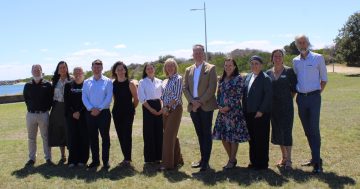
BB Disability & Mental Health Services business development manager Mark Borg in front of a purpose-built Specialist Disability Accommodation home. Photo: Region.
Facing a terminal diagnosis, Suzanne made a decision out of love for her family: she packed up her life in Yass and moved to the Illawarra.
Disability accommodation was scarce back home, so she’d been staying with her eldest daughter, who was eager to care for her. But for Suzanne, it wasn’t a permanent solution.
“I didn’t want that for her,” she says.
Seeking her own space near her aging parents in Farmborough Heights, she moved into a standard rental property, only to find herself trapped by everyday architecture. Her wheelchair couldn’t make the turns down the narrow hallways, and navigating standard doorways became a daily ordeal.
“Finding a place with wide hallways, big bathrooms, and room to manoeuvre means keeping your independence for longer,” she says. “It’s very important to me.”
Today, Suzanne lives in a purpose-built home designed specifically to remove those barriers.
Beyond wide corridors and custom accessible features, she even has space to explore her talent in painting. Her home is part of a growing, long-term investment by local provider BB Disability & Mental Health Services – an organisation actively expanding high-spec accessible housing across the region, at a time when headlines elsewhere are dominated by NDIS cuts and uncertainty.
BB Disability & Mental Health Services – a privately owned organisation operating in the region for five years – is turning the soil on new Specialist Disability Accommodation (SDA) homes, which come with strict government requirements to ensure they’re designed to offer residents permanent, accessible housing for life.
From wide doorframes and integrated ceiling hoist infrastructure to custom kitchens and dedicated wheelchair-accessible vans, the homes are geared to be a practical, community-first answer to a complex national issue.
The organisation operates 32 homes across the region, providing accessible housing and tailored support, including five SDA homes and 27 homes supporting residents living with psychosocial and mental health challenges.

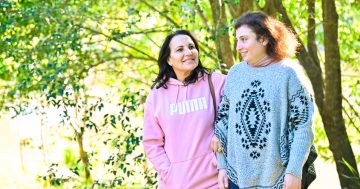
BB Disability & Mental Health Services resident Suzanne now has space to explore her talent in painting. Photo: BB Disability & Mental Health Services.
All SDA homes have been built to the High Physical Support category – the highest NDIS design standard, meaning infrastructure that supports the most complex of needs.
“We’d rather build it to the highest and accept the lowest – even if we basically lose money – so we don’t rule anyone out,” BB Disability & Mental Health Services business development manager Mark Borg says.
This means residents like Suzanne can stay in the same home permanently, even if their health or care needs progress over time.
Despite BB Disability’s commitment to building, operating in the current sector climate requires navigating severe systemic hurdles.
A common misconception in the current national discourse is that housing providers remain insulated from broader NDIS funding cuts. According to Mark, that couldn’t be further from the truth.
“People say to us, ‘Oh, but you’re not impacted because there are no cuts to housing.’ That is false,” he says.
The pressure comes from reductions to participants’ Community Participation funding – the support that allows residents to go out into the community during the day. When planners slash those hours, residents spend more time at home.
“When residents aren’t out, we don’t have staff rostered for those hours because we aren’t being paid for it,” Mark says. “But because the government cut that funding without giving extra housing money, we still have to put staff on to care for them. Inadvertently, housing providers suffer.”

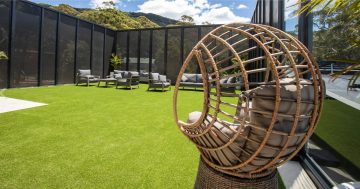
Specialist Disability Accommodation (SDA) homes come with strict government requirements to ensure they’re designed as permanent, accessible housing. Photo: BB Disability & Mental Health Services.
Despite the administrative red tape and funding headwinds, BB Disability is digging its roots deeper to offer stable, connected housing for people living with disability.
Unlike private rental markets where tenants face constant insecurity and the risk of sudden eviction, provider-owned SDA housing offers security of tenure. Once a resident moves in, it is their home for life. To encourage true independence, BB Disability also actively supports residents using external providers for day programs and community outings.
“Our residents can access community participation through a range of organisations, giving them the opportunity to meet new people, build genuine social connections and become more involved in their local community,” Mark says.
The organisation’s momentum in the region isn’t slowing down. It’s just completed a home up the street and soil is being turned on another property next week, which is expected to be completed in February. Another build is scheduled to break ground in March. Expansion plans are also underway in Shoalhaven and Southern Highlands.
“We are committed to creating high-quality, accessible homes that allow people with disability to live independently while remaining connected to their local community, family and friends,” Mark says.