The Valley looks at farmers, bakers, post office workers, florists and more through a unique lens. Photo: Ian Darling.
While most of Kangaroo Valley sleeps, cows are being milked, bread is rising in ovens and newspapers are making their way over the mountain.
It’s this largely unseen rhythm of country life that award-winning documentary filmmaker Ian Darling has captured in The Valley, a quiet documentary that turns its lens on the ordinary people, work and solitude behind one of the region’s most picturesque communities.
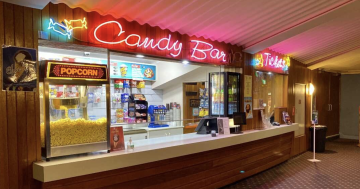
Darling is bringing the film – screened twice at the Sydney Film Festival – to the Illawarra, Shoalhaven and Southern Highlands for a series of special screenings, beginning at Gala Cinema Warrawong on 6 September.
After 25 years of making social impact films and profiles of Australians such as singer-songwriter Paul Kelly, AFL player Adam Goodes and actress Cate Blanchett, he said COVID shifted his interest towards community, isolation and the ordinary rhythms of people’s lives.
“I was looking for a story around a community, and as it happened, suddenly a couple of stories appeared,” he said.
That first led to The Pool, about the swimming community at Bondi Icebergs, before he began looking for a broader community to observe.
“I’m fascinated by the mundane, of observing people in their place of labour and toil, and I follow a number of artists, writers and filmmakers who share that same passion,” he said.
Darling was already familiar with Kangaroo Valley, where his company Shark Island Institute has run artist residencies and film work for about 15 years.
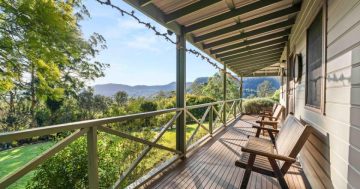
“I think there are few places in the world where you’re just struck by something very powerful and very beautiful,” he said.
“There’s a weight that comes off your shoulders as you drive down and look through the valley.”
With no interviews and little dialogue, he said participants were simply observed going about their lives.
“We weren’t looking for anything. We weren’t trying to angle a story. We simply observed and created this beautiful slice of life in Australia today,” he said.
He said there was an element of “people watching” in the film, which was something that had been lost today.
“That’s what this film is doing,” he said.
“It’s a cinematic people watching experience, and that’s something great because we’ve always got our heads down in our device now.”
He said one of the surprises of the film was seeing the amount of activity that happened at night.

The documentary film reveals country life and what we often take for granted. Photo: Ian Darling.
“The amount of people who are up working when we’re fast asleep, to a degree, we take for granted,” he said.
“Some of my favourite filming scenes were with Graham, the dairy farmer.
“We film him at 3 pm every afternoon, but those moments at 3 am in the morning were something very powerful. Just knowing that happened every single day.”
He said a central element of the film was observing how much time people spend alone and in silence in country communities.
“It enabled me to make the distinction between being alone and lonely,” he said.
“There are a lot of times where people are lonely, but being alone was quite empowering,
“So when we watched Mon the baker make her bread, it was like just watching an artisan at work.
“You’re rolling the dough and putting it in the oven and taking it out and listening to it popping and banging it to see if it was hollow, the pride of packing it away.”
He said her work began at 1:30 am, hours before customers oblivious to her routine arrived for their morning coffee.
The service station operator Arun provided another surprise.
After closing at 7 pm, restocking and cleaning with his wife, he told Darling he expected to get about four hours’ sleep before getting up at 1:30 am for a newspaper run to Nowra, returning in time to reopen at 6 am.
“It didn’t matter what anyone did, we honoured their same level of labour and toil,” he said.
Darling said he hoped audiences would resist the urge for a conventional narrative and simply sit and observe, drawing inspiration from American painter Edward Hopper, whose solitary subjects left viewers to construct their own stories.
“We thought, let’s invite people to sit quietly and treat it as this immersive meditative experience,” he said.
“In effect, this is our portrait, but everyone will have a different portrait of the valley.”
The next film in production is the essay-based Confessions of a War Photographer, based on one of Australia’s most famous war photographers Stepehen Dupont who now lives at Thiroul.
The Valley will screen with special Q&As at Gala Cinema Warrawong on 6 September, Huskisson Pictures on 12 September, and Empire Cinema Bowral on 13 September. Tickets and information are available on the website.