
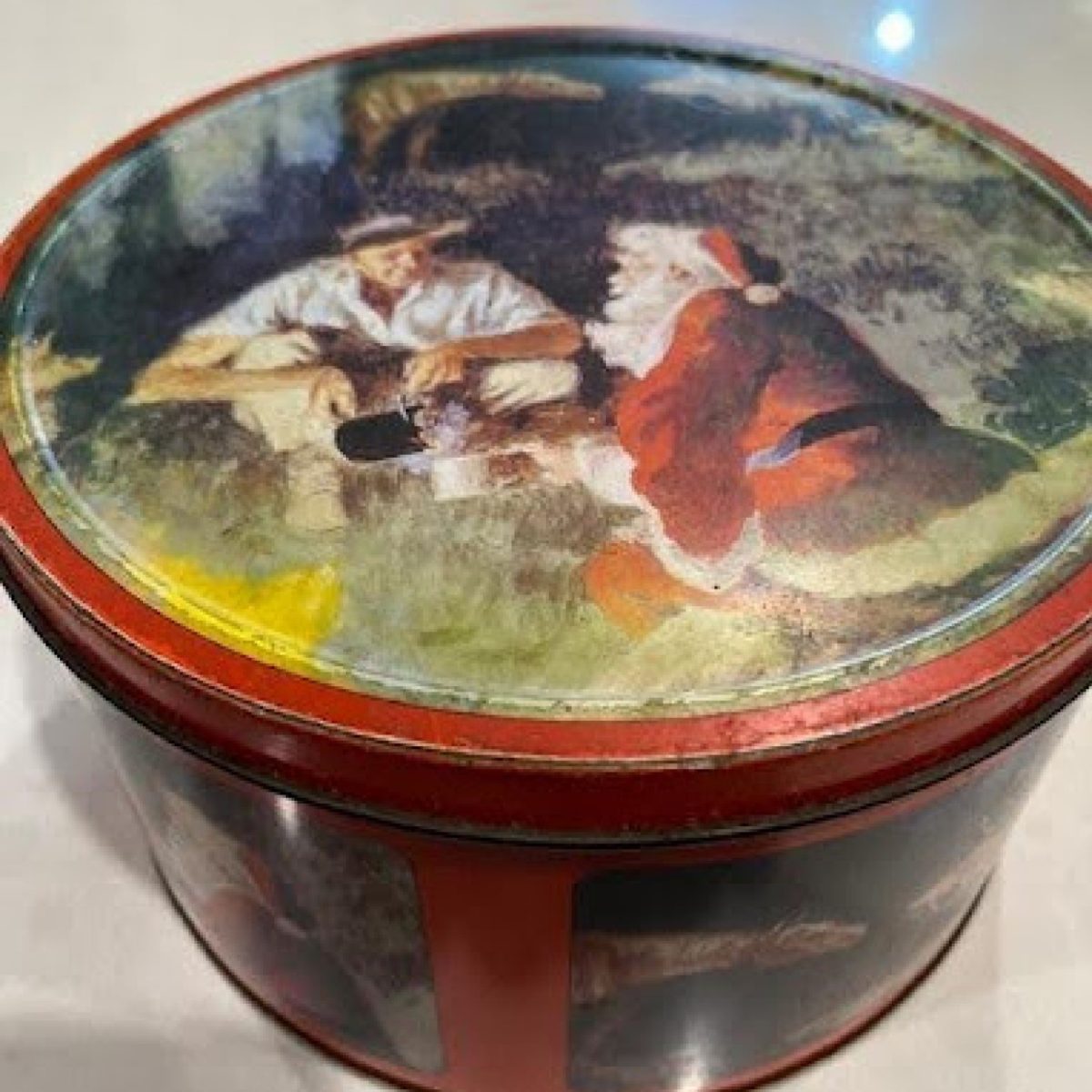
A Santa and the Drover biscuit tin, with the drover modelled on the artist himself, Jack Waugh. Photos: Andrew Waugh.
That iconic Christmas image of Santa taking a break with an Aussie drover — once found on Arnott’s biscuit tins and the back of The Australian Women’s Weekly — has long been part of the nation’s festive folklore.
But its creator was no big-city art star; he was Jack Waugh, a Jamberoo artist whose talent quietly reached millions.
Born John Edward Waugh in 1910, Jack was a commercial artist and illustrator whose work featured in Australian publications such as Man, Man Junior, Adam and Cavalcade.
Son Andrew Waugh, who still lives in Jamberoo and ran its newsagency until 2022, said his father was an artist with the K G Murray publishing group in Sydney.
Andrew said his father would ride a motorbike between Jamberoo and Sydney, with his latest art in saddlebags for discussions with Murray magazines and others.
He said another highlight of his career was a self-portrait he entered in the 1948 Archibald Prize, painted on a cow rug due to a shortage of canvas.
“It actually received really positive comments from the judges,” he said.
However, he said it was the Santa and the Drover painting for Arnott’s Biscuits in 1964 that was his most recognisable piece of art.
For more than a decade, that same image would appear on the back page of The Australian Women’s Weekly each Christmas.
“It was a picture of Santa Claus sharing a billy tea with an Aussie outback drover, and his horse and some reindeer are getting to know each other in the background,” he said.
In an Australian Women’s Weekly article in December 1973, Jack revealed that the drover was modelled on himself.
“I usually arrange myself in front of a mirror and model for the sketches I need,” Jack told the magazine.
“This results in some near dislocations and occasionally some rather peculiar left-handed drawings.
“But the model is always at hand, and knows exactly what the artist wants.”
In the interview, he admitted the initial idea of a drover talking to Santa Claus sounded “corny as hell”.
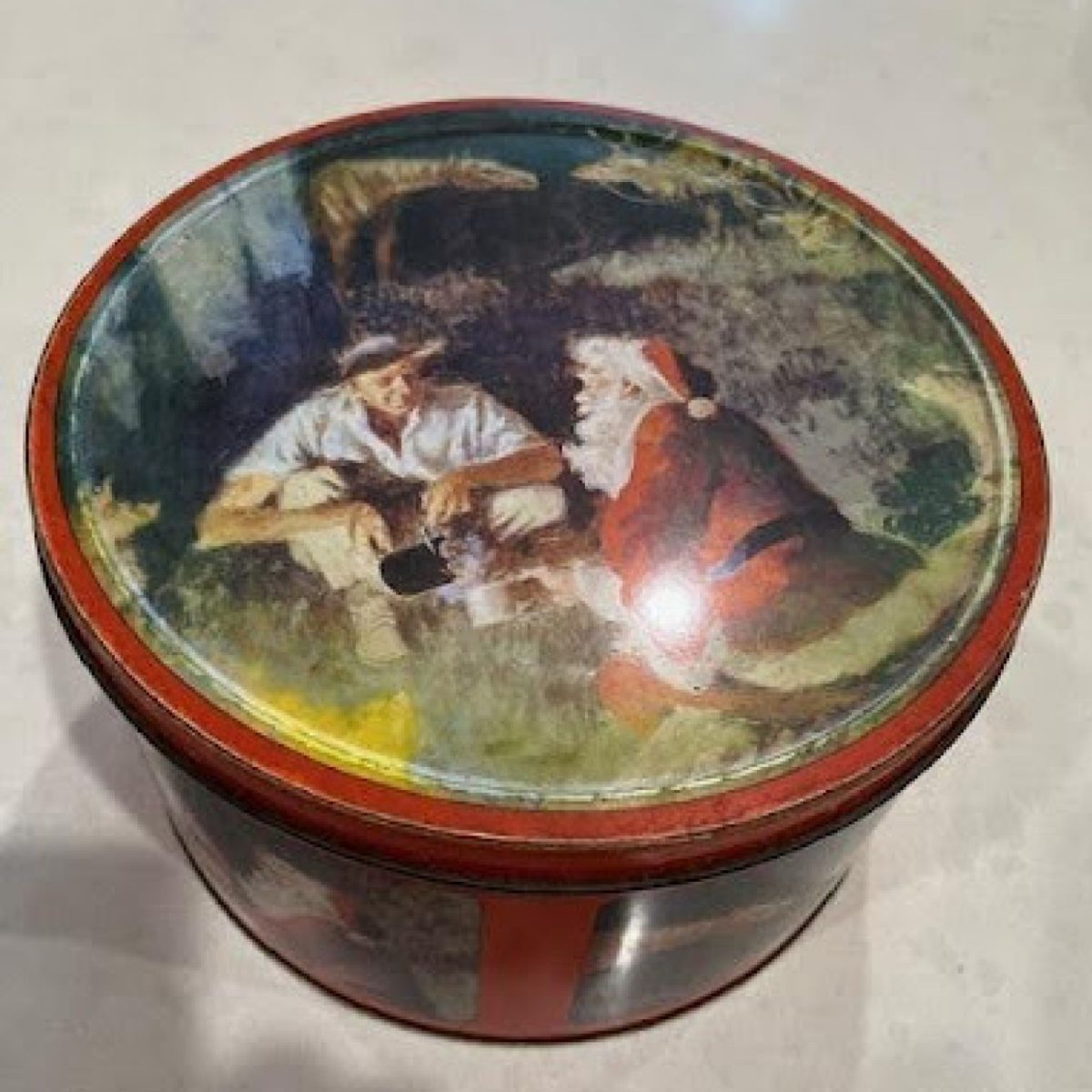
Jack Waugh’s biscuit tin artwork appeared on the back page of The Australian Women’s Weekly each Christmas for more than a decade.
“I worked out a composition with the horse making friends with the reindeer,” he said.
“Oddly enough, it didn’t turn out as corny as I thought it would.”
The interview also uncovered how an Arnott’s executive felt that the illustration had become Australian property and, in recognition of the value it had brought, Jack was paid a token royalty some years later.
Andrew said his father was an unassuming type of man who had been interested in drawing from a young age, joining his uncle’s signwriting business when he was only 14.
Among Jack’s possessions that Andrew has kept is a handwritten diary from a long trek taken with a mate just before Australia and Japan went to war.
“They set off to walk from Sydney to Brisbane, and during the trip Dad drew caricatures of people they met and sold them for four shillings each to cover expenses,” Andrew said.
“They also earned money timber felling at Coffs Harbour, which helped buy a horse and sulky, subsequently converting it into a small covered wagon — far better than sleeping under the stars as previous.
“When they got to Brisbane, they joined the armed forces.”
Andrew said Jack became a motorcycle dispatch rider in the army.
“Unfortunately, the long motorbike rides in the outback on what were just dirt roads caused lifetime damage to Dad’s eyes,” Andrew said.
“He used to say that he saw things as if they were through a church window, but it never seemed to impact his art.”
During this time he met and married Phyllis, going on to have four children: John, Andrew, Bradley and Patricia.
Jack died in 1996, with Andrew still cherishing his Arnotts biscuit tin.