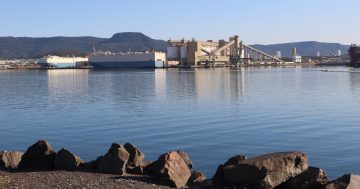
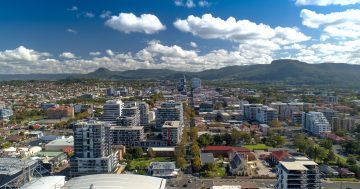
Kembla Grange is one of the Illawarra’s future industrial areas. Photo: Region.
The NSW Property Council has identified Kembla Grange and Unanderra as the region’s future industrial markets.
The council recently released a report, Ready to Grow: Unlocking Industrial Land in NSW, which assessed the supply of industrial land across Sydney, the Hunter, Central Coast and Illawarra-Shoalhaven.
The analysis concentrated on locations that were genuinely viable for companies seeking to commit significant capital to warehouses, distribution centres, logistics facilities, factories, production facilities, industrial outdoor storage, data centres and other industrial employment uses.
It found NSW had significant zoned industrial land already in the pipeline, with current vacancy across various NSW industrial markets at about four to five per cent.
It said the Illawarra-Shoalhaven had 4462 ha of zoned industrial land across 80 precincts.
However, the majority of that land is uniquely structured around three major anchors – Port Kembla port, BlueScope Steelworks and HMAS Albatross.
“The Illawarra region has 726 ha of industrial zoned land, of which 414 represents supply that could be developed in the short-to-medium term,” the report said.
“This supply would meet the demand for 69 years of development at the historical absorption rate of six hectares per year.”
The council identified 314 ha of land at Kembla Grange as the emerging diversification precinct.
A greenfield site accessible via the M1 Princes Motorway, it is attracting logistics, motor vehicle imports and light manufacturing as steel-economy workers seek new employment, the report said.
“Six of 14 Illawarra active precincts are in the Wollongong LGA, concentrated around Kembla Grange, Unanderra and South Wollongong. This is the only Illawarra precinct cluster showing notable on-market activity.”

Hundreds of new cars imported to Port Kembla are stored at Kembla Grange. Photo: Region.
NSW executive director Property Council of Australia Katie Stevenson said across all four regions covered in the report, there were significant areas of industrially zoned land constrained by infrastructure delivery, utility capacity, development controls and environmental constraints.
“At the same time, demand for industrial land continues to grow as population increases, freight volumes and freight task requirements expand, and emerging industries increasingly form part of the broader industrial and logistics ecosystem,” she said.
“This study finds that the volume of industrial land that can realistically be developed in the near term is materially lower than headline land supply figures suggest.
“It tests the assumptions underpinning existing industrial land monitoring and applies a development readiness assessment to understand what supply is realistically needed to meet future needs.
“The findings provide a practical and constructive roadmap to inform government and industry efforts to improve infrastructure delivery, strengthen employment land monitoring, and make sure NSW maintains an industrial land pipeline that supports jobs, productivity and long-term economic resilience.”
The report said the single largest, fastest growing and most diverse industrial submarket in Australia was Sydney’s outer south-west (aerotropolis). It leads the growth outlook with an expected 79 per cent jobs growth by 2036.
While the Illawarra industrial market can’t capture a significant share of the Sydney metro logistics demand due to its “Sydney accessibility ceiling” of 79 to 87 minute freight travel times to Port Botany and Sydney CBD, it can provide a service to the fast-growing south-west Sydney corridor, the report suggested.
“Therefore, the Illawarra’s future relies primarily on growth in its own port and heavy industrial base,” it said.
The property council recommended several areas for reform, including improved visibility of infrastructure capacity, more accurate measurement of deliverable industrial land, better alignment between infrastructure investment and future industrial precincts and planning settings that supported industrial intensification while maintaining productive capacity.
It also recommended that regional markets such as the Hunter, Central Coast and Illawarra-Shoalhaven needed differentiated treatment.
“[These] regions are strategically important industrial markets, but not all headline supply is open-market, serviced or substitutable,” it said.
“Anchor-tenanted, defence and port lands should be clearly excluded from market-available supply calculations where appropriate to provide a more accurate picture of the land that can realistically support future industrial growth.”