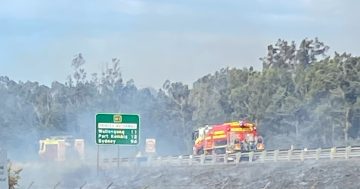
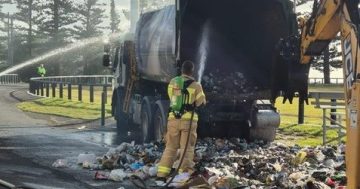
Cleaning out combustibles such as leaf litter around the home is one of three ways Illawarra residents can help local RFS teams minimise risk factors ahead of bushfire season. Photo: davidmariuz.
Illawarra residents have been urged to do their part to aid the local effort to keep the community safe, and mitigate heightened risks as this year’s bushfire season looms.
Experts warn a dangerous convergence of unseasonably high temperatures, high fuel loads and erratic weather patterns have contributed to prime conditions for bushfires.
NSW Rural Fire Service (RFS) Illawarra District Manager Superintendent Martin Surrey warned that El Niño was already driving above-average day and night temperatures, signaling a prolonged dry stretch through November.
“We’ll likely have period storms, meaning dry lightning could be an issue,” Supt Surrey said.
The threat is compounded by dense undergrowth across the region. Years of heavy rainfall sparked rapid vegetation growth, which recent dry conditions have transformed into massive fuel loads (leaf litter and dried grasses), reaching up to 20 tonnes per hectare.
“Conditions are generally very dry in many parts at the moment, with significant loads of fuel on the ground,” Supt Surrey said. “Right now it’s up to 20 tonnes per hectare, which is very high.”
Having largely escaped the devastating 2019/20 Black Summer fires, the Illawarra has gone years without a major wildfire to naturally clear leaf litter and dry grass, while unfavourable weather has repeatedly hampered planned hazard reduction burns.
“We’re taking every opportunity we can get at the moment for hazard reduction where it’s safe to do so,” Supt Surrey said.
With official crews racing against time, residents play a vital role in protecting their homes and community ahead of peak danger.
Members of the public can remove combustible materials including leaf litter dry debris, and overhanging branches from around their homes.
Every household should have in place its own bushfire survival plan, which can be downloaded via the NSW RFS website, and completed in consultation with neighbours if desired.
NSW RFS is also asking residents to download the Hazards Near Me app on their portable devices, and set alerts for their local watch zones for where they live, work and travel.
“Travelling north, south, or west from the Illawarra takes people through high-risk bushfire zones, so it’s critical to receive real-time alerts for those areas,” Supt Surrey said. “You should also check the conditions and rules at your destination, such as whether a total fire ban is in place.”

Dunmore RFS Brigade in among four Illawarra based brigades hosting a “Get Ready Weekend” event this weekend, to help people prepare (pictured: Captain Greg Hardy). Photo: Jen White.
Both the Hazards Near Me app and the RFS NSW website offer practical advice to help families prepare for worst-case scenarios.
“We’re particularly asking parents and guardians to talk to any children about what they should do in the event of a fire, for instance if they’re home alone or at school,” Supt Surrey said.
“And as a family, in the event of a catastrophic fire or a particularly dangerous day, everyone should know the plan. Will you stay home or seek refuge in a designated safety zone like a nearby hotel, club or shopping centre?”
Residents can also gather tips and speak directly with RFS volunteers during the final Get Ready Weekend events across the region:
- Mt Keira (Culture Mix 2026): Saturday 26 September, 10 am – 6 pm | Kembla Street, Wollongong
- Farmborough Heights: Saturday, 26 September, 10 am – 6 pm | Bardess Crescent, Farmborough Heights
- Jamberoo: Sunday 27 September, 8:30 am – 1 pm | 2 Young Street, Jamberoo
- Dunmore: Sunday 27 September, 9 am – 2 pm | Cove Boulevard, Shell Cove.