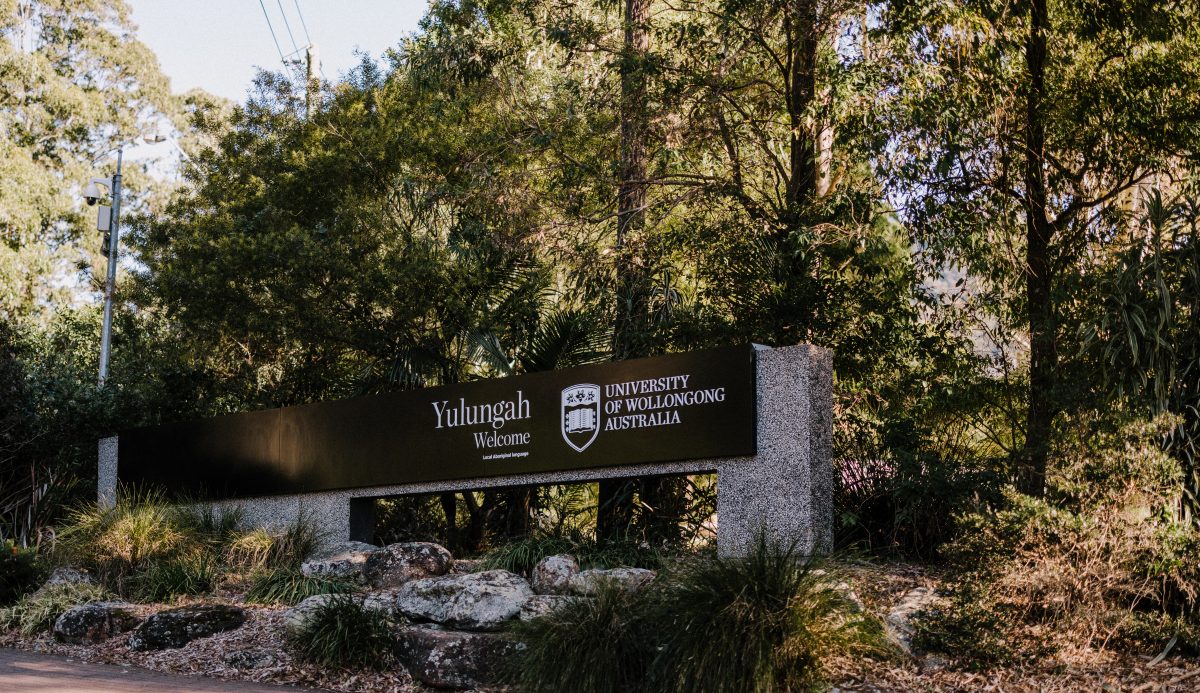
A University of Wollongong academic has addressed the NSW Government inquiry into the university sector. Photo: UOW.
A University of Wollongong academic has told a NSW Government inquiry university councils across the state are dominated by white people with corporate backgrounds.
The inquiry’s terms of reference requires the committee to “inquire into and report on the crisis in the NSW university sector” and is looking into the structure, powers and responsibilities of university councils, governance practices, reporting obligations and how universities engage in commercial activities.
Professor Corinne Cortese’s research expertise is in regulation and regulatory structures applied to contexts including accounting and reporting practices and corporate boardrooms.
She teaches undergraduate and postgraduate accounting with a focus on financial accounting.
Prof Cortese told the inquiry she was conducting research on corporate boardrooms and diversity when she decided to apply the same consideration to university councils.
“This began as a diversity project, but as I repeatedly observed the prevalence of university council members with corporate backgrounds, I became curious,” she said.
“Around the same time, the widespread use of consultants in the public sector was becoming increasingly visible.
“I was seeing in my data that some council members were also consultants or were affiliated with consulting firms, and many restructures had commenced across the sector, often mentioned in connection with these firms.”
Prof Cortese said as she looked more closely at the data she was shocked by the lack of diversity on university councils across the state.
Although men and women were both well-represented, the majority of councils lacked ethnic diversity and the vast majority of members came from higher socio-economic backgrounds.
Of the 177 council members in NSW at the time, only 18 per cent were academic or professional university staff – about 30 people in total.
Of the remaining members, 56 per cent had affiliations to corporate, consulting and industry groups.
She believed this had contributed to an increased use of consultants by universities.
“I was shocked, actually, to see the extent of the corporate backgrounds of our council members. I was surprised, alongside that, to notice the limited higher education experience that came along with council membership,” she said.
“I looked at a few university councils, and then more, and it became a pattern.
“Having a majority of council members that have a corporate orientation creates this kind of groupthink where it’s normal to seek consulting services.
“My observations stem from evidence that suggests there is a significant reliance on consulting services by universities, and a related concern that these consulting engagements are shaping and even displacing traditional university governance functions in ways that aren’t transparent.”
Most council members were tertiary educated, however, few of them had more than a bachelor’s degree, something Prof Cortese said surprised her given the roles were specifically about university governance.
She said given the public mission of universities in Australia, their goals and methods should look quite different to those of a private corporation.
“[If] we go to shop at Woolies, that doesn’t mean we can serve on the board of Woolies,” she said.
“If we think about how corporate boards are formed, typically the corporate board members are appointed because they’ve got years of experience in the sector that they’re appointed to, or at least adjacent sectors.
“Yet we don’t see that really in university councils.
“They would perhaps have attended university or have a degree, but often these externally appointed members are … drawn from an elite network or in some similar way.”
The appointment of council members at the University of Wollongong, and financial decisions made by the council, have come under scrutiny as part of the inquiry.
UOW executives were grilled over the relationship between former interim vice chancellor John Dewar and KordaMentha, a consultancy firm hired by the university.
Prof Cortese said inconsistent and opaque reporting practices across the sector made it difficult to identify exactly how much was being spent on consultants, and that was part of the problem.
“It’s very difficult then to discern exactly what we’re seeing,” she said.
“Where is the money being spent?”
The full transcript of the UOW sessions is now on the NSW Parliament website. This is the third in a series of articles about UOW’s evidence to the inquiry.
The inquiry continues.