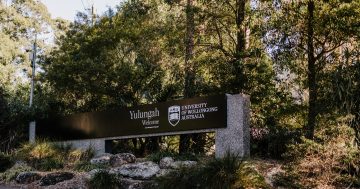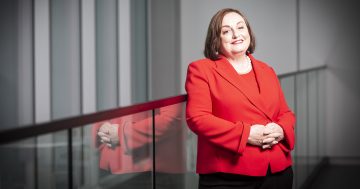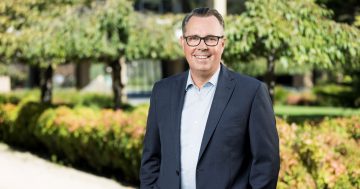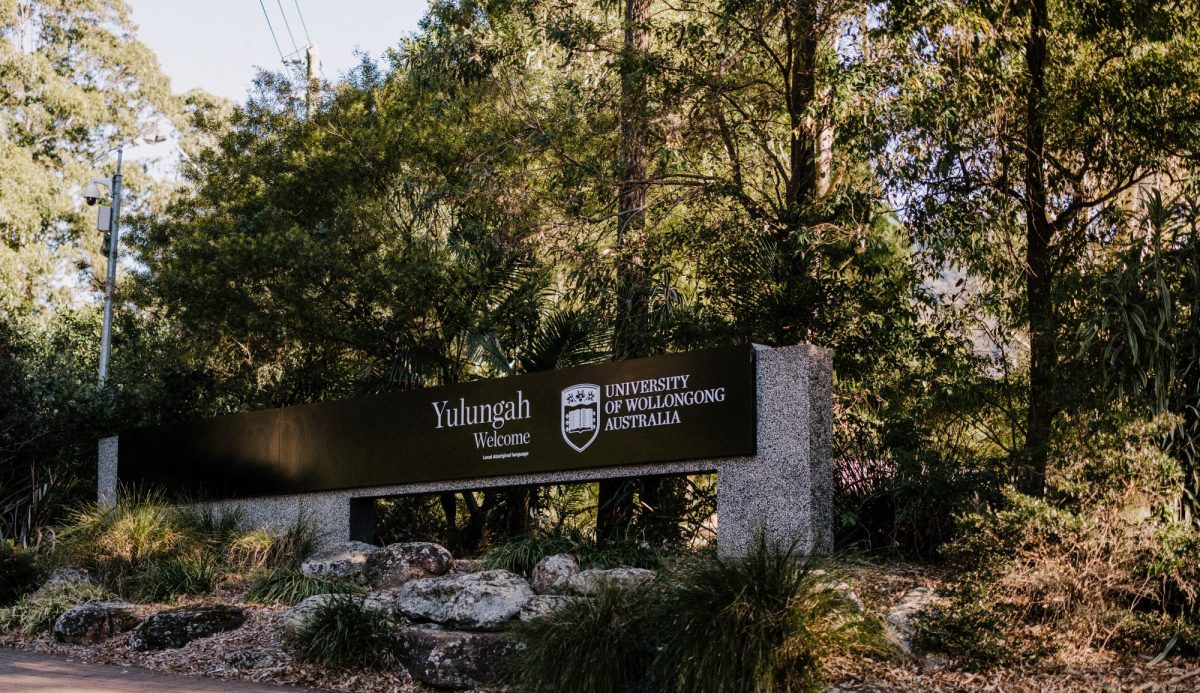
The University of Wollongong has faced scrutiny as part of a NSW inquiry into the sector. Photo: UOW.
A series of financial decisions made by the University of Wollongong have come under scrutiny as part of a NSW Government inquiry into the sector.
The inquiry’s terms of reference requires the committee to “inquire into and report on the crisis in the NSW university sector” and is looking into the structure, powers and responsibilities of university councils, governance practices, reporting obligations and how universities engage in commercial activities.
The committee was particularly interested in two significant investments made by the university.
One was a failed public-private partnership between UOW and Lendlease to deliver and operate more student accommodation that ended up costing the university $169 million, an amount it did not disclose in its 2020 financial statement.
In 2021 the NSW Auditor-General ordered UOW to revise its 2020 financial statements to show the loss.
Committee member Abigail Boyd asked UOW Pro-Chancellor Warwick Shanks how such a large error could be made by a board “chock-full” of financial experts.
“The accounting standard language is very black and white and harsh in its description of things as errors, but I need to take on notice the particular circumstances,” he told the committee.
Mr Shanks is also an employee of KPMG.
The other investment is a planned public-private partnership providing retirement living and aged care.
The planned Health and Wellbeing Precinct, in partnership with Lendlease, requires $250 million in capital to build an independent living retirement complex on university land.
Under the proposed agreement Lendlease will manage the complex, including residential apartments, aged care facilities, a childcare centre, community facilities, a cafe and community hub, and neighbourhood retail outlets.
The committee chair asked UOW vice-chancellor Professor Max Lu where the project was up to, and what level of financial risk it exposed the university to.
“Although the project was initially a long time ago … the project hasn’t started yet,” he said.
“It is in appropriation phase. The aim of the project is to build aged care facilities that will alleviate the aged care shortage in the Illawarra region, which is really important for the health and well-being of the community.
“My advice is the number is around $19 million due to the site preparation, parking and all that we would have to do anyway for a large part of the Innovation Campus.
“We don’t know what would be the final commitment of the university. I hope that there would be nothing from the university.”
Dr Adam Lucas, Honorary Senior Fellow in the School of Humanities and Social Inquiry, Faculty of Arts, Social Sciences and Humanities at the university told the inquiry he believed these investments indicated a broader trend of the university moving away from its core business of providing quality tertiary education.
“Our research shows that two-thirds or more of university council members now come from finance, property and consulting backgrounds, many of whom have links to the Big Four accountancy and consulting firms,” he said.
“The Big Four have helped university executives to construct paper financial crises through accrual accounting narratives.
“They recommend slash and burn solutions and then profit again by auditing or reviewing the outcomes.
“Meanwhile, staff are sacked, disciplines are erased and students receive a thinner, more precarious education.”
Dr Lucas told the committee accrual accounting was used by corporations and businesses to account for depreciation of equipment and property they purchased.
Universities, however, received a lot of their property and equipment for free through government grants.
Offsetting the depreciation of assets that were acquired for free against cash income could make their finances look worse than they actually were.
“Similarly, they’re able to book paper losses on investments as also losses to the finances of the university,” Dr Lucas said.
“But, again, they’re not realised or crystalised losses, as we say in accounting. They’re just paper losses.
“Those worse financial outlooks are then used to justify job cuts, cuts to subjects, cuts to courses or to whole disciplines, because they’re not deemed to be financially viable.
“Traditionally, in the universities, we’ve used those areas where we’ve drawn more revenue to cross-subsidise other areas of the university … [because] enrolments fluctuate from year to year.”
Former UOW Professor Fiona Probyn-Rapsey told the committee she believed these “paper losses” were also used to place restrictions on research spends, and exert control over grants.
She said academics were awarded grants from a variety of sources, including the Australian Government.
That money is held and disbursed by the university they work at; however, it is attached to the researcher and their project, and if they move universities the funds go with them.
“Academics were suddenly faced with a whole raft of obstacles placed in the way of spending their research money,” she said.
“It made it impossible for many research staff to actually spend their research grants.
“If you don’t spend that money it sits in the university accounts. It came to about $45 million.”
At the same time, more than $60,000 was spent on the installation ceremony for UOW Chancellor Michael Still, part of almost $300,000 Mr Still racked up in discretionary spending since his appointment in January 2024, the committee heard.
Mr Still does not receive a salary for his role as chancellor.
Asked what he thought of the spend, and if there was an upper limit on his discretionary budget, Mr Still claimed it was “appropriate”.
He said the installation ceremony was a “proper procedure” for the university to undertake, despite the last installation ceremony being held in 1975.
He said he did not oversee the organisation of the ceremony.
“I spend absolutely as little as I can,” he said.
“I drive my own car. I pay my own expenses. I’m very surprised at $300,000, but we will find out what it’s spent on.
“[The budget] is a matter of what’s appropriate and what’s proportionate.
“Somebody has to do the work of supporting the chancellor and the council. There’s quite a lot of work to do.”
The full transcript of the UOW sessions is now on the NSW Parliament website. This is the third in a series of articles about UOW’s evidence to the inquiry.
The inquiry continues. The most recent hearing took place in Sydney on 18 February.