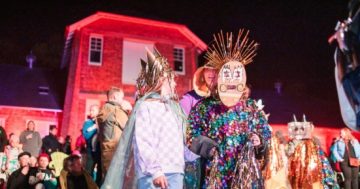
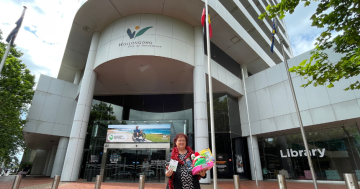
Escape rooms, like this Alice in Wonderland-themed one, are some of the many immersive experiences at Kiama Libraries that are popular with children. Photo: Kiama Libraries.
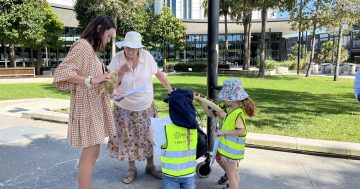
At Shellharbour City Library, a child checks out a Frog Explorer Pack, and ventures forth to sow the seeds of a lifelong fascination.
In their cars and kitchens, Illawarra residents tune into the latest episode of Kiama Library’s podcast to get the literary lowdown straight from their local librarians.
And in a Wollongong library, dance coaches clear a space soon to be filled with students trying hip-hop dance for the first time.
This is a library in 2026.
Gone are the days of dark, dusty corners and stern pin-drop silences; today’s libraries are a meld of traditional use, creative hub and community space.
If you haven’t been to a library lately, here are some good reasons why it might be time to delve in and rediscover.
Kiama Libraries


Even before the introduction of modern programs and digital literature collections, libraries were sanctuaries for all, according to Kiama Libraries outreach library officer Carla James.
“All libraries exist as the last remaining secular indoor space where members of the community might exist for free, and without barriers,” she says.
“It doesn’t matter your abilities, age, or socio-economic standing, here is a place to come without monetisation or the expectation to consume.
“It’s a truly democratised space, and that’s a forever kind of important thing we offer communities. Everything else is the whipped cream on top of a cool, tasty cake.”
Carla is one half of the duo behind the Good Librations podcast, along with Gerringong Library branch supervisor Lauren Watkins.
The podcast for literature and book lovers has been running for four years and is available via all major platforms.
“We look at storytelling and narratives, from a modern, revisionist, I’d say even feminist perspective,” she says.
The library also hosts a parade of fascinating talks and workshops based on what’s trending in popular culture.
From next-generation farmers implementing the latest sustainable practices on their farms, to bioluminescence chasers, a host of local experts are brought in to breathe topics to life.
Some of the most powerful stories come from everyday people sharing extraordinary moments.
“We once had a woman who simply shared the experience of taking her 80-year-old father trekking in Nepal, and what that meant to their relationship,” Carla says. “More often than not, there’s a human element to these presentations.”
Shellharbour Libraries

Frog Explorer Packs are on near constant rotation. Photo: Shellharbour City Library.
Bright and airy Shellharbour City Library has turned the hushed, academic and research-dominant model of conventional libraries on its head, with a space where people of all ages and lifestyles are beckoned in with the promise of belonging and discovery.
It’s perhaps why member numbers continue to grow year on year, according to Shellharbour City Libraries team leader library programs Luke Morris.
“A library can’t be what it was in the 1980s. We had to evolve, or we wouldn’t be here to serve our purpose – to boost knowledge and access,” he says.
“We see our libraries like a community living room. It has to cater for everyone, and keep up with the way people live and what they’re interested in now.
“We have a very beautiful space people enjoy coming to, and the best part is every interaction we have is because people want to be here.”
One major drawcard is the libraries’ “creative collections”, which is based on the traditional “library of things” concept.
From weaving looms to bird watching kits, a library membership grants access to equipment covering a wide range of interests, usually in the field of tech, craft or nature.
Among the most popular are the Frog Explorer Packs. It empowers ordinary community members to become citizen scientists and record local frog data for national databases — an opportunity kids in particular jump on.
“Most of these kits are loaned out all the time,” Luke says.
Wollongong Libraries


Perhaps the greatest indication of Wollongong Libraries’ evolution is its “quiet hour”, where once a week the lights are dimmed, no programs are scheduled and more staff are on hand to help.
“It’s not something you might think is necessary in a library,” coordinator community connections and learning Stacey O’Brien says.
“Libraries were once traditionally quiet places by default — not anymore. We introduced this to ensure our neurodiverse members and those with sensory issues are not overlooked.”
The rest of the time, the library is alive with activity. There’s still space for traditional library activities such as study and research, but equally areas for kids’ activities.
Community groups, including Lifeline, Wollongong Homeless Hub, Multicultural Communities Council of Illawarra, Living Connected and even justices of the peace offer services in situ.
Events aimed at First Nations and LGBTQIA+ people and people living with disabilities work to ensure inclusivity.
One-off events have included everything from speed puzzling to reptile encounters, discos and laser tag, while the popular “Let’s Try” has invited community members to dip a toe in everything from tai chi to hip hop and rockabilly dance, fencing to “naughty pottery”.
“It’s a sort of playground for people to connect,” Stacey says.