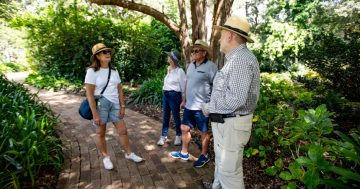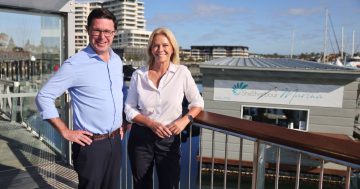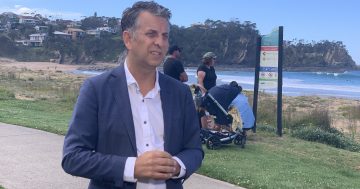

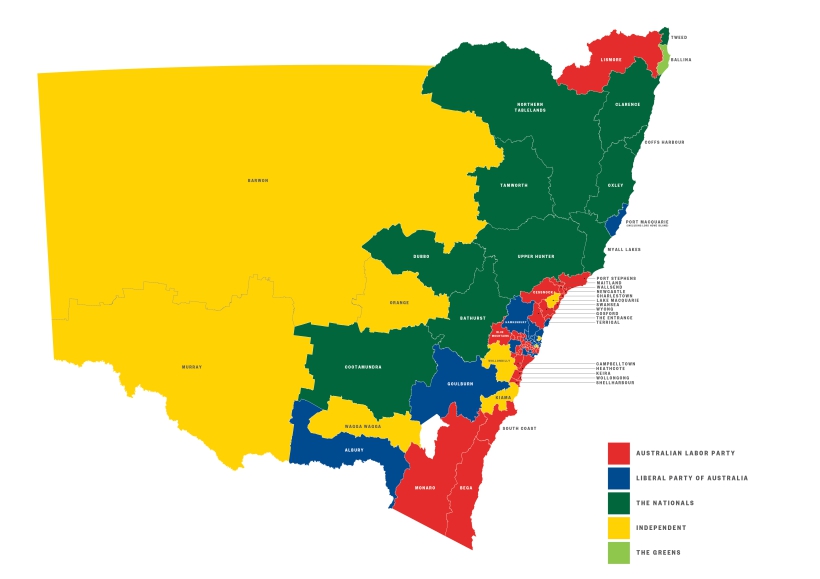
Since the Kiama by-election, it’s a sea of red from south of Sydney to the Victorian border – but that’s not the biggest deciding factor when it comes to government spending. Photo: NSW Parliament.
Do swing seats get more love from the pollies – or do safe seats get rewarded when their party is in power?
Whichever type of electorate you live in, it’s easy to look at the other side and think they’re getting a better deal.
Wollongong currently has a Labor mayor leading a council with a Labor majority, as well as Labor representation at the state and federal levels.
It’s had a long history of being one of the safest seats for the party at a state and federal level – although, as political scientist and Emeritus Professor John Warhurst explained, there is some competition, especially at a local level.
“Wollongong is largely a Labor stronghold, but we’re increasingly seeing a three-sided competition between Liberal, Labor and independents,” he said.
“Wollongong has a history of independent mayors, including the controversial Frank Arkell.
“Then you throw in the minor parties, and you might have sections of the electorate that swing more towards one end of the political spectrum or another over time.”
Down the coast to Shellharbour, Kiama, Nowra and all the way south to Bega it’s a similar picture, with Labor holding state and federal seats all the way to the Victorian border.
Is this good news for the region? Prof Warhurst said it was not as simple as safe vs swing seats.
“Marginal seats traditionally do really well at election time where both sides of politics will make promises to try and win the seat,” he said.
“But if the government is giving out funds, for example the sports rorts we’ve seen from both sides of politics, the funds tend to go disproportionately to secure electorates that are being rewarded.
“People in both types of seat can feel forgotten or taken for granted.”
Prof. Warhurst said there were generally three types of issues that mattered to voters.
Big picture issues such as national security and immigration, local issues such as a new hospital, school or roads and personal issues such as difficulties accessing benefits.
How voters assess whether they’re getting bang for their buck from elected members can depend on which of those issues they value most.
“It’s not just about money,” Prof Warhust said.
“Electorates often wish they had someone who will criticise the government on things they don’t agree with, they want a spokesperson for their values and opinions.
“Other people might be looking for an MP who can deliver on local infrastructure, so they value someone who can collaborate well with other levels of government, and get funding.
“Some might have a personal issue that’s really important to them, so they want an MP who will go in to bat for them and solve their issue.”
Prof Warhust said the effectiveness of an individual MP often had more to do with their personality and their staff than with political affiliation.
“Representatives are very different people, old, young, male, female, experienced or inexperienced,” he said.
“It often comes down to how committed they are to getting stuff done and the quality, enthusiasm and experience of the staff in their electoral office.
“Many projects require joint federal state and local funding, so MPs who work well with one another are more effective.
“Even if they’re in the same party they might be competitors, or they might be from different parties and both have an interest in getting good outcomes for their community.”
Prof Warhurst said when people got caught up in debates about swing and safe seats, it became easy to overlook one of the most important players in politics – citizens.
Whether you vote for someone to hold the government to account, deliver local projects or help you solve a pernicious problem, election time is just the first part of the process.
It’s important to do the unglamorous work in between election cycles that makes sure your voice is heard.
“You need to get engaged and advocate for yourself,” he said.
“Some people are well-connected, articulate and persistent, others are more concerned with their job, family and hobbies.
“If you want something to change you have to keep at it, keep an eye on things and keep in touch and build relationships with people who are in a position to do something about it.”